

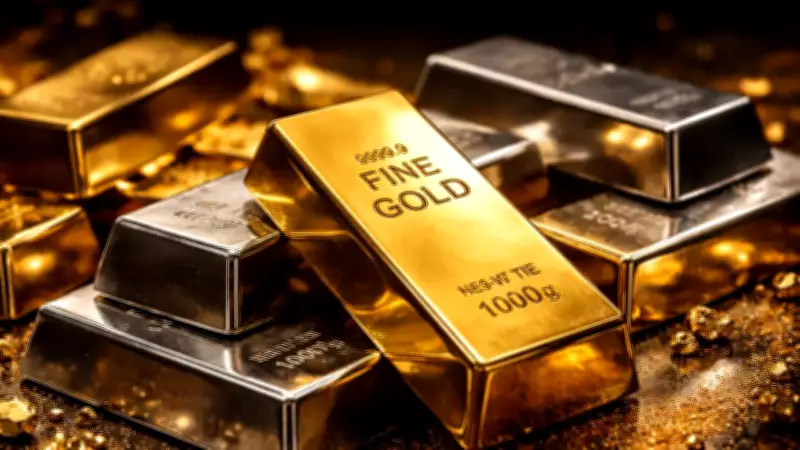
Gold and Silver Prices Stage Sharp Rebound After Recent Market Crash
In a dramatic turnaround, gold and silver prices have rebounded significantly in Tuesday's trading session, recovering from steep losses experienced over the previous few days. This recovery comes after what market analysts described as a brutal selloff that began late last week, raising questions about the sustainability of the precious metals rally.
Market Performance and Recovery Details
Spot gold surged by 2.2 percent to $4,767.33 per ounce, bouncing back from a near one-month low reached on Monday. This recovery is particularly noteworthy considering gold had recently touched an all-time high of $5,594.82 just last Thursday. Similarly, silver demonstrated strong performance with spot prices advancing 2.8 percent to $81.61 per ounce, following its own record peak of $121.64 reached on the same day.
The domestic market mirrored this international trend, with MCX Gold experiencing significant volatility. After initially dropping nearly ₹9,000 to sub-₹1,38,000 levels, it recovered to near ₹1,46,500 following strong short covering and bargain buying activity.

Factors Behind the Recent Market Volatility
Market experts point to several key factors that contributed to the recent precious metals selloff and subsequent recovery:
- Federal Reserve Nomination Impact: The nomination of Kevin Warsh as the next chair of the US Federal Reserve by President Donald Trump created market uncertainty that initially pressured precious metals prices.
- Margin Requirement Changes: A hike in margin requirements by CME Group added to the selling pressure, particularly affecting leveraged positions in gold and silver markets.
- Dollar Strength Concerns: Market reactions to potential shifts in US monetary policy influenced dollar movements, which inversely affected precious metals pricing.
Longer-Term Trends and Central Bank Activity
Despite recent volatility, the broader trend for precious metals remains positive. Gold recorded its strongest monthly performance since November 2009 in January, rising almost 13 percent, while silver surged an impressive 19 percent over the same period.
This sustained strength is underpinned by significant structural changes in the global economy:
- Central Bank Accumulation: Major economies including China and India have been steadily increasing their gold reserves as part of a broader strategy to diversify away from US dollar dependence.
- Geopolitical Uncertainty: Rising global tensions and trade conflicts have reinforced gold's traditional role as a safe-haven asset during times of economic uncertainty.
- Industrial Demand Growth: Silver continues to benefit from increasing industrial applications, adding fundamental support to its price appreciation.
Analyst Perspectives and Market Outlook
Market analysts offer mixed but generally optimistic views on the precious metals outlook. Kyle Rodda, senior market analyst at Capital.com, suggests that "the recent price action suggests valuations may now be more reasonable" following weeks of erratic trading. He notes that current prices return gold and silver to levels seen in early January.
Jateen Trivedi, VP Research Analyst at LKP Securities, emphasizes that "volatility remains extremely high" following the recent margin-led correction. He identifies key technical support near ₹1,35,000 and resistance around ₹1,50,000 for MCX Gold.
Other Precious Metals Performance
The recovery wasn't limited to gold and silver alone. Spot platinum edged up 0.6 percent to $2,134.10 per ounce, though it remains below its record peak of $2,918.80 reached on January 26. Palladium, however, experienced a slight decline, slipping 0.5 percent to $1,711.0 per ounce.
As global economic dynamics continue to evolve, with central banks diversifying reserves and geopolitical tensions persisting, the fundamental case for precious metals remains strong. However, investors should brace for continued volatility as markets digest policy changes and adjust to new economic realities.






