

Andhra Pradesh Government Constitutes High-Level Committee to Investigate Massive Cooperative Bank Scandal
The Andhra Pradesh government has taken serious cognizance of widespread financial irregularities at the Prakasam District Central Cooperative Bank (PDCCB), establishing a high-level investigative committee to probe the multi-crore scandal. The committee will be headed by Gauri Sankar, additional director of cooperative societies, signaling the administration's determination to address systemic corruption in the state's cooperative banking sector.
Massive Loan Irregularities Uncovered
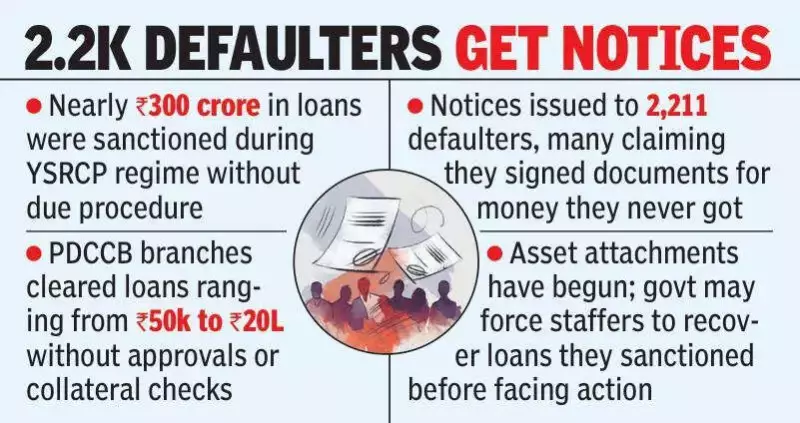
According to preliminary reports, loans totaling nearly Rs 300 crore were sanctioned during the previous YSRCP regime without following proper banking procedures. The scandal has sent shockwaves through the bank's administration, with several officers expected to face serious consequences for their involvement in the fraudulent activities.
PDCCB represents the second major cooperative bank in Andhra Pradesh to be rocked by loan fraud allegations, following similar irregularities at the Guntur District Cooperative Central Bank. In the Guntur case, the government has already filed criminal cases against 21 officials, including the CEO, general managers, assistant general managers, branch managers, and staff members.

Pattern of Systematic Irregularities
Initial investigations have revealed a disturbing pattern of irregularities across PDCCB branches, particularly in urban areas. Loans ranging from Rs 50,000 for farm implements to nearly Rs 20 lakh for custom hiring centers and electronic goods were sanctioned without mandatory approvals from the district cooperative officer or proper collateral verification.
The scandal first came to light through internal whispers within the bank. Ravi Kumar, a bank clerk approaching the end of his service tenure, noticed an unusual surge in joint liability group (JLG) loans. His investigation revealed that loan files were being cleared at breakneck speed, frequently linked to politically influential individuals. In numerous cases, not a single installment had been repaid on these questionable loans.
Whistleblower Testimony and Political Connections
By the time the NDA government assumed power in 2024, PDCCB was already drowning in bad loans. Complaints flooded the district collector's office, with many describing the bank as a "hub of irregularities." A three-member committee was initially constituted to probe allegations concerning more than Rs 300 crore in unpaid loans spread across 20 branches of the bank.
Based on this committee's findings, the government has now appointed the high-level committee for a comprehensive investigation. Sources indicate the committee has issued notices to 2,211 defaulters, many of whom claim they were coerced into signing loan documents for money they never actually received. Shopkeepers, small farmers, and self-help group members now find themselves burdened with fabricated debts.
Organized Loot and Recovery Efforts
Several branch managers and officers have been identified for collusion in the scandal, with questions being raised about promotions granted to officials known for bending rules, particularly at the bank's Ongole town branch. Ravi Kumar, the whistleblower, testified during the inquiry that "it was not banking, it was organized loot," alleging that political interference transformed PDCCB into a "personal ATM" for a few powerful individuals.
Recovery proceedings have now commenced, with asset attachment and legal action underway. The state government is likely to initiate criminal proceedings against staff members involved in the scandal if the outstanding debts are not recovered. Authorities are also considering tasking the implicated staffers and managers with ensuring recovery of the loans they sanctioned before facing disciplinary action.
In the related Guntur bank case, authorities have booked criminal cases against 21 officials and also filed a case against the then in-charge of the bank and YSRCP leader R Ramanjaneyulu for allegedly forcing staff members to commit the financial crimes.






