

India Sets Ambitious Goal for Universal Health Insurance by 2033
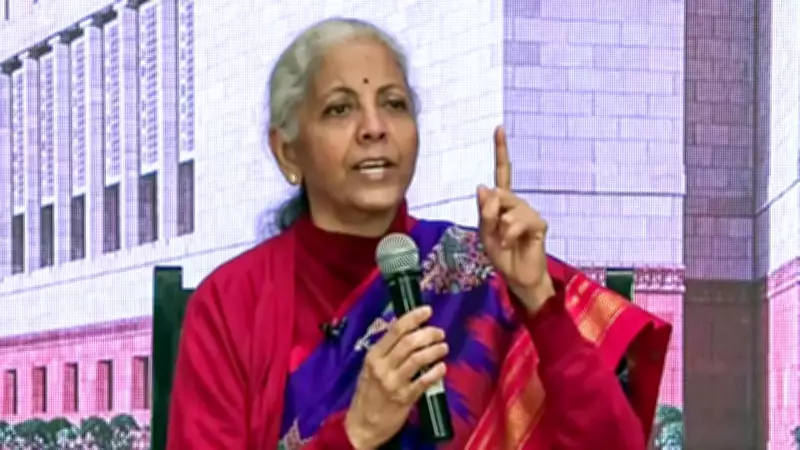
In a significant announcement during the Rajya Sabha's Question Hour, Finance Minister Nirmala Sitharaman declared health insurance as a top priority for the government, expressing confidence that India will achieve universal insurance coverage by 2033. This ambitious target comes as the insurance sector demonstrates substantial growth and expanding reach across the nation.
Current Insurance Landscape and Growth Trajectory
Responding to supplementary queries, Sitharaman revealed that the insurance industry has already made remarkable progress, covering approximately 58 crore lives during the 2024–25 period. "Health insurance is a priority for this government. In fact, we are hoping that by 2033 we will have insurance cover for all," the Finance Minister stated, as reported by news agency PTI.
The minister provided detailed financial data showing total health premium collections reaching Rs 1,17,505 crore in 2024–25. This substantial figure breaks down to public sector insurers contributing Rs 42,420 crore, private insurers adding Rs 37,752 crore, and standalone health insurers accounting for Rs 37,331 crore.

Addressing Structural Challenges and Implementation Strategies
Despite this growth, Sitharaman acknowledged significant structural challenges facing India's insurance sector. She highlighted that India's per capita insurance premium remains at just USD 97, dramatically lower than the global average of USD 943. "While penetration remains low, the government is actively bridging this gap through targeted reforms and affordability measures," she explained.
The Finance Minister outlined several key initiatives driving momentum in the sector, including GST exemption on individual premiums, expansion of coverage areas, and strong regulatory support. She emphasized that health insurance has become a clear priority area for policy intervention.
Legislative and Regulatory Framework Strengthening
Sitharaman detailed specific government actions to deepen market penetration, including the introduction of a Bill in December 2025 to increase foreign direct investment (FDI) in the insurance sector. She also referenced regulatory measures implemented by the Insurance Regulatory and Development Authority of India (IRDAI), particularly rules notified in 2024 concerning rural social sector obligations and third-party requirements designed to expand insurance coverage in rural areas.
"Both private and public insurers are subject to systematic regulation by the insurance watchdog," Sitharaman assured. "If there are any wrongdoings by insurance companies, the regulator acts upon them." She noted that several companies had faced substantial penalties in recent years for various violations.
Enforcement Actions Against Violations
The Finance Minister provided specific examples of regulatory enforcement, stating that unfair business practices trigger decisive action. "If there is undue influence by insurance companies using their dominant position, or when they make false and misleading claims, misrepresent facts, omit key features while selling insurance, or fail to ensure suitability of the policy, all such acts of omission and commission are acted upon," she clarified.
Citing concrete cases, Sitharaman informed the House that Reliance General Insurance Company faced a penalty of Rs 2 crore in 2023–24 for unfair business practices. Similar penalties were levied on Bajaj Finance Ltd (Rs 2 crore), HDFC Life Insurance (Rs 2 crore), SBI Life Insurance (Rs 1 crore) and Royal Sundaram General Insurance (Rs 1 crore).
Detailed Policy Coverage Statistics
In a written reply, the minister provided comprehensive data showing that in FY 2024–25, there were 251.85 lakh individual health insurance policies covering 6.01 crore people. Additionally, 13.05 lakh group policies provided coverage for 27.51 crore members, demonstrating the extensive reach of both individual and collective insurance arrangements.

Government Schemes Complementing Private Insurance
Sitharaman highlighted the crucial role of government-sponsored schemes in advancing health coverage objectives. She specifically mentioned the Ayushman Bharat Pradhan Mantri Jan Arogya Yojana (AB-PMJAY), which provides health cover of Rs 5 lakh per family per year for secondary and tertiary care hospitalisation to approximately 12 crore families. This represents the bottom 40 per cent of India's population, ensuring that the most vulnerable citizens have access to essential healthcare protection.
The Finance Minister's comprehensive presentation underscores the government's multi-faceted approach to achieving universal health insurance coverage, combining regulatory oversight, financial incentives, legislative reforms, and targeted schemes to create a more inclusive insurance ecosystem for all Indians.





