

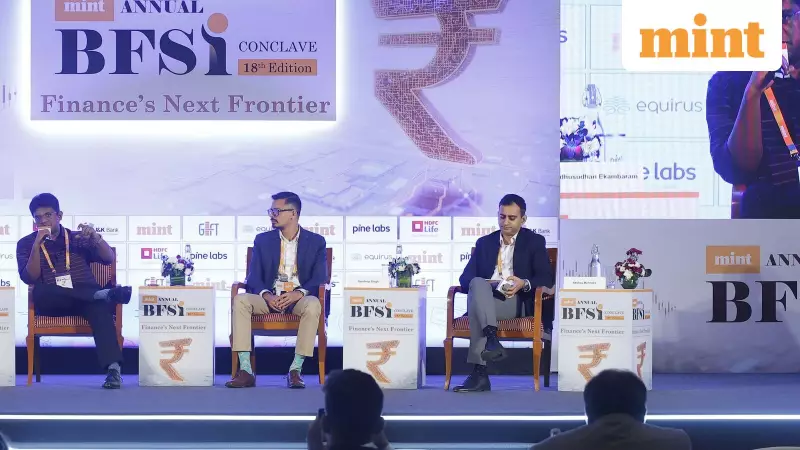
India's dynamic fintech lending industry is undergoing a profound transformation, moving decisively into its next chapter. Top executives revealed that the sector's priorities have radically shifted from unchecked, growth-at-all-costs expansion to building sustainable businesses grounded in strong unit economics and deeper customer relationships.
The Regulatory Reset: From 2,400 Players to a Consolidated Market
The journey of digital lending in India spans roughly a decade, but its most defining period began with the intervention of regulators. Madhusudan Ekambaram, CEO and Co-founder of KreditBee, recalled the initial landscape as an "unregulated world." He noted that in March 2020, over 2,400 companies were engaged in lending activities. This number plummeted to just 85 within six months after the first wave of regulations was introduced.
The Reserve Bank of India's (RBI) expectations were unambiguous. The regulator demanded proper licensing, rigorous Know-Your-Customer (KYC) procedures, fairness in practices, and strict adherence to norms without seeking loopholes. This regulatory clarity, while initially disruptive, ultimately reshaped the industry's foundation.

Akshay Mehrotra, MD and Group CEO of Fibe, pointed out that the full impact of these regulations became most visible in the post-pandemic period. Tighter rules governing digital lending, data usage, and risk-sharing created a significant opportunity for compliant players like Fibe and KreditBee to scale responsibly.
Fintech 2.0: Depth Over Scale, Monetization Over Acquisition
The new phase, termed "Fintech 2.0" by industry leaders, is no longer solely obsessed with scale. Sandeep Singh, CEO of Trillionloans (a BharatPe subsidiary), emphasized that the current focus is on liability management and the depth of customer monetization.
This represents a fundamental evolution in strategy. Earlier, innovation in the sector was primarily about improving user interface (UI) and user experience (UX) to acquire customers. Today, the competitive edge lies in how well a lender truly understands its customer, enabling tailored products and services that drive value for both parties.
Despite a decade of activity, building a massive balance sheet remains a rare feat in fintech lending. Industry estimates indicate that only a select few digital-first lenders have surpassed the ₹10,000 crore mark in Assets Under Management (AUM). Capital constraints, regulatory limits, and asset-quality concerns have kept most players below this threshold.
However, fintechs exert an influence far greater than their AUM suggests through sheer disbursement volume. They command a significant share, estimated at 60% or higher, in terms of loan volumes. This, as Ekambaram describes, is more a story of market penetration than pure AUM growth.
Specialization and the Path to Public Markets
This penetration is driving lenders towards specialization. Mehrotra highlighted that fintechs' unique advantage lies in solving very specific customer demands that large banks often cannot address efficiently. Companies are now carving out niches; for instance, Fibe has moved into impact-oriented categories like healthcare loans.
Differentiation has also become critical for fundraising. "In financial services, until you differentiate, you cannot raise enough funds," Mehrotra added. While venture capital has become more selective, founders assert that capital is available for compelling business models at the right valuation.
Data from Venture Intelligence underscores the shift: funding for digital lenders fell to $752 million across 53 deals in 2025 (year-to-date), down from $1.53 billion across 69 deals in 2024. The sharp slowdown, especially for unsecured lending, is pushing major players like KreditBee, Fibe, and MoneyView to explore public markets.
Ekambaram made a strong case for listings, stating, "Lending companies always need more capital, and from a regulatory perspective, lending companies should ideally be publicly-listed." He anticipates a wave of listings, predicting that once one company successfully goes public, others will follow swiftly, leading to many publicly-traded lending players next year.

Looking ahead, founders express robust optimism about underlying demand in what they describe as a "credit-starved" country. The rise of consumerism in daily life signals significant room for growth. Navigating this future, they agree, will require maintaining a constant and transparent dialogue with regulators, interpreting RBI guidelines in their simple intent without overcomplication.





