

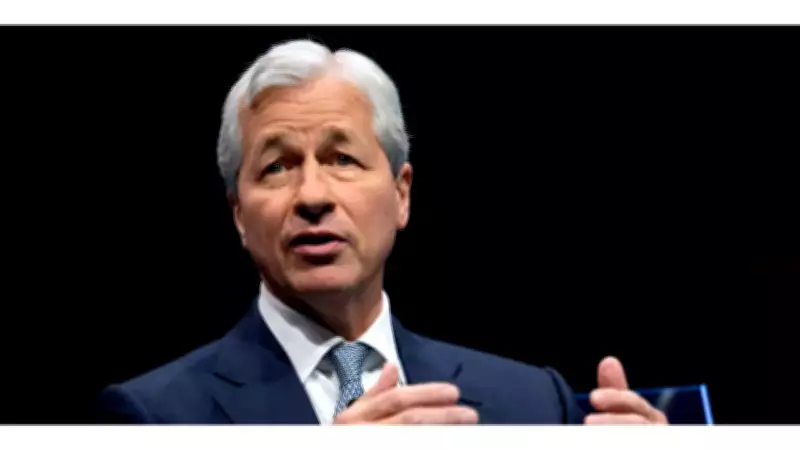
JPMorgan CEO Jamie Dimon Details AI's 600+ Use Cases in Banking Operations
Jamie Dimon, the Chief Executive Officer of America's largest bank JPMorgan Chase, has provided comprehensive insights into how artificial intelligence is being deployed across the financial institution's extensive operations. Speaking recently to Bloomberg, Dimon revealed that AI technology now supports hundreds of different functions within the banking giant, fundamentally transforming how business is conducted.
AI Integration Across Banking Functions
Dimon detailed that JPMorgan is actively utilizing artificial intelligence in numerous critical areas of banking operations. The technology is being applied to risk management systems, sophisticated fraud detection mechanisms, underwriting processes, negotiation strategies, automated note-taking, idea generation platforms, and comprehensive error reporting systems. "We use AI for risk, fraud, bargaining, underwriting, note taking, idea generation, error reporting, reducing errors, and, you know, there are 600 more use cases, 50 of which I would put in the important category," Dimon explained during the interview.
The banking executive emphasized that the primary objective behind this widespread AI adoption is to enhance operational efficiency across all departments. "It is no different than the past. And if we could do it, we could use it, do some better, faster, quicker, cheaper, higher staff and the customer, We are gonna do it. And so AI is the new front of the wonderful stuff," Dimon stated, highlighting the bank's commitment to technological advancement.

Broader Societal Impact of Artificial Intelligence
Beyond banking applications, Jamie Dimon addressed the potentially transformative impact of artificial intelligence on society at large. He suggested that over the coming decades, AI technology could fundamentally alter how people work and structure their lives. "And I think for society, you got to remember, people talking about the negatives, you know, my guess is, I really do mean it, may be in 30 or 40 years... are going to be working four days a week, maybe three and a half days a week. You live 120, a lot of cancers have been cured, a lot of disease will be cured," Dimon predicted, envisioning a future where AI-driven productivity enables shorter workweeks and significant medical advancements.
Preparing for Labor Market Disruption
Dimon has recently urged both businesses and government entities to begin preparing for the labor market disruptions that artificial intelligence implementation might trigger. According to a Fortune report, the JPMorgan CEO cautioned that society should not wait until significant job losses materialize before addressing potential workforce challenges. "I'm not predicting [it] can be a problem. I'm simply saying now's the time to start thinking about what you do if it does," Dimon warned, advocating for proactive planning.
The banking leader further emphasized that JPMorgan is fully embracing AI transformation rather than resisting technological change. The institution has already deployed a large language model that is utilized by approximately 150,000 employees on a weekly basis. Dimon acknowledged that productivity gains achieved through AI implementation could potentially result in the bank employing fewer people over the next five-year period, reflecting the complex balance between technological advancement and workforce considerations.
Strategic Implementation and Future Outlook
JPMorgan's approach to artificial intelligence represents a strategic integration of cutting-edge technology within traditional banking frameworks. The bank's deployment of AI across hundreds of use cases demonstrates:

- Comprehensive risk assessment and management enhancement
- Advanced fraud detection capabilities
- Streamlined underwriting and negotiation processes
- Automated documentation and idea generation systems
- Proactive error reduction and reporting mechanisms
As artificial intelligence continues to evolve, financial institutions like JPMorgan are positioning themselves at the forefront of this technological revolution. The bank's extensive AI implementation serves as both a practical business strategy and a case study for how traditional industries can adapt to emerging technologies while considering broader societal implications.





