

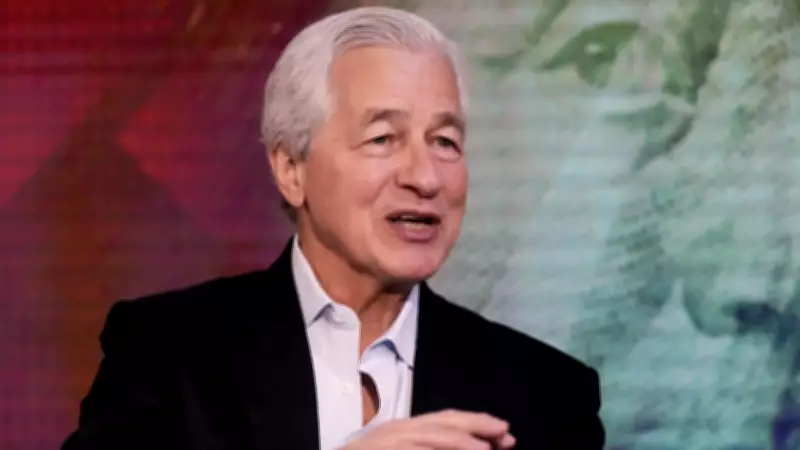
JPMorgan CEO Jamie Dimon Signals Extended Leadership Tenure Amid Strong Performance Outlook
In a significant announcement that provides fresh clarity on one of Wall Street's most closely watched leadership transitions, JPMorgan Chase CEO Jamie Dimon has indicated he plans to remain at the helm of the largest U.S. bank for "a few years" as chief executive. Speaking at the bank's Investor Day event in New York, Dimon offered his most direct timeline yet regarding succession planning, stating he does not intend to step down immediately and may continue with the firm in a different capacity after eventually relinquishing the CEO role.
Leadership Continuity and Succession Planning
"I'm here for a few years as CEO, and maybe a few after that, as executive chairman, pending whatever the board wants to do," Dimon told investors, addressing long-running speculation about his departure timeline. His remarks come amid persistent investor questions about succession at JPMorgan, where Dimon has led the institution for two transformative decades. Under his leadership, the bank has ascended to become Wall Street's largest by both assets and market value, with a market capitalization exceeding $800 billion—surpassing the combined value of rivals Bank of America and Citigroup.
The JPMorgan board has maintained focus on developing a deep bench of executive talent capable of eventually assuming leadership responsibilities. Dimon's comments represent the clearest indication yet of his personal timeline, providing stability and continuity for the banking giant during a period of economic uncertainty and technological transformation.

Strong Investment Banking and Trading Performance Projected
Alongside leadership commentary, JPMorgan delivered an optimistic outlook for its core business operations. The bank expects investment banking fees and markets revenue to post strong growth in the first quarter, alleviating concerns that recent equity market turbulence might disrupt dealmaking activity. Investor worries had intensified following a sharp sell-off in software and technology stocks—driven by artificial intelligence disruption fears—which raised questions about mergers and acquisitions and IPO pipelines for high-growth companies.
JPMorgan executives provided specific guidance to counter these concerns:
- Investment banking fees are expected to rise by a mid-teens percentage, potentially reaching the high teens in the quarter
- Markets revenue is also projected to increase by a mid-teens percentage, supported by elevated trading activity during volatile market conditions
"We started the year strong. Pipelines were very good, and it was broad based," said Doug Petno, Co-CEO of JPMorgan's commercial and investment bank. "The one thing I will say in M&A is that there are powerful strategic drivers. I think a lot of these transactions will survive the volatility and carry on."
Technology Investment and AI Initiatives
JPMorgan maintained its forecast for annual adjusted expenses unchanged at $105 billion as the institution continues substantial investments in technology and artificial intelligence initiatives. The bank expects to spend $19.8 billion on technology in 2026, representing a 10% increase from the previous year.
"We continue to invest in AI and we're seeing tangible benefits in multiple areas," Chief Financial Officer Jeremy Barnum explained. "Machine learning and analytical AI have been driving improvements in revenue."
UBS analyst Erika Najarian noted that markets increasingly view large money-center banks as relative beneficiaries of AI disruption, with investors keen to understand both productivity gains and revenue opportunities stemming from the technology.
Consumer Resilience and Financial Performance
JPMorgan executives reported that U.S. consumers remain resilient despite elevated interest rates and economic uncertainty, helping sustain spending and credit quality. Marianne Lake, a senior JPMorgan executive, stated the bank had not observed deterioration among lower-income consumers and that "everything is solid" on the consumer front.

The lender is targeting a return on tangible common equity of 17%, a key profitability metric measuring how efficiently tangible equity generates profits. This comes after JPMorgan reported fourth-quarter earnings that exceeded analysts' estimates as volatile markets boosted trading income. The bank surpassed Wall Street profit forecasts in all four quarters of last year, according to LSEG-compiled data.
JPMorgan shares demonstrated strong performance with a 34.4% gain in 2025, outperforming both large-cap U.S. banking peers and the broader equity market. The stock traded marginally higher in post-market activity following the Investor Day announcements.





