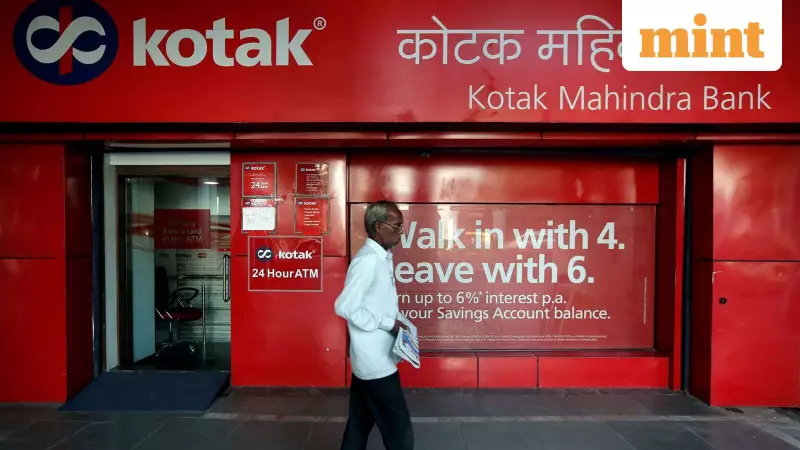
Kotak Mahindra Bank's Q3 Performance: Margin Pressure Meets Growth Resilience
Kotak Mahindra Bank's December quarter (Q3FY26) earnings have presented a mixed picture for investors, with profitability metrics facing headwinds even as fundamental growth indicators show strength. The bank's profit after tax (PAT) registered a modest 4% year-on-year increase to ₹3,446 crore, a figure that fell short of market expectations despite showing positive movement.
Operating Expenses and Labour Code Impact
The bank's operating expenses grew by 8% during the quarter, primarily driven by a one-time impact from the implementation of new labour codes. Excluding this exceptional item, operating expense growth would have been a more manageable 6%, reflecting the bank's ongoing focus on cost discipline and operational efficiency. This expense pressure contributed significantly to the tempered profit growth, overshadowing otherwise solid operational performance.
Deposit and Advance Growth Momentum
In a highly competitive deposit environment, Kotak Mahindra Bank has demonstrated remarkable resilience. The bank achieved 15% year-on-year growth in deposits, closely tracking its 16% growth in advances. This balanced expansion has allowed the bank to maintain a healthy credit-deposit ratio of 88.6%, indicating prudent liquidity management.

Particularly noteworthy is the performance in savings deposits, including sweep deposits (ActivMoney), which kept pace with the bank's aggressive consumer lending push during the festival season. This deposit stability provides a solid foundation for future margin expansion as repricing opportunities emerge.
Asset Quality Shows Steady Improvement
The bank's asset quality metrics continued their positive trajectory, reflecting industry-wide trends. Gross non-performing assets (NPAs) declined by 9 basis points quarter-on-quarter to 1.30%, while net NPAs edged down by one basis point to 0.31%. Credit costs dropped 16 basis points to 0.63%, suggesting the stress cycle may be bottoming out.
Management remains optimistic about further improvement in credit costs as collection efficiencies strengthen and existing stress subsides. The stability in previously troubled credit card and retail microcredit portfolios adds to this positive outlook.
Net Interest Margin Challenges
The bank's net interest margin (NIM) remained flat sequentially at 4.54%, constrained by an unfavorable loan mix shifting away from unsecured loans and the deployment of IPO-related funds at lower yields. Compared to the year-ago period's 4.93%, this represents significant compression that impacted net interest income growth, which increased just 5% year-on-year to ₹7,565 crore.
Future Growth Drivers and Strategic Initiatives
Despite current margin pressures, several factors point toward potential expansion ahead. The 25 basis point repo rate cut implemented in December will fully reflect in the March quarter, while continued deposit repricing and migration toward ActivMoney products should provide additional tailwinds.
The management maintains its commitment to long-term credit growth guidance of 1.5-2 times nominal GDP growth, supported by:
- Rising urban housing demand
- Calibrated rebuilding of the credit card portfolio
- Working capital lending to mid-market corporates
Additionally, the bank's board has approved plans to strengthen balance sheet resilience through private placement of non-convertible debentures worth ₹15,000 crore, scheduled for FY27.
Market Performance and Valuation Considerations
The stock has corrected over 2% in FY26 so far, significantly underperforming the private bank index's 9% gain. Current valuation at 2.9 times FY27 book value estimates, combined with ongoing monitoring requirements for margin trends and stress in construction equipment and retail commercial vehicle segments, gives investors reason for caution.
Market sentiment also faces potential overhang from speculation about Kotak's possible bid for IDBI Bank, adding another layer of complexity to the investment thesis.

While immediate profitability metrics show pressure from margin compression and one-time expenses, Kotak Mahindra Bank's fundamental growth story remains intact. The combination of robust deposit accretion, improving asset quality, and strategic positioning for future expansion suggests the bank may be better positioned than current stock performance indicates.