

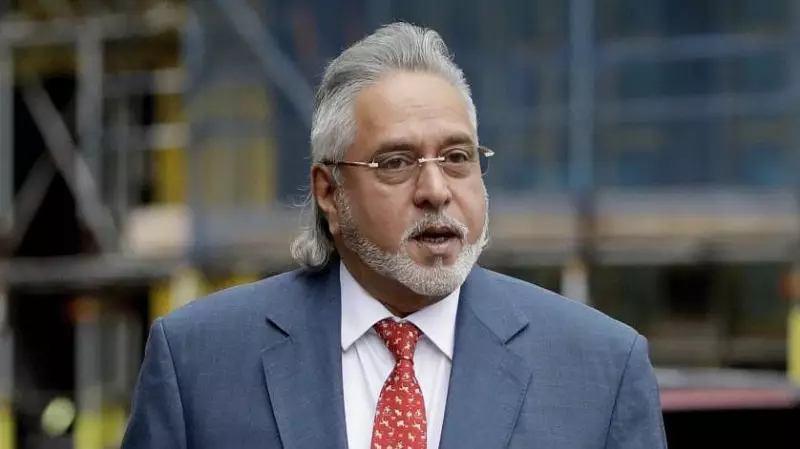
Fugitive liquor tycoon Vijay Mallya has launched a direct challenge to the Indian government, specifically questioning a statement made by Finance Minister Nirmala Sitharaman regarding the recovery of funds from him. The controversy centers on the amount the government claims to have recovered in the long-running Kingfisher Airlines loan default case.
Mallya's Public Challenge to the Finance Minister
In a public post made on Friday, Vijay Mallya took to a social media platform to demand clarity and proof. He directly referenced Finance Minister Nirmala Sitharaman's recent statement in a media interview. During that interview, Sitharaman had stated that the government had recovered a sum of Rs 1,692 crore from Vijay Mallya.
Mallya, who is currently in the United Kingdom and fighting extradition to India, contested this figure. He asserted that the Enforcement Directorate (ED) had publicly informed a special Prevention of Money Laundering Act (PMLA) court about the recovery amount. According to Mallya's post, the ED's submission to the court was that Rs 13,109.17 crore had been recovered by selling assets attached under the PMLA. He emphasized that this recovery was credited to the Public Sector Banks that had suffered losses due to the Kingfisher Airlines loan default.

The Core of the Dispute: Conflicting Recovery Figures
The heart of this new controversy lies in the discrepancy between the two stated figures. On one side is the Finance Minister's claim of Rs 1,692 crore recovered "from Mallya." On the other is the much larger figure of over Rs 13,000 crore that Mallya cites from an ED court submission, which represents the value of assets sold.
Mallya's statement seeks to highlight this difference. He ended his post with pointed questions directed at the Finance Minister: "Why is the FM presenting a surprisingly low figure? Will the FM publicly clarify and confirm the actual amount recovered?" This public questioning is seen as an attempt to force transparency and potentially challenge the narrative around the success of the recovery process in his case.
Background and Legal Proceedings
Vijay Mallya is at the center of one of India's most high-profile financial fraud cases. He is accused of defaulting on loans totaling over Rs 9,000 crore that were taken by the now-defunct Kingfisher Airlines from a consortium of banks, led by the State Bank of India. The Indian government has been pursuing his extradition from the UK since 2018.
The recovery process has involved multiple agencies, including the ED and the Central Bureau of Investigation (CBI). Assets belonging to Mallya and his companies, both in India and abroad, have been attached and sold under the PMLA. The proceeds from these sales are meant to be returned to the banks to partially cover the outstanding debt.
Mallya has consistently maintained that he is not an absconder and has offered to repay the banks. However, the Indian authorities have proceeded with legal action, resulting in him being declared a fugitive economic offender.
This latest exchange adds a new layer of public debate to the complex legal and financial saga. It shifts some focus from the legal extradition battle to the specifics of the financial recovery claimed by the government. The ball is now in the court of the Finance Ministry to either provide a detailed breakdown that reconciles the two figures or to reiterate its stance, potentially leading to further public sparring.
The development is closely watched by financial and legal circles, as it touches upon issues of accountability, transparency in government statements, and the final outcome of high-value debt recovery processes.






