

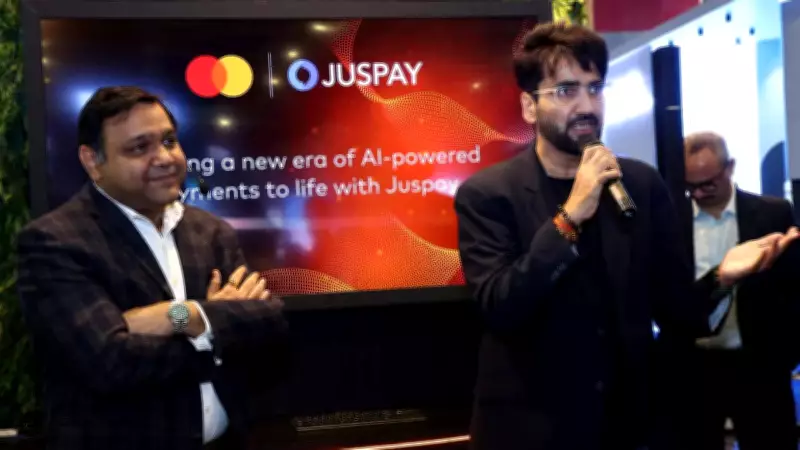
Mastercard Pioneers AI-Driven Shopping Revolution at India AI Impact Summit 2026
Imagine instructing an artificial intelligence chatbot to locate the optimal deal for a new belt, verify the safety of the website, and finalize the purchase—all without ever launching a shopping application or manually entering payment details. This groundbreaking vision became a reality as Mastercard showcased India's inaugural 'fully authenticated agentic commerce transaction' at the prestigious India AI Impact Summit 2026.
What Exactly Is Agentic Commerce?
For the typical consumer, digital shopping traditionally involves a series of manual steps: opening an app, searching for products, and navigating to a payment gateway. Agentic Commerce fundamentally automates this entire cumbersome process, delegating the shopping and payment tasks to a secure AI agent operating within a regulated framework.
"Agentic commerce is not really one piece of technology; it is a culmination of multiple things coming together," explained Gautam Aggarwal, President of India & South Asia at Mastercard, in an interview with The Times of India. "So the way I will probably explain it to a common man is today if you are doing any kind of e-commerce digital commerce transaction: you go to an app, you probably have a credential where you've created a username password for yourself, you go through the journey of discovery of what you want to buy, you type in a search. And then you’ll end up going through a journey of payment. What agentic commerce has enabled is bringing all of this in a way which is automated."

The Robust Ecosystem Behind the Demonstration
Mastercard leveraged its extensive network of Indian banking and payment partners to execute this pioneering demo. Transactions were processed using Mastercard cards issued by prominent banks such as Axis Bank and RBL Bank. Leading payment aggregators including Razorpay, Cashfree, Juspay, and PayU provided the essential infrastructure, while the AI agent successfully interacted with major merchants like Swiggy, Zepto, Vi (Vodafone Idea), and Tira.
Addressing Security Concerns in AI-Powered Payments
Naturally, entrusting an AI with "permission to pay" raises significant security apprehensions among consumers wary of financial risks. Mastercard has emphatically addressed these concerns by ensuring the transaction utilizes the same robust security features already familiar to Indian users, such as tokenization and passkeys.
"We have built in a lot of security in the way we allow for payments to happen. The first phase of that was, of course, through tokenization and then now with passkeys. In the automated requests, there is enough safety and security built into payment systems, both by regulation and by innovation that companies like ours have done," Aggarwal elaborated.
Overcoming Adoption Challenges: Education Over Technology
When discussing the potential hurdles to widespread adoption in India, Aggarwal highlighted that scalability and technological limitations are not the primary issues. Instead, the core challenge lies in consumer education. "The challenge always remains is generally what we see is the lack of education. We have to keep educating consumers," he stated, underscoring the need for awareness campaigns to build trust in this innovative system.
Future Expansion Across Asia Pacific
Looking ahead, Mastercard plans to extend this agentic commerce framework throughout the Asia Pacific region. The company is actively collaborating with Large Language Model (LLM) providers to ensure that as Indians increasingly engage with AI in daily conversations, they can also confidently trust these intelligent agents with their financial transactions, paving the way for a seamless, automated shopping future.






