

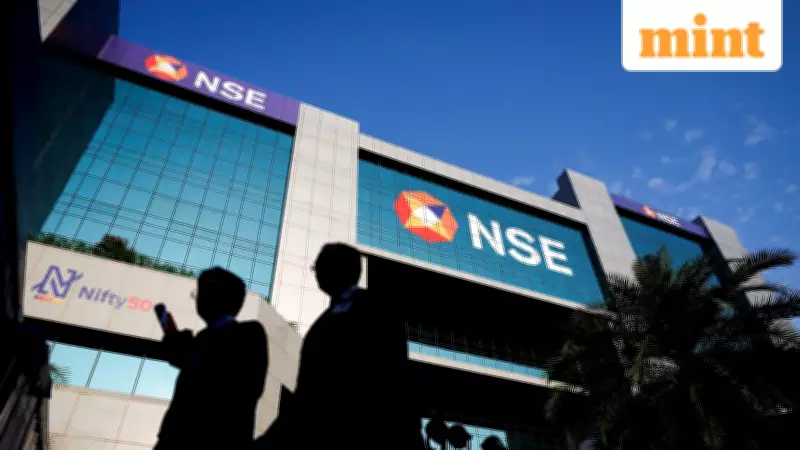
National Stock Exchange Formally Approves Landmark Initial Public Offering
The National Stock Exchange of India Ltd (NSE) has taken a decisive step toward its historic market debut by formally approving its initial public offering (IPO). This move clears the path for the country's largest stock exchange to finally list on the bourses after years of anticipation and delay.
IPO Structure and Stake Sale Details
In a regulatory filing submitted on Friday, the company confirmed that the offer will involve a stake sale by existing shareholders. The proposed IPO will feature shares with a face value of Re 1 each. According to statements made earlier this month by chief executive officer Ashishkumar Chauhan, the exchange might see a 4-4.5% stake dilution, a process that could take up to eight months to complete.
The exchange has also approved the formation of a dedicated IPO committee to oversee and execute the entire listing process. For companies operating without promoters, such a panel is a mandatory requirement under regulatory guidelines.

Composition of the IPO Oversight Committee
The committee will be chaired by Tablesh Pandey, the former managing director of Life Insurance Corporation (LIC), who currently serves as a non-independent director on NSE's board. Pandey, who retired from LIC effective 31 May 2025, also holds a directorship at ITC Hotels Ltd. Notably, LIC remains the single-largest shareholder in NSE, holding a 10.7% stake as of the end of December.
Other key members of the committee include NSE's newly appointed chairperson Srinivas Injeti, public interest directors Mamata Biswal, Abhilasha Kumari, and G Sivakumar, along with CEO Ashishkumar Chauhan.
Regulatory Hurdles and Legal Challenges
NSE recently obtained a crucial no-objection certificate from the market regulator, Securities and Exchange Board of India (Sebi), allowing it to proceed with the IPO. The listing process had previously encountered significant obstacles due to the dark fibre case, which involved allegations that certain high-frequency traders received preferential access to the exchange's co-location servers between 2010 and 2014.
These private communication lines allegedly enabled faster order execution for select traders. In April 2019, Sebi directed the exchange to disgorge ₹62.58 crore in purported unlawful gains and imposed prohibitions on several senior officials from holding market-related positions.
In a subsequent development in 2022, Sebi levied a ₹7 crore penalty on the exchange, which was later overturned by the Securities Appellate Tribunal (SAT). The regulator has since appealed this tribunal ruling before the Supreme Court, with filings submitted in September 2023 and again in February 2024.
New Coal Exchange Subsidiary Announced
In a parallel strategic move, the exchange approved the incorporation of a new coal exchange subsidiary on Friday. NSE will hold a 60% stake in this venture, with the remaining 40% potentially distributed among other shareholders.
The subsidiary aims to introduce transparency, efficiency, and standardized price discovery to India's coal market, which currently operates through fragmented and largely opaque channels. To ensure regulatory compliance, NSE will invest ₹100 crore as minimum capital in the coal exchange.
Strong Financial Performance in December Quarter
The exchange reported robust financial results for the December quarter, with profit rising 15% sequentially to ₹2,409 crore. Revenue from operations increased 7% to ₹3,925 crore during the same period.
NSE's operating earnings before interest, taxes, depreciation, and amortization (Ebitda) nearly doubled to ₹2,851 crore, while its margin against the topline expanded significantly to 73% from 40% in the September quarter. This margin improvement was primarily driven by a reduction in other expenses, which fell to ₹542 crore from ₹1,811 crore due to a one-time provisioning in the previous quarter.






