

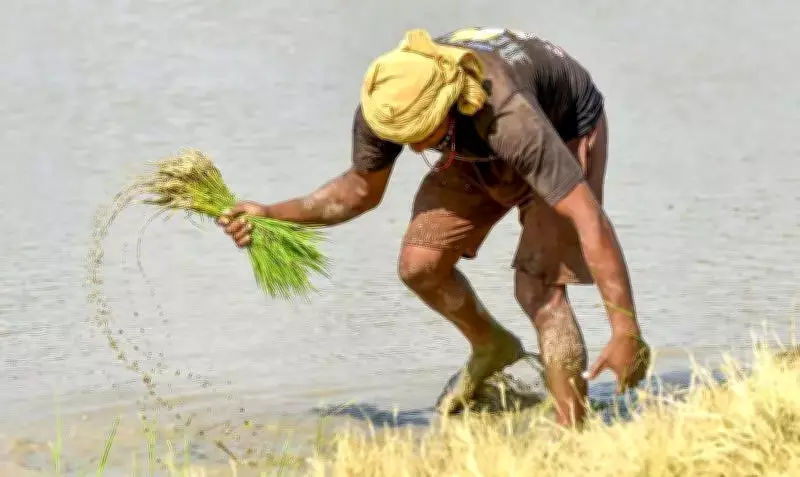
Recent rainfall in parts of Punjab may have brought relief to the agriculture sector by temporarily calming anxieties over El Niño and a projected weak monsoon, but long-term summer concerns remain high. While the state government has been motivating farmers to switch from tube wells to canal-based irrigation, a subsequent lack of rainfall could make anxious farmers indulge in increased pumping from already strained water tables to sustain the state's 18-million-tonne paddy crop. The premium basmati export sector is also vulnerable, as any dry patches or high temperatures during the flowering stage could still hurt grain quality and spark pest outbreaks.
The threat of the El Niño cycle has come during the ongoing paddy season. To address groundwater concerns, the state government executed its region-wise staggered transplantation schedule throughout June, starting with south-western districts on June 1 and rolling through the central belts by June 9. However, unlike the rain-fed districts directly prioritised on the Centre's high-alert dryland crisis list, Punjab's agriculture is largely dependent on tube wells and an extensive canal irrigation network. As a result, the state does not face immediate, catastrophic crop failure from a weak monsoon, but rather a severe escalation in resource strain and production costs.
Expert Insights on Water Management
Ranjit Singh Jossan, vice-president of the Basmati Rice Millers and Exporters Association, said, "A sharp decline in rainfall could increase pressure on groundwater resources, raise electricity consumption, and significantly push up the cost of agricultural production. Continuous monitoring remains essential, as a substantial monsoon deficit could reduce paddy arrivals, affecting not only farmers but also rice mills, exports, rural employment, and the entire food supply chain. India currently has adequate buffer stocks, leaving no reason for panic. However, timely planning and efficient water management can substantially mitigate potential losses."

On the ground, these water management challenges have been visible in the "tail-end" canal districts like Fazilka and Mansa. Despite the state's expanded canal network, some remote villages face localised water shortages, requiring farmers to run deep submersible pumps to sustain their fields. This additional pumping increases input costs for farmers and places a heavier load on the state power grid. Ultimately, the current El Niño cycle will test the capacity of Punjab's new irrigation infrastructure to support vital food production while managing the state's long-term groundwater challenges.
What Is El Niño?
El Niño occurs when weakened atmospheric trade winds in the equatorial Pacific Ocean allow a massive pool of warm water to slosh eastward towards South America. This shifts the global jet stream and traditionally weakens the Indian southwest monsoon, with the IMD projecting a highly concerning 35% probability of a deficient monsoon season, and some international climate experts warning of a severe "Super El Niño" later this year.
While the Union Agriculture Ministry's primary weekly crisis list focuses on entirely rain-fed, dryland agricultural zones, vulnerability indices built by the ICAR-National Innovations on Climate Resilient Agriculture (NICRA) identify localised climate risks elsewhere across the country. In Punjab, NICRA specifically flags northern and central districts like Gurdaspur, Jalandhar and Moga, alongside southern pockets like Bathinda, Firozpur, Muktsar and Mansa, as highly vulnerable to changing heat stress patterns and severe water table fluctuations.






