

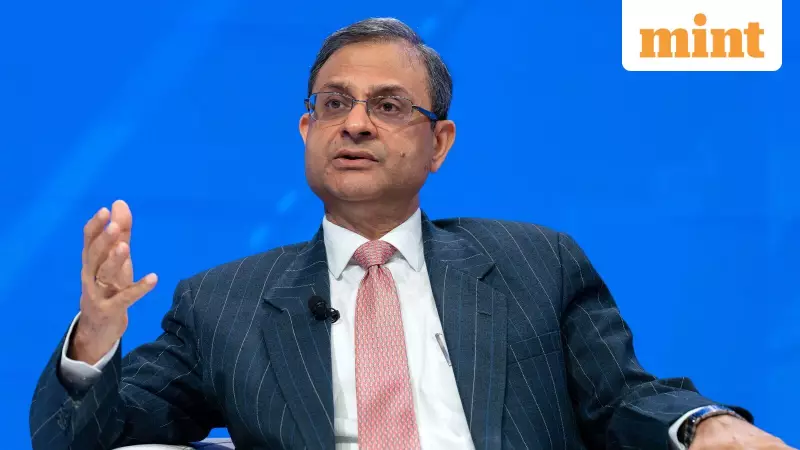
Reserve Bank of India (RBI) Governor Sanjay Malhotra has issued a clarion call for a unified approach to tackle the escalating menace of digital fraud in the country's financial ecosystem. Speaking on Friday, Malhotra emphasized that banks, non-banking financial companies (NBFCs), and all RBI-regulated entities must collaborate to safeguard customers and preserve systemic trust.
Collective Defence is Key to Curbing Frauds
While acknowledging that individual institutions must fortify their internal security tools and processes, the Governor underscored that collective efforts are indispensable. He advocated for building shared analytics and systems capable of early and pre-emptive detection of mule accounts and suspicious transaction patterns. This collaborative framework is deemed critical for a robust defence mechanism.
The urgency is reflected in the latest data. According to the RBI's annual report, the value of digital payment frauds reported by banks dropped significantly to ₹520 crore in the financial year 2024-25 (FY25), down from ₹1,457 crore in FY24. The number of fraudulent transactions also fell to 13,516 from 29,082 in the previous year.

AI-Powered Vigilance Shows Strong Results
A major focus of this collaborative fight is on identifying mule accounts – bank accounts used as temporary conduits for illicit funds, often showing sudden bursts of low-value, high-volume transactions. The RBI's innovation arm has developed an artificial intelligence (AI) based solution named MuleHunter.ai to combat this.
Malhotra highlighted the tool's effectiveness, noting it was showing a strong success rate. As per a November PTI report, this AI-enabled system is detecting approximately 20,000 potential mule accounts every month, providing a powerful technological shield for the banking network.
"For all of us, protecting customers’ interest is not just a priority – it has to become the cornerstone of a sustainable and resilient financial system," Malhotra stated.
Shift Towards Tech-Driven, Consumer-Centric Supervision
The Governor also outlined the central bank's evolving supervisory approach. The RBI intends to move supervision more off-site than on-site, and make it increasingly near real-time rather than periodic. This transformation will involve deeper use of Supervisory Technology (SupTech) and AI-enabled tools, while keeping human judgment and accountability central.
He cautioned that while digitalization boosts inclusion and convenience, it can also lead to opaque pricing and weak disclosures without proper safeguards. "Our aim should be to ensure that digitalization and innovations are aligned with fair outcomes for consumers," he added.
On enforcement, Malhotra clarified that the regulator's actions are generally corrective, not punitive. The intent is to course-correct by signalling concerns and setting clear standards. Data supports this nuanced approach: a Mint report from December 30 indicated that while enforcement actions against banks rose to 38 in 2025 from 30 in 2024, the median penalty amount levied was nearly half that of the preceding two years.






