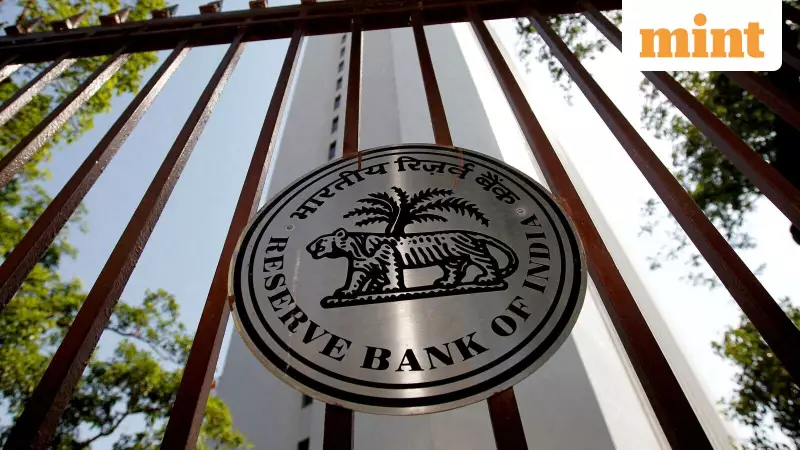
In a move that caught many market watchers off guard, the Reserve Bank of India's Monetary Policy Committee (MPC) announced a significant reduction in the key policy rate. The committee, in its review on December 5, 2025, unanimously decided to cut the repo rate by 25 basis points, bringing it down from 5.5%.
A Unanimous Decision Amidst Market Divisions
The decision was particularly striking because it was unanimous, coming at a time when economists were deeply split on the possibility of a cut. While plummeting inflation to a mere 0.25% in October 2025 built a strong case for easing, the rupee's weakness—having touched a record low beyond 90 against the US dollar—posed a serious counter-argument. The MPC ultimately prioritized the domestic growth-inflation dynamics, delivering a cut that signals strong confidence in India's economic stability.
Alongside the rate action, the central bank presented a dramatically upgraded macroeconomic outlook. The RBI slashed its Consumer Price Index (CPI) inflation forecast for the fiscal year 2025–26 to 2%, a sharp revision from the 2.6% projected in October and just half of the 4% estimate made in April.

The Goldilocks Scenario: High Growth, Low Inflation
On the growth front, the news was even more buoyant. The RBI raised its Gross Domestic Product (GDP) growth estimate for 2025–26 to 7.3%. This marks a substantial increase from the 6.8% forecast in October and the 6.5% projected in the April review. This combination of robust growth and benign inflation creates what analysts term a 'Goldilocks' scenario for the Indian economy—neither too hot nor too cold, but just right for sustainable expansion.
Massive Liquidity Infusion to Speed Up Transmission
Recognizing that past rate cuts have not been fully passed on to borrowers, the RBI announced a major liquidity injection. It will conduct Open Market Operations (OMOs) to purchase government securities worth ₹1 lakh crore and undertake USD-INR buy-sell swaps adding roughly ₹45,000 crore. This combined infusion of nearly ₹1.5 lakh crore in December 2025 is designed to ensure the banking system is flush with funds, making it easier for banks to lower lending rates effectively.
Prior to this policy, the RBI had reduced the repo rate by 1 percentage point (100 bps). However, the transmission was uneven: fresh deposit rates fell by 105 basis points, while lending rates on new loans eased by only 69 basis points. The new liquidity measures aim to bridge this gap.
What the Rate Cut Means for You
For Borrowers: This is positive news. If you have a floating-rate loan like a home loan or personal loan, your Equated Monthly Installment (EMI) is likely to become cheaper. The timing and extent depend on your bank's reset period and the external benchmark (like the repo rate) to which your loan is linked. Fixed-rate loan borrowers will not see an immediate benefit.
For Investors: The equity market typically cheers lower interest rates as they reduce the cost of capital and can drive more investment into stocks. For the bond market, the rate cut is positive as bond prices move inversely to yields; existing bond and debt fund holdings will see price appreciation. However, analysts caution that the rally may be limited as markets are forward-looking and this could be near the end of the current rate-cut cycle.
A Tax-Efficient Investment Hack: For those looking to invest in debt instruments, note that debt mutual funds are taxed at your income slab rate. As an alternative, consider a Debt-oriented Fund of Funds (FoF). If held for over two years, the gains are taxed at a concessional rate of 12.5% plus surcharge and cess, which can be significantly more efficient for investors in higher tax brackets.
For Businesses: Cheaper credit acts as a catalyst for corporate investment. Coupled with the upgraded GDP growth forecast of 7.3%, businesses are now better positioned to fund expansion plans, potentially boosting job creation and economic activity further.
The RBI's decisive action, supported by upgraded growth projections and complementary liquidity measures, paints an optimistic picture for the Indian economy as it heads into the new year.