

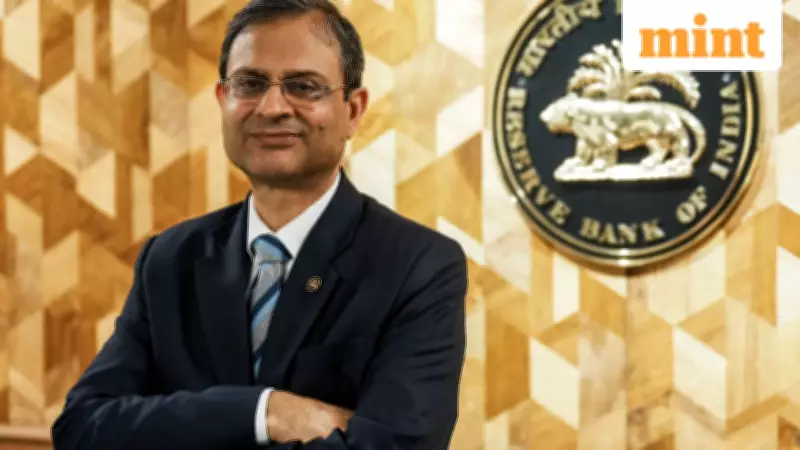
RBI Concludes Rate Cutting Cycle, Banking Liquidity Emerges as Primary Challenge
The Reserve Bank of India's Monetary Policy Committee is poised to conclude its rate-cutting cycle after implementing reductions totaling 125 basis points, shifting its primary focus from the cost of funds to the critical issue of banking system liquidity management.
Growth Momentum and Inflation Dynamics
India's economic momentum has strengthened significantly, with nowcasting models indicating growth accelerated to approximately 7% during the December quarter. This represents a 30 basis point improvement over the September quarter estimate, driven by firming domestic demand across multiple sectors including vehicle sales, industrial production, and credit expansion.
While goods exports face challenges from US tariff policies, free-trade agreements and a relatively weaker rupee position should provide some support to exporter earnings. The government's fiscal approach, characterized by measured consolidation, combined with robust central and state capital expenditure, is expected to maintain stable growth in the medium term.

Inflation presents a more complex picture, rebounding from unusually subdued levels as favorable base effects diminish. The December quarter saw inflation average 30 basis points above the RBI's projections, though January figures likely trended around 2.5%, aligning with central bank expectations.
The Liquidity Conundrum
Despite the substantial easing cycle, monetary transmission remains constrained by persistently tight banking liquidity conditions. The benchmark 10-year bond yield currently exceeds levels observed at the beginning of the rate-cutting cycle, while the weighted average call rate has consistently averaged above the repo rate since the last MPC meeting.
Certificate-of-deposit rates have risen in response to money-market tightness, creating upward pressure across the interest rate spectrum. This liquidity crunch emerges despite adequate base-money creation, with cash reserve ratio-adjusted base money growth maintaining approximately 9% year-on-year expansion, roughly matching nominal GDP growth.
Three Key Liquidity Drains
Currency in circulation has surged unexpectedly to 10.7% year-on-year, reaching its highest level since early 2022. This currency leakage, which began accelerating in mid-2024, correlates with improving rural demand and the wave of state elections in 2025, creating significant liquidity drainage that requires replenishment.
Forex intervention has further tightened domestic liquidity conditions. As the rupee experienced sharp depreciation, the RBI's substantial dollar sales to stabilize the currency have tightened onshore liquidity. Given ongoing depreciation risks from corporate hedging demand and equity outflows, the central bank will need to sterilize future interventions through durable liquidity injections.
Credit-deposit dynamics show increasing pressure as credit growth improves while deposit expansion lags. The rising incremental credit-deposit ratio creates persistent upward pressure on interest rates within a constrained liquidity environment, forcing banks to bid up deposit rates or seek costlier funding alternatives.
Policy Implications and Forward Outlook
The growth-inflation outlook remains sufficiently comfortable for the forward-looking MPC to pause further rate reductions while maintaining a neutral policy stance. Communication is expected to remain growth-supportive while emphasizing readiness to respond to downside risks, particularly those linked to US tariff policies.
The more immediate challenge involves ensuring effective transmission of past rate cuts through additional liquidity provision and anchoring market rates in alignment with the policy rate and stance. While the RBI has initiated both durable and temporary liquidity infusion measures, further action may prove necessary to maintain monetary conditions supportive of growth.
With GDP growth for FY27 projected in the 6.5-7% range and headline inflation expected to cross 4% in the second half of 2026, the monetary policy environment requires careful navigation between supporting economic momentum and managing price stability objectives.






