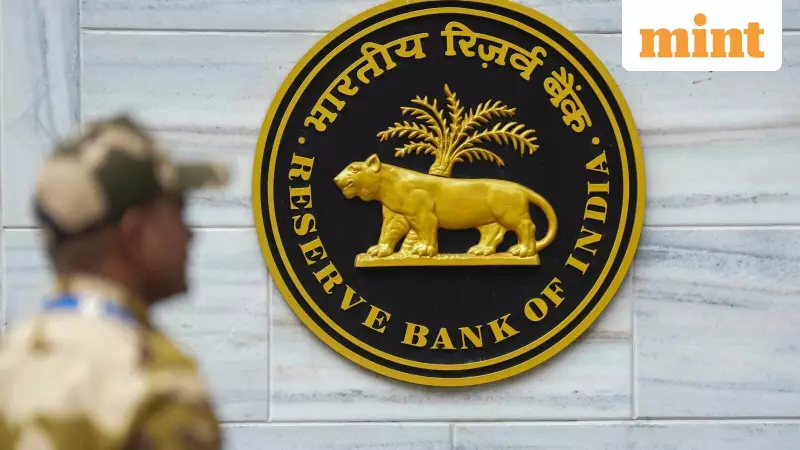
The Reserve Bank of India (RBI) commenced the final leg of its monetary policy deliberations on Wednesday, December 3, with all eyes on whether the central bank will pivot towards lowering interest rates. The three-day meeting of the Monetary Policy Committee (MPC) is set against a backdrop of cooling inflation and robust economic growth, creating a complex puzzle for policymakers.
To Cut or Not to Cut: The RBI's Delicate Balancing Act
In its previous review in October, the MPC opted for stability, maintaining the repo rate at 5.5% for the fourth time in a row. RBI Governor Sanjay Malhotra had pointed to a significant cooling of inflation as the rationale for the prolonged pause. Since then, with price pressures easing further and growth momentum holding strong, speculation has intensified on whether the December meeting would mark the start of a new rate-cutting cycle.
This year, the MPC has already reduced the key policy rate by a cumulative 100 basis points, bringing it down from 6.5% to the current 5.5%, before hitting the pause button in August.

Market Consensus: A Cautious Pause Prevails
Despite favorable conditions, most market analysts believe the RBI will refrain from announcing a rate cut in its policy statement due on Friday, December 5. The primary reason is the economy's current resilience.
Sugandha Sachdeva, Founder of SS WealthStreet, highlighted that strong domestic growth, buoyant consumption, and improving sentiment indicate the economy is on firm footing. "Despite having space to cut rates, the RBI is not under any immediate pressure to deliver additional easing at this meeting," she stated. Sachdeva cautioned that the surprisingly strong second-quarter GDP figures might deter the central bank from acting prematurely, as easing too soon could overstimulate an already vigorous economy.
Echoing this view, Yes Bank Ecologue in a research note said, "We expect the RBI to stay on a pause in December and keep rates and stance unchanged. Space for incremental rate cuts by the RBI is limited." However, Sachdeva added that the central bank is likely to keep the door open for a possible 25 basis points cut in the last quarter of this fiscal year (Q4 FY26) if macroeconomic conditions justify it.
Inflation and Growth: The Twin Pillars of Policy
The decision to hold rates is heavily influenced by the evolving inflation and growth dynamics. Headline CPI inflation plummeted to a record low of 0.25% in October, the lowest year-on-year reading in the current CPI series and well under the RBI's 4% medium-term target.
Sachdeva anticipates the RBI will revise its inflation forecast downward, with CPI likely to average around 2% for FY26 and a modest 3.9% for FY27, comfortably within its target band.
On the growth front, the economy surprised on the upside with GDP expanding by 8.2% in Q2 of FY26. Early indicators for October suggest the momentum continued, supported by GST reductions, previous monetary easing, and festive demand. However, some recent data points like the Manufacturing PMI have shown signs of softening.
Yes Bank Ecologue noted that some slowdown is expected as lower nominal GDP impacts tax collections and government expenditures. They estimate H2 FY26 growth at 6.7% (compared to 8.0% in H1) and project full-year FY26 growth at 7.4%. They expect the RBI to upgrade its GDP forecast to 7.0-7.2% from the current 6.8% estimate.
The report also flagged potential drags from a likely weakening in central government capital expenditure after H1 front-loading, a tapering of the GST-led consumption boost, and higher trade deficits.
In conclusion, the RBI's December policy is set to be a story of cautious optimism. While the domestic environment provides room for future easing, the central bank is expected to prioritize stability, balancing robust growth prospects against lingering global risks and ensuring inflation remains firmly anchored.