

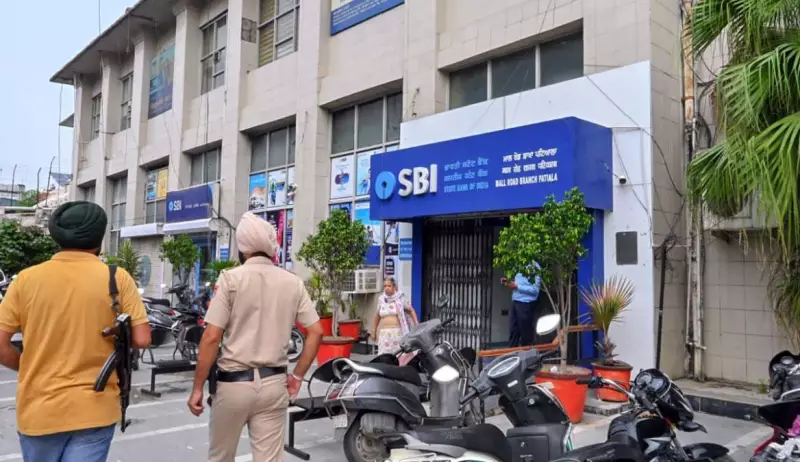
In a significant pre-budget move, the State Bank of India (SBI), the country's largest public sector bank, has formally submitted a set of comprehensive recommendations to the government ahead of the Union Budget 2026. The proposals, which are currently under active consideration by policymakers, focus on three critical financial pillars: enhancing tax incentives for bank deposits, implementing structural reforms in the insurance industry, and modernizing the pension framework to better serve India's growing population.
SBI's Core Demands for Tax Relief and Financial Reforms
The bank's submission outlines a clear strategy aimed at revitalizing household savings and strengthening the financial security of citizens. A central theme in SBI's recommendations is the urgent need for tax relief on bank deposits, which the bank argues has become increasingly necessary in the current economic climate. According to SBI, existing tax structures on interest income from fixed deposits and other savings instruments are discouraging individuals from parking their funds in formal banking channels, thereby limiting the flow of domestic capital.
Proposed Changes to Deposit Taxation
SBI is advocating for an increase in the tax deduction limit under Section 80TTA of the Income Tax Act, which currently allows a deduction of up to Rs 10,000 on interest income from savings accounts. The bank suggests that this limit should be substantially raised to make bank deposits more attractive compared to other investment avenues. Additionally, there is a push for separate tax exemptions for senior citizens on fixed deposit interest, recognizing their reliance on such income for daily sustenance.

Another key proposal involves simplifying the Tax Deducted at Source (TDS) norms on bank deposits. SBI recommends raising the threshold for TDS deduction on interest income, which would reduce compliance burdens for both banks and depositors, especially those in lower income brackets. These measures, if implemented, are expected to incentivize higher savings rates and channel more funds into the banking system, supporting broader economic growth.
Insurance and Pension Sector Overhaul
Beyond deposits, SBI's recommendations extend to the insurance and pension sectors, where the bank sees considerable room for improvement. For insurance, SBI is calling for enhanced tax benefits under Section 80C for premium payments, arguing that current limits are insufficient to encourage adequate life and health coverage among the masses. The bank also proposes regulatory simplifications to make insurance products more accessible and affordable, particularly for rural and underserved communities.
Pension Reforms for Long-Term Security
In the pension domain, SBI emphasizes the need for reforms to address India's aging demographic and ensure financial stability for retirees. The bank suggests expanding the scope of the National Pension System (NPS) by offering more flexible withdrawal options and higher tax exemptions on contributions. Furthermore, SBI recommends integrating pension schemes with digital platforms to streamline enrollment and management, making it easier for individuals from diverse backgrounds to participate.
These pension reforms are aligned with global best practices and aim to create a more robust social security net, reducing future fiscal pressures on the government. SBI's proposals highlight the interconnectedness of deposit, insurance, and pension policies in fostering a resilient financial ecosystem.
Potential Impact and Government Response
If adopted in Budget 2026, SBI's recommendations could have far-reaching implications for India's economic landscape. Tax relief on bank deposits might boost domestic savings rates, providing banks with more capital for lending and investment. Meanwhile, insurance and pension reforms could enhance financial inclusion and reduce vulnerability to economic shocks among low-income households.

Government sources indicate that these proposals are being reviewed as part of the broader budget formulation process, with a focus on balancing fiscal prudence with consumer benefits. The final decisions will likely reflect input from other stakeholders, including the Reserve Bank of India and various industry bodies. As Budget 2026 approaches, all eyes are on whether SBI's advocacy will translate into actionable policies that reshape India's financial future.





