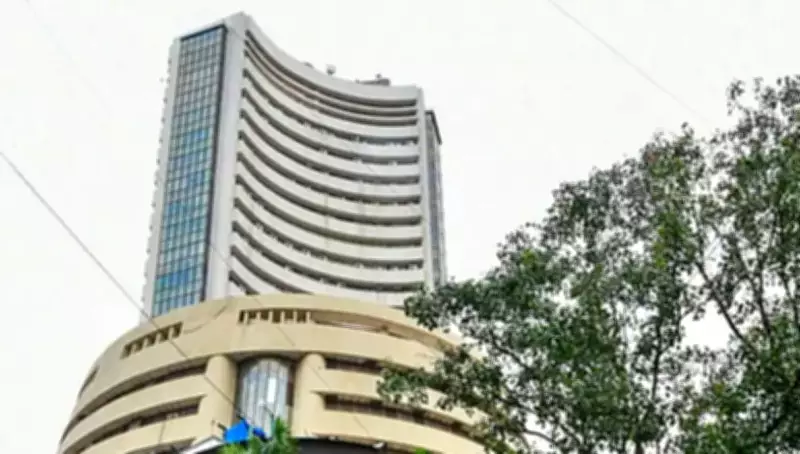
Indian equity benchmarks opened sharply lower on Monday, with the BSE Sensex tumbling over 430 points and the NSE Nifty slipping below the 23,500 mark, as renewed geopolitical tensions in the Middle East sparked a broad-based sell-off. The negative sentiment was driven by fears of further escalation in the region, dampening investor appetite for risk assets.
Market Opening Bell
The 30-share BSE Sensex plunged 430.23 points, or 0.55 percent, to open at 77,231.45, while the broader NSE Nifty50 declined 135.65 points, or 0.57 percent, to start at 23,478.70. All sectoral indices were in the red, with IT, metal, power, and oil & gas stocks bearing the brunt of the selling pressure.
Top Losers and Gainers
Among the Sensex constituents, major losers included Infosys, which fell over 1.5 percent, followed by TCS, Power Grid Corporation, Tata Steel, and Vodafone Idea. On the other hand, some defensive stocks like Hindustan Unilever and Nestle India managed to stay afloat, trading marginally higher. The broader market also witnessed heavy selling, with the BSE Midcap and Smallcap indices dropping over 0.7 percent each.

Geopolitical Tensions Weigh on Sentiment
The fresh round of tensions in the Middle East, following reports of increased military activity, rattled global markets. Asian peers also traded lower, with Japan's Nikkei 225 falling 1.2 percent, Hong Kong's Hang Seng declining 0.8 percent, and South Korea's Kospi dropping 0.9 percent. The rising crude oil prices due to supply disruption fears further added to the woes, as India is a major importer of crude oil.
Expert View
Market analysts attributed the sharp fall to the geopolitical risk premium being priced in. "Investors are turning risk-averse amid the escalating situation in the Middle East. The uncertainty is likely to keep markets volatile in the near term. We advise traders to remain cautious and avoid aggressive positions," said a senior analyst at a domestic brokerage firm.
The Indian rupee also weakened against the US dollar, opening at 85.67 compared to the previous close of 85.52. The 10-year government bond yield edged higher to 7.12 percent. Global cues remain weak as investors await further developments in the region.
As the day progresses, market participants will closely monitor any diplomatic moves or statements from global leaders that could ease tensions. In the absence of positive triggers, the markets may remain under pressure.