

Budget 2026 STT Hike Sparks Market Turmoil: Derivatives Trading Volumes at Risk
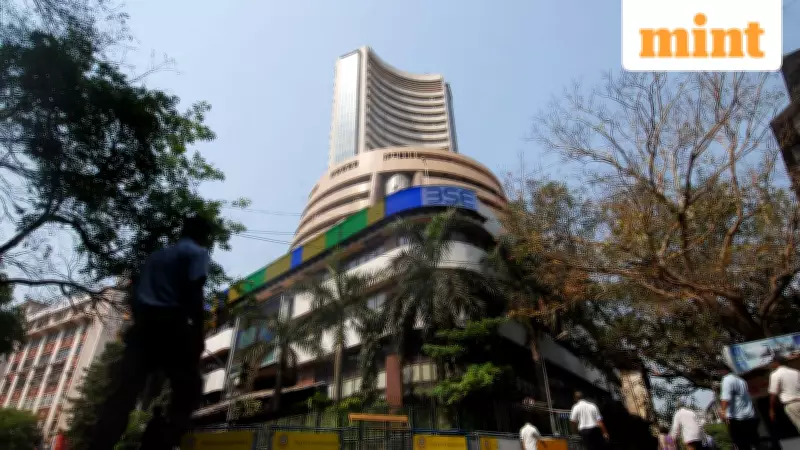
The Union Budget 2026 has sent shockwaves through India's capital markets with a substantial hike in the Securities Transaction Tax (STT), triggering immediate sell-offs in stocks of exchanges and discount brokers. Shares of BSE Ltd, Angel One, and Groww plummeted by 5-9% following the Budget speech, while the Nifty 50 index fell 2%, reflecting widespread concerns over reduced trading activity in the derivatives segment.
Immediate Market Reaction and Broader Implications
Capital-market-related companies, particularly exchanges and discount brokers, have borne the brunt of this steep STT increase. The impact extends beyond listed entities, as the valuation of the National Stock Exchange's upcoming initial public offering (IPO) is also likely to be affected, given its dominance in equity derivatives trading. This move underscores the government's focus on regulatory measures that could reshape trading behaviors and market dynamics.
Understanding the STT Hike: A Detailed Breakdown
The tax hike is indeed substantial, with STT on futures rising from 0.02% of sales turnover to 0.05%, and on options from 0.10% to 0.15% of the premium value. In practical terms, this means a trader will now pay ₹5,000, up from ₹2,000 earlier, to sell futures worth ₹1 crore. Similarly, selling options with premiums worth ₹1 crore will incur an STT of ₹15,000, compared to ₹10,000 previously.

Rationale Behind the Hike: The government's STT collections from April 2025 to January 2026 stood at approximately ₹45,000 crore, falling short of the ₹78,000 crore target for FY26. While the higher rates aim to boost revenue, they may paradoxically reduce derivatives trading volumes in FY27, potentially offsetting gains. Some analysts suggest the hike is intended to disincentivize futures and options (F&O) trading rather than maximize tax revenue, aligning with broader financial stability goals.
Differential Impact: BSE's Resilience vs. Broker Vulnerabilities
BSE Ltd is expected to be less affected than discount brokers due to two key factors: its distinct revenue model and ongoing market-share gains. BSE charges 0.0325% as transaction fees on the premium value of options, whereas discount brokers like Angel One and Groww rely on flat brokerage fees of ₹20 per order. In Q2FY26, BSE earned ₹624 crore from derivatives transaction charges, accounting for 58% of its total revenue of ₹1,068 crore.
BSE's Advantage: The exchange's revenue is tied to the average daily premium turnover (ADPT), which can remain robust even if overall trading activity declines. For instance, despite regulatory measures by SEBI in Q4FY25, BSE's ADPT surged 83% year-on-year in Q2FY26 to ₹15,000 crore, driving an 80% increase in derivatives transaction charges. Additionally, BSE has been gaining market share, with its ADPT holding steady quarter-on-quarter while NSE's fell 16%.
Broker-Specific Challenges and Market Dynamics
Discount brokers face heightened risks due to their heavy reliance on derivatives brokerage income. Angel One derives 85% of its equity brokerage from derivatives, compared to 75% for Groww. In recent quarters, Angel One's derivatives revenue declined 11% year-on-year, while Groww's increased 6% due to market-share gains. This disparity highlights how business models and market positioning influence resilience to tax hikes.
Full-service brokerages like Motilal Oswal Financial Services and ICICI Securities are somewhat insulated, as they earn more from cash markets through research services and have diversified income streams from wealth and asset management.
Future Outlook and Strategic Considerations
While the Budget proposals pose incremental challenges for all affected companies, BSE is best positioned to weather the storm, thanks to its duopoly status and past resilience to SEBI's F&O curbs. Angel One, with its larger exposure to equity derivatives, faces greater headwinds than Groww. Investors and market participants must now recalibrate earnings forecasts and strategies in light of these regulatory changes.

The STT hike not only impacts immediate trading volumes but also signals a shift in policy priorities, potentially encouraging a move towards more stable investment avenues. As the market digests these changes, monitoring ADPT trends and broker performance will be crucial for assessing long-term implications.





