

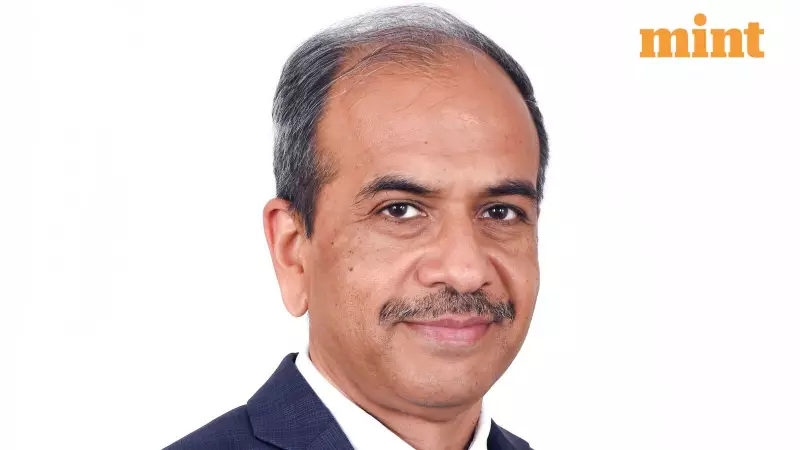
Tata Mutual Fund CIO Sees Improved Market Valuations, Cautions on Manufacturing Optimism
Rahul Singh, the Chief Investment Officer for Equities at Tata Mutual Fund, believes Indian markets currently offer much better value compared to mid-2024 levels. While not at absolute rock-bottom valuations, the premium over other emerging markets has narrowed significantly from 80-90% to 50-60%, closer to historical averages.
Foreign Flows and Emerging Market Dynamics
Singh explained that India has reached a crucial point where any emerging market fund flows would likely include allocations to Indian markets. "If emerging markets as an asset class start to get sustainable flows, foreign portfolio investors need not have to sell India to buy China," he stated in an interview.
This shift comes after global money followed artificial intelligence themes and China's stimulus-driven recovery earlier, while India experienced an earnings slowdown. Now with growth returning, the valuation gap has become more reasonable.

Earnings Outlook and Sector Analysis
The investment head expects Nifty earnings growth to accelerate to around 15% next year, up from the current 7-8% range. "Apart from banking and financial services, a material part of the index is linked to commodity prices," Singh noted.
He highlighted that large stocks in energy, metals, and mining sectors could see significant growth, providing further tailwind to overall earnings. Information technology companies have also stopped their downgrade cycle, removing a potential drag on corporate profitability.
Areas of Concern: Manufacturing and Capital Goods
Despite the improved overall outlook, Singh warned about specific sectors showing excessive optimism. "Manufacturing and some parts of the capital goods sector have a lot of optimism which may not be justified," he cautioned.
The CIO explained that these sectors started from very high valuations, and execution challenges have led to disappointments. When stocks are perfectly priced for heightened expectations, meeting those expectations doesn't generate additional returns, but any miss can significantly hurt valuations.
Investment Philosophy and Flow Expectations
Singh outlined his investment approach, emphasizing that valuation serves as the starting point but isn't sufficient alone. "The focus is on whether there are identifiable triggers for profit surprises or positive earnings upgrades over the next 12-24 months," he said.
Looking ahead, he expects flows this year to favor core categories like multi-asset, flexi-cap, and large-cap funds. While small- and mid-cap funds haven't lost favor completely, a gradual shift toward large-caps appears likely.
Geopolitical Factors and Oil Market Impact
Addressing global concerns, Singh noted that oil demand remains generally weak with adequate supply, limiting fundamental risks of price spikes. However, he acknowledged that geopolitical situations require monitoring.
For India, he views crude as a portfolio hedge rather than a direct earnings driver. Companies supplying to the oil and gas industry, particularly engineering, procurement and construction firms with Middle East exposure, could benefit from higher order flows if oil prices rise.
Alpha Generation in Current Markets
When asked about generating outperformance, Singh emphasized the importance of longer time horizons. "Alpha should be assessed over longer horizons of three to five years or more, not over short-term periods," he advised.
He noted that short-term markets often move based on themes and sentiment rather than earnings or valuations, making consistent outperformance challenging without taking excessive risk.






