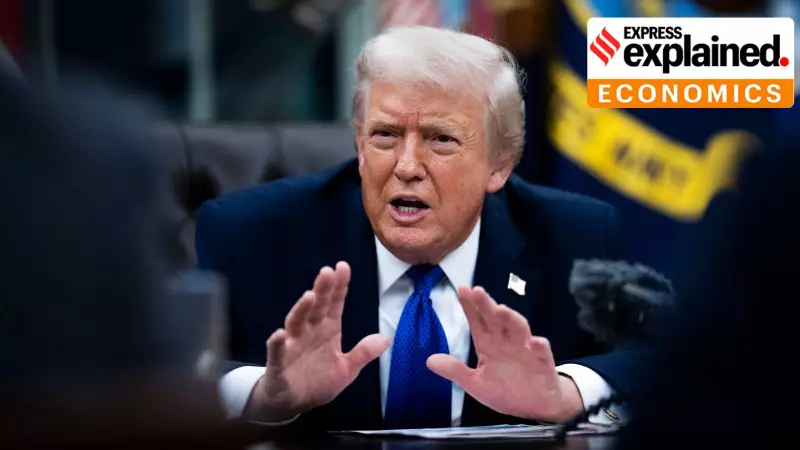
Former US President Donald Trump's recent call to impose a one-year cap on credit card interest rates at 10 percent has found an eager audience among Indian cardholders, many of whom grapple with annual percentage rates (APRs) as high as 42 percent. The proposal, announced on January 10 and slated to take effect from January 20, 2026, if enacted, has ignited a crucial question in Indian financial circles: could Indian regulators consider a similar move to control soaring credit card costs?
The US Proposal: A Populist Pledge Meets Political Reality
Positioning his plan as a major consumer-protection measure, Donald Trump strongly criticised financial institutions for "ripping off" the American public with APRs commonly ranging between 20 to 30 percent or more. This announcement reiterates a campaign promise from the 2024 presidential race. However, analysts note that turning this proposal into law would face significant hurdles, requiring approval from the US Congress and cooperation from financial regulators.
Similar legislative efforts, including bipartisan bills from Senators like Bernie Sanders and Josh Hawley, have been introduced before but have consistently met with strong resistance from the powerful financial services industry. They are widely viewed as having little chance of passing in their current form.

Potential Impact of a Rate Cap: Relief vs. Risk
Financial experts warn that a rigid interest rate ceiling, while offering immediate relief to heavily indebted borrowers, carries potential downsides. A 10 percent cap could severely limit access to credit, especially for higher-risk individuals, as banks may become more selective or reduce card issuance altogether.
Furthermore, to offset the loss of interest income, issuers might scale back popular card benefits, rewards programmes, and cashback offers. There is also a risk that some borrowers could be pushed towards costlier, unregulated lending options. Despite these concerns, such a cap would undeniably ease the financial burden for millions by drastically cutting borrowing costs on outstanding balances.
The Indian Context: No Cap, High Rates, and Regulatory Freedom
The credit card landscape in India is markedly different. There is no regulatory cap on credit card interest rates. Indian banks typically charge APRs in the range of 36 to 48 percent per annum, with some customers paying up to 42 percent or more on revolving balances.
This was reinforced by a Supreme Court decision in late 2024, which clarified that banks are permitted to charge over 30 percent interest on credit card dues. This overturned an earlier consumer-friendly ruling that sought to impose a cap. The Reserve Bank of India (RBI), which monitors the segment, allows banks the freedom to set their own rates, a flexibility lenders justify by citing the unsecured, collateral-free nature of credit card debt.
"Customers must realise that if they carry card dues beyond the interest-free period, they can end up in a debt trap, paying effective interest rates of 42 percent or higher," cautioned a bank official.
Rising Card Usage and Market Concentration in India
Credit card adoption in India is accelerating rapidly. According to RBI data, the total number of outstanding credit cards reached 11.5 crore (115 million) as of November 2025, showing steady growth. More strikingly, credit card outstandings—the total debt owed—stood at a massive ₹2.96 lakh crore as of November 2025, up from ₹2.88 lakh crore a year earlier.
This growth is accompanied by rising delinquencies, highlighting increasing financial stress among users. The market remains highly concentrated, with large issuers accounting for nearly 80% of total spending, as per a CareEdge Ratings report. Public sector banks have recently led issuance growth, leveraging their wide customer base for cross-selling.

Unlike the politically charged debate in the US, India's regulatory focus has been on enhancing consumer awareness, strengthening risk management frameworks, and ensuring overall financial stability, rather than imposing strict APR ceilings. For now, Trump's proposal is unlikely to directly influence Indian policy. However, experts believe such a high-profile move in a major economy could spark broader global discussions on consumer protection in credit markets, potentially influencing future regulatory thinking in India and elsewhere.