

Major US-Israel Offensive Targets Iran, Killing Supreme Leader Khamenei
On February 28, the United States and Israel launched a large-scale military offensive against Iran, following weeks of escalating threats from former President Donald Trump. In a post on Truth Social, Trump declared that the operation's primary objectives were to prevent Iran from obtaining nuclear weapons and to defend the American people by eliminating what he termed "imminent threats" from the Iranian regime.
Trump further urged the Iranian populace to seize this moment as a "once-in-a-generation" opportunity to overthrow their government. Israeli officials subsequently confirmed that coordinated Israeli-American airstrikes on Tehran had resulted in the death of Iran's Supreme Leader, Ayatollah Ali Khamenei, explicitly framing the action as part of a regime-change strategy.
In retaliation, Iran has launched missile and drone strikes against multiple US military bases across the Middle East, significantly heightening regional tensions and raising fears of a broader conflict.

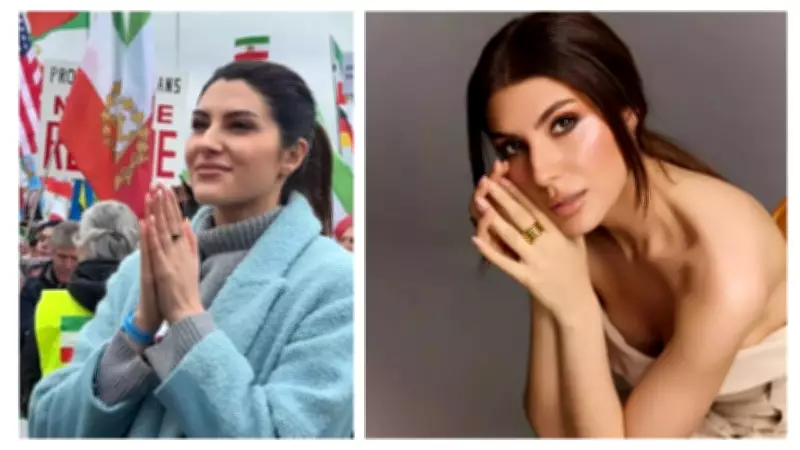
Actress Elnaaz Norouzi Reflects on the Human Cost of Conflict
Amidst the geopolitical turmoil, actress Elnaaz Norouzi, who was born in Tehran and lived there for the first eight years of her life before moving to Germany and eventually India, has shared her poignant perspective on the crisis. While her parents emigrated, much of her extended family remains in Iran, with her last visit to the country occurring in 2018.
Norouzi emphasizes the critical need to differentiate between the Iranian people and the political regime that governs them. "The conflict has existed for over 40 years," she explains. "When we speak about Iran, I would like to differentiate between the Islamic Republic, which has occupied the country, and the people of Iran. The majority of Iranian people are smart and educated, and their beliefs are not the same as those of the Islamic Republic."
A Historical Perspective and Call for Democracy
Norouzi provides historical context, noting that Iran once enjoyed positive relations with both Israel and the United States. "At one point, Iran had a great relationship with Israel. Cyrus the Great, who wrote the first human rights charter in history, was Persian and he freed the Jews from Babylon. We even had a great relationship with the USA during the time of Shah Mohammad Reza Pahlavi," she states. "It is just the Islamic Republic that is constantly saying they want to wipe Israel off the map."
She describes a complex power structure within Iran, involving the Supreme Leader, parties like Hezbollah, the Islamic Revolutionary Guard Corps (IRGC), and the Basij militia, all of which are interconnected and support groups like the Houthis and Hamas. Norouzi observes a strong desire for democratic change among Iranians, particularly the younger generation. "The Crown Prince Reza Pahlavi's name is being chanted all over Iran. People want democracy. The Gen Z knows exactly what's right for them," she says, adding that many older Iranians now regret supporting the 1979 revolution.
Personal Risk and the Struggle for Free Expression
As a vocal critic of the regime, Norouzi reveals she cannot return to Iran. "I can’t set foot in Iran. If I do, I think they will kill me," she claims, referencing her outspoken criticism during the 2022 protests following the death of Mahsa Amini. "If people die in this war, I'm going to blame the Ayatollah because people have come out multiple times saying we do not want you and they did not leave. It is a dictatorship."
She highlights the role of Iranian cinema as a medium for truth-telling despite severe restrictions. "Cinema has helped bring the truth and the voices of people to the world. It's the medium Iranians have used to speak about the atrocities," Norouzi notes, citing Oscar-nominated filmmakers like Jafar Panahi who are banned from filming in Tehran.

Fear for Family and the Reality of Life in Iran
With communication blackouts in place due to the war, Norouzi expresses deep concern for her family's safety. "I haven't been able to reach my family since yesterday. I hope they are inside their homes and don’t get too excited because of Ayatollah Ali Khamenei’s death. Iranians are getting on roads to celebrate and it risks their life," she says.
She explains the immense difficulty of emigration for ordinary Iranians, citing complex asylum processes and the challenges of starting anew abroad. "Leaving your home behind is not easy. Not everyone has the means. If you can keep your mouth shut, you can live in Iran," she remarks, describing an educated populace grappling with high inflation, unemployment, and survival-level hardships unless connected to powerful entities like the IRGC.
Norouzi concludes with a heartfelt plea for understanding, portraying Iran as a nation rich in history and diversity, now yearning for the freedom and democracy it once knew.





