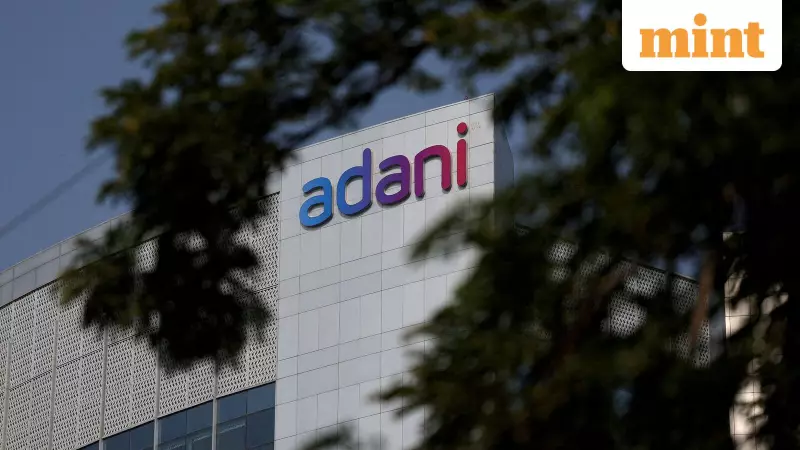
Adani Power Q3 Earnings Preview: Bangladesh Deal Uncertainty Weighs on Growth Outlook
Investors are closely monitoring Adani Power Limited's upcoming third-quarter financial results, as uncertainty surrounding its lucrative power supply agreement with Bangladesh casts a shadow over short-term earnings potential. The company's contrarian strategy of investing in coal-fired power plants, while most private sector competitors shift away from fossil fuels, has positioned it for significant growth over the next decade. However, immediate concerns revolve around the stability of its Bangladesh operations.
Financial Expectations and Market Sentiment
According to consensus estimates from three analysts surveyed by Bloomberg, Adani Power is projected to report a marginal increase in revenue for Q3FY26, rising to approximately ₹13,848 crore from ₹13,434 crore in the same quarter last year. Net profit is anticipated to grow by around 5% to ₹3,075 crore. This subdued growth forecast is attributed to steady but unspectacular demand for thermal power during the period.
The muted earnings outlook reflects broader market apprehension, as skittish investors paying a premium for Adani Power's growth narrative now face potential short-term hurdles. The company's ambitious capacity expansion plans—from 18.2 gigawatts (GW) currently to 41.9 GW by 2032—underscore its long-term vision, but near-term performance remains tethered to the Bangladesh deal's fate.

The Bangladesh Overhang: Risks and Revenues
Adani Power's 1,600-megawatt ultra super-critical plant at Godda in Jharkhand supplies electricity exclusively to Bangladesh's national grid. This arrangement has been highly profitable, generating over ₹8,300 crore in annual revenue and more than ₹4,800 crore in EBITDA, as disclosed by management in May 2025. These figures represent over 14% of FY25 revenue and nearly 20% of EBITDA, highlighting the deal's critical importance.
However, a recent review by Bangladesh's National Review Committee (NRC) has jeopardized this agreement. The NRC concluded that the country's power distributor was purchasing excess electricity at inflated rates from private players, particularly Adani Power. It recommended renegotiating these contracts, potentially endangering the 2017 deal with the former Sheikh Hasina government.
Key financial disparities exacerbate the risk:
- Adani Power sells electricity to Bangladesh at $0.135 per unit (approximately ₹12.3).
- In contrast, average merchant market prices in India during H1FY26 were only ₹5.37 per unit.
Analysts at JM Financial note that cash flows from the Godda plant remain exposed to payment delays, PPA renegotiation risks, and legal uncertainties, despite recent clearance of past dues. Significant pending dues from the Bangladesh Power Development Board could further strain cash flows.
Strategic Contingencies and Expansion Plans
Adani Power has a contingency plan: connecting the Godda plant to the Indian grid if the Bangladesh contract collapses. However, this would mean selling power at substantially lower spot market prices, eroding profitability. The company's growth strategy remains focused on thermal power expansion, capitalizing on India's need for 80 GW of additional thermal capacity by FY32. Adani has already secured 23.7 GW of this capacity, outpacing competitors like NTPC, JSW Energy, and Torrent Power.
JM Financial analysts commend Adani Power for recognizing thermal power's indispensability in India's energy mix, even as peers retreated from coal. The company built its 18 GW capacity through organic growth (10.8 GW) and acquisitions of stressed assets (7.3 GW), becoming India's largest private-sector thermal producer.
Yet, execution risks loom. While critical equipment has been ordered in advance, global supply chain pressures could delay new projects. Investors will scrutinize management updates on expansion timelines and cost controls.

Investor Takeaways and Future Outlook
As Adani Power announces its Q3 results, key areas for investor attention include:
- Bangladesh Deal Clarity: Updates on renegotiation talks, payment schedules, and legal proceedings.
- Capacity Expansion Progress: Timelines for new projects and mitigation of execution risks.
- Financial Resilience: Ability to maintain cash flows amid external uncertainties.
The company's long-term growth narrative remains intact, driven by India's thermal power demands. However, short-term earnings may be tempered by Bangladesh-related headwinds, making Thursday's earnings call a pivotal moment for stakeholders assessing risk versus reward in Adani Power's ambitious journey.