

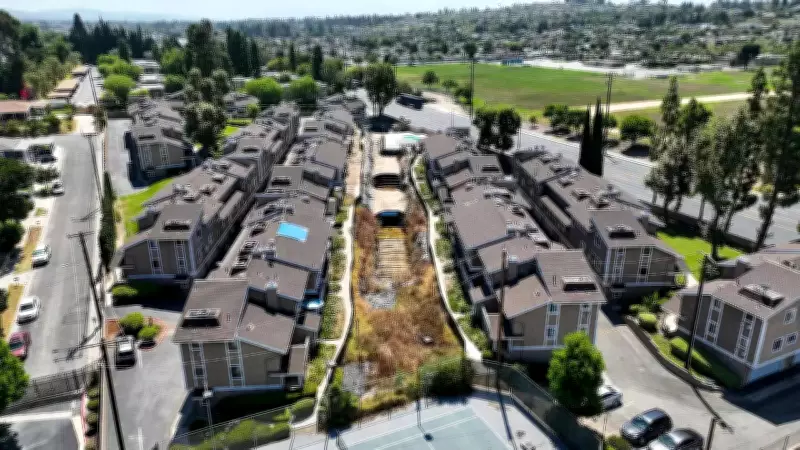
The artificial intelligence (AI) boom is not just creating new billionaires; it is fundamentally reshaping the real estate landscape of Silicon Valley. A new report from Redfin, as cited by Fortune, reveals a growing housing market divide in the Bay Area, where the fortunes of AI's biggest winners are soaring while lower-end homeowners are being left behind. Since the launch of ChatGPT in November 2022, a clear divide has emerged, marking a sharp break from previous years.
Luxury vs. Affordable Housing
According to Redfin, the impact of AI wealth on the region is noticeable. Prices for luxury homes, such as those selling between $3.1 million and $7.6 million, have jumped 13.4% since late 2022. During the same period, values for properties in the $535,000 to $615,000 range have fallen by 3.8%. In the San Francisco metro area, the median home sale price hit a record $1.7 million in March, a 14.4% increase year-over-year.
K-Shaped Economy
“It’s another sign of the K-shaped economy taking shape in the Bay Area. AI is lifting the fortunes of some households and neighborhoods much more than others,” said Redfin senior economist Yingqi Xu. This divergence is driven by the concentration of AI wealth among a select group of investors and tech leaders.

Division Between Two Sets of Workers
While early investors and tech leaders are buying up multi-million-dollar properties, salaried white-collar workers are facing a harsher reality. “There are lots of people who have gotten very rich off of AI. At the same time, salaried white-collar workers are feeling the strain of the economy, worrying that AI is going to replace them,” explained Redfin chief economist Daryl Fairweather. This is compounded by broader economic shifts: the median age of a first-time homebuyer reached 40 in 2025, up significantly from 33 in 2021, as many Americans struggle with high mortgage rates and a shortage of available homes.
The Trap of Falling Prices
While falling prices at the lower end might seem like good news for buyers, experts warn it is often a trap. Many of these properties are condos with high homeowner association (HOA) fees or houses in need of major repairs, which can quickly cancel out any savings from a lower purchase price.
A Trend Unique to Silicon Valley
The report also notes that this massive gap between luxury and affordable housing appears to be unique to Silicon Valley. In cities like New York and Los Angeles, luxury zip codes did not see the same explosive growth following the AI boom. This highlights the localized impact of AI wealth on the housing market.






