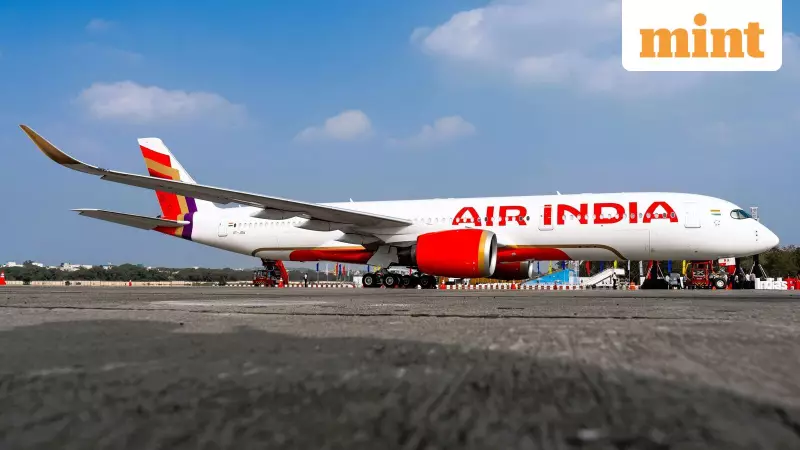
In a significant move to protect passengers from exorbitant prices, Air India has announced a proactive cap on economy class airfares for its non-stop domestic flights. This decision comes amidst a severe operational disruption in the Indian aviation sector, primarily triggered by massive flight cancellations from the country's largest carrier, IndiGo, leading to a sharp spike in ticket prices across airlines.
Air India's Proactive Fare Cap and Clarification
Since December 4, Air India and its subsidiary Air India Express have implemented a ceiling on economy class fares for their direct domestic routes. An airline spokesperson explained that this step was taken to prevent the automatic surge pricing typically applied by revenue management systems based on demand and supply.
The airline also addressed concerns regarding screenshots circulating on social media showing extremely high fares for complex itineraries. These involved one-stop or two-stop flights or combinations of different cabin classes like economy and premium economy, often sourced from third-party booking platforms. Air India clarified that while capping all such permutations is technically challenging, they are actively engaging with these platforms to ensure better oversight and prevent price gouging.

The Trigger: IndiGo's Operational Crisis
The aviation turmoil began with IndiGo cancelling hundreds of flights over a five-day period. The primary reason cited was an acute shortage of crew members. This sudden reduction in capacity created a supply shock in the market. With fewer seats available, airfares on several key routes witnessed an unprecedented and dramatic increase, causing distress to passengers.
To mitigate the impact on stranded travellers, Air India stated it is seeking to add more flight capacity. "Air India and Air India Express are seeking to add capacity to help travellers and their baggage reach their destinations as quickly as possible," the spokesperson noted.
Government Intervention and Soaring Fares
The situation reached a tipping point on Friday when fares hit astronomical levels. Examples reported by PTI included a one-stop SpiceJet economy class ticket from Kolkata to Mumbai for December 6 priced at a staggering ₹90,000. Similarly, an Air India ticket for the Mumbai-Bhubaneswar route was listed at ₹84,485.
In response, the Ministry of Civil Aviation issued a strict directive to all airlines on Saturday, December 6. The ministry expressed serious concern over the "unusually high airfares" and invoked its regulatory powers to ensure fair pricing. An official order mandated that all carriers must strictly adhere to prescribed fare caps on affected routes.
The ministry's goal is threefold:
- To maintain pricing discipline in the market.
- To prevent the exploitation of passengers in distress.
- To ensure that citizens with urgent travel needs—including senior citizens, students, and patients—are not subjected to financial hardship.
The government has made it clear that these fare caps will remain enforced "until the situation fully stabilises." Air India's announcement of its own fare cap aligns directly with this government directive, showcasing a coordinated effort to bring normalcy back to the domestic aviation market and protect consumer interests during a period of crisis.