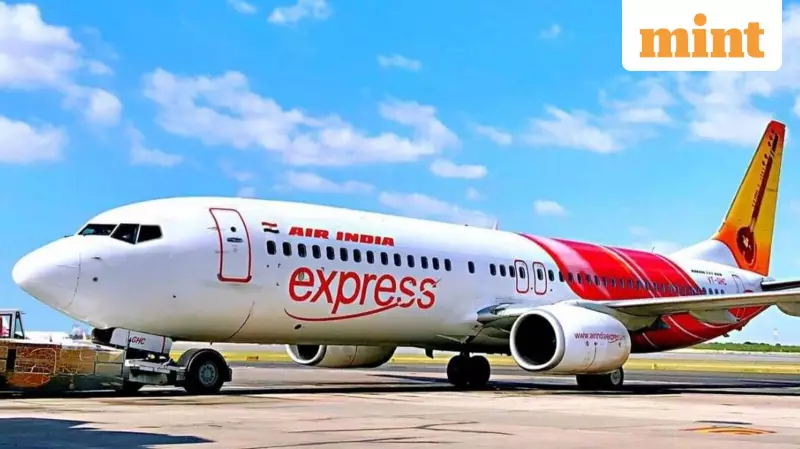
Air India Express Faces Fleet Hurdles in Navi Mumbai Airport Expansion
Budget carrier Air India Express, owned by the Tata Group, is encountering significant fleet constraints that are slowing its planned expansion from the Navi Mumbai International Airport (NMIA). The airline now expects to connect the new airport to 15 other Indian cities by the end of 2026, a target it had initially aimed to achieve during the early phase of the airport's operations.
Current Connectivity and Competitive Landscape
According to data compiled by aviation analytics firm Curium, Air India Express currently operates flights from NMIA to only two cities: Bengaluru and Delhi. In contrast, competitor IndiGo has already established connectivity to 13 cities from India's newest airport, while Akasa Air flies to four destinations. This disparity highlights the challenges faced by Air India Express in keeping pace with its rivals.
The Navi Mumbai International Airport commenced commercial operations on December 25, 2025, marking a significant development in India's aviation infrastructure. While other carriers have rapidly expanded their networks from this new hub, Air India Express has struggled to implement its announced plans.

Delayed Expansion Plans
In September 2025, Air India Express had announced ambitious plans to operate 20 daily departures (40 air traffic movements) from NMIA, connecting 15 Indian cities during the initial phase of the airport's operations. The airline had further stated its intention to scale up to 55 daily departures by mid-2026, including up to five daily international flights from the Navi Mumbai facility.
However, these plans have been significantly delayed due to ongoing fleet constraints. Air India Express CEO Aloke Singh acknowledged these challenges during the Wings India 2026 aviation exhibition in Hyderabad, stating that the expansion would be progressive and would take approximately a year to complete as the airline's fleet grows.
"Navi Mumbai is a really important part of our network," Singh told Mint. "The expansion will be progressive and we will fly to all 15 destinations in about a year, as our fleet grows."
Fleet Management Strategy
Air India Express currently operates a fleet of approximately 110 aircraft. The airline plans to add 20-24 new planes in 2026, translating to roughly two aircraft per month. However, Singh clarified that the overall fleet size would remain largely unchanged by the end of 2026 due to planned returns of older aircraft.
The airline is undergoing a fleet refreshment program, replacing older aircraft with newer, more efficient models. A company spokesperson explained that as part of this transition, aircraft reaching the end of their lease terms will be phased out, maintaining a stable overall fleet size while improving operational efficiency and customer experience.
In December 2025, Air India Express received its first line-fit aircraft from Boeing—aircraft customised specifically for the airline's requirements. Additional new planes arriving in 2026 are also expected to be line-fit configurations, representing an upgrade from previous inductions that consisted mostly of "white tail" aircraft (fully constructed planes without immediate customers).
Broader Context and Industry Position
The fleet constraints come at a challenging time for Air India Express, which completed its merger with AIX Connect (formerly AirAsia India) on October 1, 2024. The Tata Group now operates two distinct airline brands: full-service carrier Air India and low-cost carrier Air India Express.
The aviation sector in India continues to experience robust growth, with new airports like NMIA creating opportunities for expansion. However, aircraft delivery schedules, fleet modernization programs, and operational integration challenges have created headwinds for some carriers seeking to capitalize on these opportunities.
As Air India Express works through its fleet constraints, the airline remains committed to its expansion plans, albeit on a delayed timeline. The progressive approach to network development reflects the practical realities of aircraft availability while maintaining strategic focus on the important Navi Mumbai market.