Amazon Overtakes Walmart to Claim Top Revenue Spot Globally
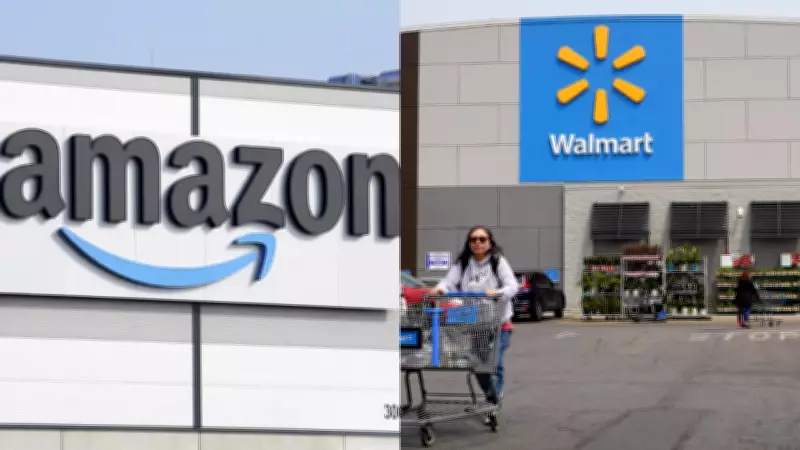
In a significant corporate milestone, Amazon has officially surpassed Walmart as the world's largest company by revenue. For the year 2025, the e-commerce giant reported total sales of $717 billion, edging out Walmart's $713.2 billion for the 12-month period ending January 31. This shift ends more than a decade of Walmart holding the premier position, signaling a transformative moment in global retail dynamics.
Contextualizing the Revenue Milestone
However, analysts emphasize that this comparison requires careful context. Without Amazon Web Services (AWS), its highly profitable cloud computing division, Amazon's 2025 revenue would have stood at approximately $588 billion. This indicates that the milestone rests largely on a business segment where Walmart does not compete, raising questions about the direct retail rivalry. Walmart remains the undisputed leader in physical retail, operating over 10,000 stores and shopping clubs worldwide, and continues to dominate brick-and-mortar operations while aggressively expanding its e-commerce footprint.
In contrast, Amazon has struggled to establish a comparable physical presence despite its 2017 acquisition of Whole Foods Market. The two companies compete directly for consumer spending, with Amazon attracting 2.7 billion monthly visits across its digital platforms, while Walmart leverages its extensive store network to drive sales. Both generate the majority of their revenue in the United States, highlighting their intense domestic competition.

Analyst Perspectives on the Shift
In a statement to Bloomberg, Kirthi Kalyanam, executive director of the Retail Management Institute at Santa Clara University, argued that the revenue achievement carries limited weight in traditional retail terms. "This is a hollow victory. Amazon didn't beat Walmart in the retail game. It just beat them in revenue by launching a new business Walmart doesn't operate in." This perspective underscores that while holding the top revenue position reflects immense scale and consumer reach, it is not necessarily a metric that investors prioritize heavily.
Historically, companies like Exxon Mobil and General Motors have held similar distinctions, often facing increased political scrutiny and heightened customer expectations as a result. For comparison, Nvidia currently boasts a market capitalization of $4.5 trillion, more than double Amazon's and over four times Walmart's, illustrating how revenue alone does not equate to overall market valuation or investor confidence.
Growth Trajectories and Strategic Influences
Over the past decade, Amazon's revenue has grown at nearly ten times the pace of Walmart's, driven by a massive shift in consumer spending from physical stores to online platforms and the explosive expansion of AWS. This rapid growth has been instrumental in propelling Amazon to the top revenue spot. Notably, Amazon founder Jeff Bezos, who first overtook Microsoft co-founder Bill Gates as the world's wealthiest person in 2017, currently ranks fourth on the Bloomberg Billionaires Index with estimated assets of $228 billion, largely tied to his Amazon stock holdings.
Bezos has long studied Walmart founder Sam Walton's business strategies, incorporating many of them into Amazon's operations, as noted in industry reports. This strategic borrowing highlights the interconnected evolution of these retail titans, with each learning from the other's successes in different domains.
Despite Amazon's revenue lead, analysts suggest that Walmart need not worry excessively about this development. The company maintains a strong edge in physical retail and is steadily growing its e-commerce operations, positioning it well for future competition. The revenue milestone, while symbolically important, may not drastically alter the competitive landscape, as both companies continue to innovate and adapt in a rapidly changing market.