Times of India Budget Dialogues 2026: Experts Decode Viksit Bharat Vision and Economic Priorities
The Times of India Budget Dialogues 2026, held in New Delhi on Tuesday, convened a distinguished assembly of policymakers, economists, industry leaders, and opinion-makers. This significant gathering aimed to decode the intricate priorities, promises, and pressures embedded within the Union Budget. The platform facilitated a comprehensive and wide-ranging discussion on India's economic roadmap, set against a backdrop of global uncertainty and soaring domestic aspirations.
Examining the Budget's Impact Across Key Sectors
The dialogues provided a critical lens to examine what this budget signifies for pivotal areas of national development. These included infrastructure, manufacturing, job creation, agriculture, exports, and social development. The discussions sought to understand the budget's role in shaping India's journey toward becoming a global economic powerhouse.
Session Two: Marching Towards Viksit Bharat
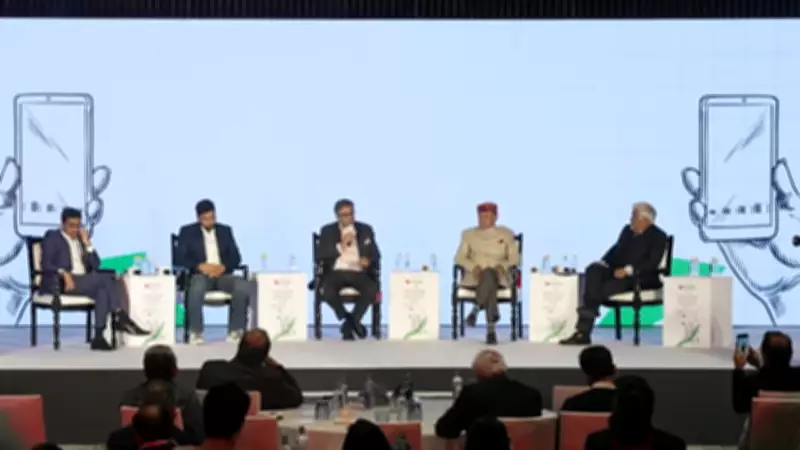
The second session of the dialogue was centered on the compelling theme 'March Towards Viksit Bharat'. This panel discussion was skillfully moderated by Sunil Barthwal, the former Commerce Secretary of the Government of India. The esteemed panel featured:

- Sunil Gupta, Managing Director and CEO of Yotta
- Shavir Bansal, a prominent content entrepreneur
- Ajay Sethi, Managing Director of Baker Tilly
- Lt General (Retd) Dr. SP Kochhar, Director General of COAI
Initiating the conversation, moderator Sunil Barthwal highlighted a crucial facet of the budget. He pointed to its long-term vision and strategic approach, urging stakeholders to understand it within a larger context rather than focusing solely on immediate tax provisions. Barthwal stated that the budget lays down a definitive step toward the ambitious Viksit Bharat 2047 vision, effectively setting a clear goal for the nation's position by that year.
He further emphasized that while India is already the world's fastest-growing major economy and poised to become the third-largest very soon, this is not the ultimate endpoint. The true objective is to evolve into a fully developed economy by 2047. Barthwal noted that, for the first time, the budget has very clearly charted out a comprehensive policy framework supporting this long-term vision, spanning from tax concessions to critical sectors like semiconductors.
Digital Infrastructure: The Road and Its Resilience
Lt General (Retd) Dr. SP Kochhar underscored the paramount importance of digital infrastructure as the essential road leading to Viksit Bharat. However, he expressed significant concerns regarding the budget's approach. He noted a lack of specific attempts to make this digital infrastructure more robust and resilient.
Dr. Kochhar warned, "If digital highways were to break down, there would be complete mayhem." He acknowledged that while both physical and digital infrastructure are vital, digital is unequivocally the future. This recognition is reflected in government assertions and the budget's allocations. He clarified that components enabling the digital ecosystem have been addressed, but the critical task of fortifying this infrastructure against disruptions remains unaddressed, despite the Ministry of Communications identifying telecom networks as value-added horizontals requiring strengthening.
Tax Stability and the Blueprint for Growth
Ajay Sethi, Managing Director of Baker Tilly and an accountant by profession, appreciated the budget's decision to introduce no tax changes. He remarked, "Every year when the budget is announced, there are some expectations of tax changes. Taxes cannot be changed endlessly; the blueprint for growth is the critical factor for a good budget."
Sethi projected an optimistic outlook, suggesting that 2025 could mark a golden era for India, akin to what China experienced 15-20 years ago. He believes 2026 is poised to be a fantastic year. Addressing global trade dynamics, he highlighted the government's strategic response through Free Trade Agreements (FTAs), which he termed as game-changers in navigating issues like trade tariffs with the US.

The Rise of the 'Orange Economy'
Content entrepreneur Shavir Bansal sought to demystify the creator economy, applauding the government's formal acknowledgment of content creation as a legitimate profession, now termed the 'orange economy'. As a content creator himself, Bansal described the budget as feeling very personal.
He highlighted the substantial economic contribution of content creation, currently adding around $20 billion to the Indian economy. Bansal projected this figure is bound to rise significantly in the coming years, potentially reaching around $100 billion. He positioned this sector as a very important pillar supporting overall growth within the services package.
Data Centres and National Digital Sovereignty
Sunil Gupta, explaining the rationale behind the budgetary focus on data centres and related tax reliefs, stated, "The digital infrastructure of the country needs to keep pace with the digital adoption in our lives, and AI is only amplifying this need further."
He added that this focus stems from a crucial realization: while everyone views India as a massive consumer market, a significant portion of data services is currently provided from outside the country. The budget's measures aim to bolster domestic data infrastructure and enhance national digital sovereignty.
The Times of India Budget Dialogues 2026 successfully provided a multi-faceted, in-depth analysis of the Union Budget, blending expert insights on fiscal policy, digital resilience, economic stability, and the burgeoning creator economy into a cohesive narrative for India's development journey.