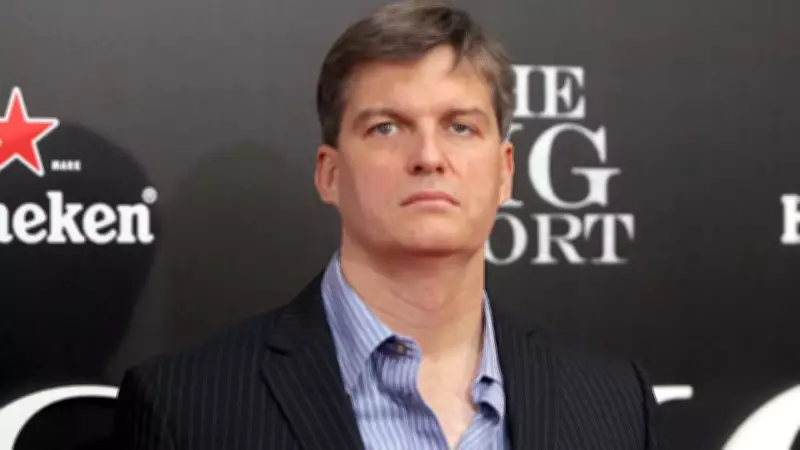
Michael Burry, the renowned American investor celebrated for his prescient market forecasts, has recently shared his perspective on Elon Musk's grand vision for the future. In a detailed analysis, Burry has labeled the Tesla and SpaceX CEO as an 'American treasure,' yet he has simultaneously issued a cautionary note, suggesting that the future Musk is striving to build is 'much further away than he thinks.'
Burry's Assessment of Musk as a Futurist and Showman
As reported by Business Insider, Burry expressed his views through a series of posts on the social media platform X, formerly known as Twitter, and on his Substack newsletter. He described Musk as a 'desperate incentivised futurist' who is driven by the belief that his visionary ideas can translate into enormous profits once they materialize. Drawing historical parallels, Burry compared Musk to iconic figures such as P.T. Barnum, the famous showman, and Thomas Edison, the prolific inventor. He posited that Musk will likely be remembered in history books as both a masterful showman and a groundbreaking inventor, blending spectacle with innovation.
The Role of Futurists in Capital Raising
Burry, who gained fame for accurately predicting the 2008 financial crisis, elaborated on the nature of futurists in the business world. He argued that such visionaries are 'always decades early' in their projections. They often promote ambitious visions with indefinite timelines, which strategically allows them to raise substantial capital from investors. According to Burry, Elon Musk's expansive projects—ranging from colonizing Mars to deploying millions of autonomous robotaxis—perfectly fit this mold. These grand endeavors serve not only as technological goals but also as powerful narratives that attract funding and public interest.

Potential Merger of Musk's Companies and Market Valuations
In his commentary, Burry also highlighted recent reports suggesting that Musk is considering a potential merger between his three major entities: SpaceX, Tesla, and his artificial intelligence startup, xAI. He noted that the financial markets have already begun to price in such a consolidation, reflecting the combined valuations of these companies. Based on recent data:
- SpaceX is valued at approximately $800 billion, as indicated by a private share sale in December 2025.
- Tesla boasts a market capitalization of around $1.3 trillion.
- xAI has reached a valuation of $230 billion following a fundraising round in November 2025.
Burry calculated that the trio's combined worth totals about $1.6 trillion, a figure he believes 'more than encompasses' their current and future value, suggesting that the market may have already fully accounted for their potential synergy.
Strategic Rationale Behind the Proposed Mergers
The rationale for merging these companies appears multifaceted. For SpaceX, a primary motivation could be the intensifying global AI arms race. SpaceX has signaled plans to launch data centers into orbit, and by integrating xAI's advanced software directly with Starlink's satellite hardware, Musk could potentially create a globally accessible, space-based AI network. This network would be physically shielded from terrestrial disruptions, offering a unique competitive advantage in the tech landscape.
Meanwhile, alternative proposals are also under discussion. Bloomberg reports that some investors are advocating for a merger between Tesla and xAI. This alignment would ensure that xAI's cutting-edge technologies, such as 'Full Self-Driving' (FSD) capabilities and robotics innovations, are optimally utilized within Tesla's electric vehicle and humanoid robot programs, including the Optimus project.
Expert Opinions and Corporate Developments
Industry experts have weighed in on the potential consolidation. Gene Munster, managing partner at Deepwater Asset Management, commented, 'I think it's highly likely that xAI ends up with one of the two parties. What's important for Elon is to have a massive vision that's way out there that he's early on.' This sentiment underscores the strategic importance of Musk's far-reaching ambitions in driving corporate strategy and investor confidence.

Dennis Dick, chief market strategist at Stock Trader Network, added a note of caution, stating, 'Musk has too many separate companies. A major risk thesis for Tesla is that Musk is spreading himself out too much. As a Tesla shareholder, I applaud further consolidation.' This perspective highlights concerns about resource allocation and focus, suggesting that merging entities could streamline operations and enhance efficiency.
In a related development, the report mentioned that two new entities were established in Nevada on January 21. Corporate filings listed SpaceX and its CFO, Bret Johnsen, as managing members, hinting at possible organizational restructuring or new ventures in the pipeline. These moves align with the broader narrative of consolidation and strategic realignment within Musk's corporate empire.