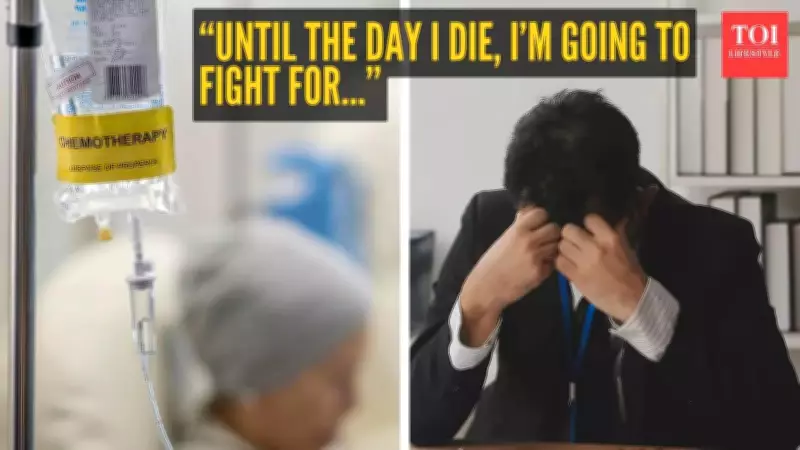
For Tyler Wells, the most challenging aspect of his cancer battle extended far beyond hospital visits, medical tests, or chemotherapy sessions. It permeated his professional environment, where he found himself negotiating for something he believed should never have required discussion: adequate time to recover. The US-based social media professional, undergoing treatment for brain cancer, recently revealed that he resigned from his high-paying position after his employer denied him paid time off during chemotherapy, despite having an "unlimited leave" policy officially in place.
Who Is Tyler Wells?
Wells is a Tennessee-based digital professional who worked at an advertising agency, earning what he described as a six-figure salary. During his tenure, he received a brain cancer diagnosis and began chemotherapy, a process that is physically and emotionally draining, often necessitating extended recovery periods. Like many professionals facing serious illnesses, Wells attempted to balance work with treatment but soon found it increasingly difficult. To manage his health, he requested periodic time off, which he described as modest, to focus on recovery.
What Exactly Happened at Work?
Wells stated that his company had an "unlimited paid time off" (PTO) policy, designed to allow employees to take time off as needed, provided their work was completed and manager approval was granted. However, unlimited PTO policies often come with unspoken guidelines and expectations. While undergoing chemotherapy, Wells sought to take a couple of days off each month, totaling approximately 24 to 36 days annually, to rest and recuperate.

His request was reportedly denied. He later shared on social media platform X that using PTO regularly during treatment was viewed as "abuse" of the policy. Instead of paid leave, he was directed to apply for unpaid time off under the US Family and Medical Leave Act (FMLA). Additionally, his request for a temporarily reduced workload was rejected, with human resources stating the company was not "obligated" to make adjustments. Faced with minimal support and mounting pressure, Wells ultimately chose to resign.
Why 'Unlimited PTO' Often Isn't Truly Unlimited
On paper, unlimited leave policies appear generous, but in practice, they frequently have limitations. Unlike traditional leave systems where employees know their exact allotted days, unlimited PTO typically hinges on managerial discretion. Many employees end up taking less time than necessary due to factors such as fear of appearing uncommitted, performance pressures, workplace competition, and unspoken expectations. In Wells' case, the policy failed to provide the support he needed during a critical health crisis.
Why His Story Resonated Widely
After Wells shared his experience online, thousands responded with their own stories, recounting instances where illness, burnout, or family emergencies were met with resistance at work. Many described struggling to obtain basic understanding or support during medical crises. His narrative struck a chord because it highlighted a broader issue: employee wellness is often discussed but not consistently implemented in corporate settings.
The Mental and Financial Toll of Working Through Illness
Beyond physical discomfort, cancer treatment often brings anxiety, emotional exhaustion, and financial uncertainty. Wells emphasized that unpaid leave would have meant worrying about bills while battling a life-threatening condition. "People who are sick are worried about so much already," he wrote. "We shouldn't have to worry about paying bills." Mental health professionals note that such workplace pressures can significantly delay recovery and exacerbate emotional distress.
How Do Workplace Leave Policies Compare?
In the United States, employees may access unpaid medical leave under federal law, but paid medical leave is not universally guaranteed. In India, most companies offer limited sick leave, with rules varying significantly across sectors. Large corporations might provide additional medical benefits, but contract and informal workers often have minimal protection. Consequently, many individuals rely on managerial empathy rather than clear legal safeguards, and paid leave is not always accessible during serious illnesses.

A Larger Debate on Compassion at Work
Wells has since advocated for broader reforms, including better protection for employees undergoing treatment, guaranteed paid medical leave, more flexible work arrangements, and a shift away from productivity-centric cultures. He argued that companies must prioritize people over performance metrics, especially during health emergencies. "Some of this is policy," he wrote. "Some of it is just heart reform."
What His Story Reveals About Modern Workplaces
Wells' resignation raises a crucial question: how much support do workplaces genuinely offer when employees face difficult times? Many companies promote work-life balance and employee well-being, but stories like his demonstrate that real support often depends more on organizational culture than written policies. For numerous individuals, his experience serves as a reminder that behind job titles and paychecks, there are real people who sometimes need understanding above all else.
Disclaimer: This article reflects the experiences and claims shared by Tyler Wells. The information is provided as reported and has not been independently verified.