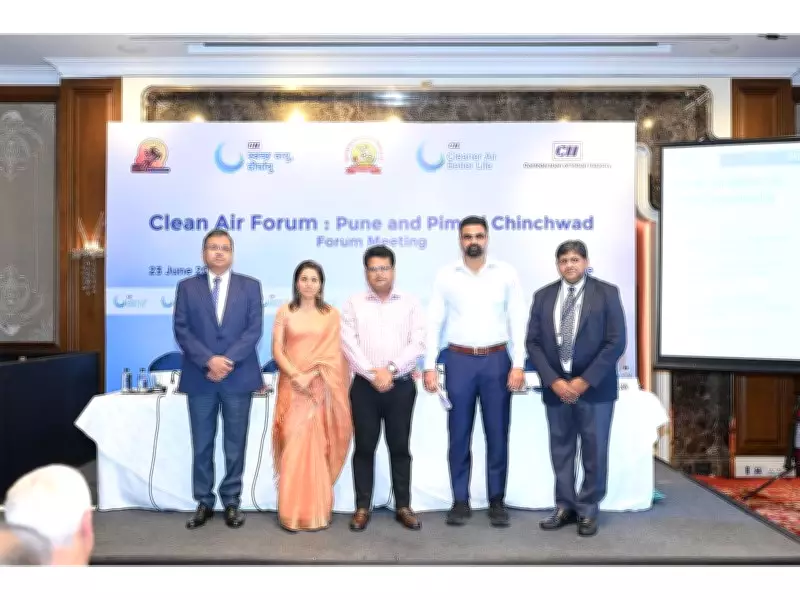
Cummins India, in partnership with the Confederation of Indian Industry (CII), has launched an advanced Decision Support System (DSS) for air quality management in Pune and Pimpri Chinchwad, marking a significant step in the Cleaner Air Better Life (CABL) initiative. The DSS provides predictive, data-driven insights to enable authorities to make proactive decisions for improved urban air quality.
What is the Decision Support System?
Developed in collaboration with the Pune Municipal Corporation (PMC), Pimpri Chinchwad Municipal Corporation (PCMC), and Airvoice, the DSS platform offers up to 72-hour air quality forecasts. It helps city authorities identify pollution hotspots, investigate emerging air quality events, anticipate pollution episodes, and plan timely interventions. The system is designed to support hyperlocal, data-backed solutions tailored to city-specific emission sources such as transport and construction.
Collaborative Efforts Under CABL
The CABL initiative, conceptualized by Cummins India, CII, and NITI Aayog, has evolved into a national multi-stakeholder platform. It brings together government, industry, academia, civil society, and communities through four focused task forces on clean transport, clean fuel, clean industry, and biomass management. Since its inception, the forum has moved from policy dialogue to on-ground implementation, delivering measurable impact across rural India.

Measurable Environmental Impact
According to the release, the CABL initiative has reached over 1 lakh farmers, avoided 6.4 lakh tonnes of crop residue burning, conserved 71 billion liters of water, reduced an estimated 1.3 lakh tonnes of CO₂ emissions, and covered 432 villages and over 4.8 lakh acres.
Quotes from Key Leaders
Shveta Arya, Managing Director of Cummins India Ltd. and Chairperson of CII Cleaner Air Better Life, said, "Every city has a unique air quality challenge and therefore requires a unique solution. By expanding this collaborative model from Delhi to cities like Pune, we are creating a blueprint for cleaner, more resilient urban environments."
Ashish Aggarwal, Executive Director & Chief Administrative Officer of Cummins India, added, "Through the Cleaner Air Better Life initiative we are enabling collaborative, on-ground action that delivers measurable environmental outcomes and contributes to healthier, more resilient communities."
Mr. Shikhar Jain, Executive Director of CII - CESD, noted, "The Cleaner Air Better Life initiative demonstrates how collaboration and technology can accelerate environmental progress. By adopting and empowering with predictive, data-driven planning, we are helping cities make smarter decisions that improve air quality and public health."
Government Participation
The launch event at the Clean Air Forum gathered senior government leaders, including the Municipal Commissioner of Pune and the District Collector of Pune, alongside representatives from PMC, Mr. Naval Kishore Ram, Municipal Commissioner of Pune Municipal Corporation and Co-Convener of the Clean Air Forum, and Mr. Jitendra Dudi, District Collector of Pune. Industry leaders, academia, research institutions, and civil society organizations also participated, highlighting the importance of public-private collaboration in advancing cleaner air solutions.
About Cummins Group in India
Established in 1962 and headquartered in Pune, Cummins Group in India is a leading provider of integrated power solutions for industrial and automotive sectors, operating through 12 legal entities. The company designs, manufactures, distributes, and services engines and powertrain components for commercial vehicles, gensets, and industrial markets, with 19 manufacturing plants and over 600 customer touchpoints. It employs over 15,500 people committed to its mission of "making people's lives better by powering a more prosperous world."
About the Cleaner Air Better Life Initiative
The Cleaner Air Better Life (CABL) Initiative is a flagship industry-led programme launched by CII in partnership with NITI Aayog. It aims to address air pollution through collaborative and evidence-based action, supporting cities in designing data-driven approaches to air quality management, strengthening institutional capacity, and promoting collaborative governance.