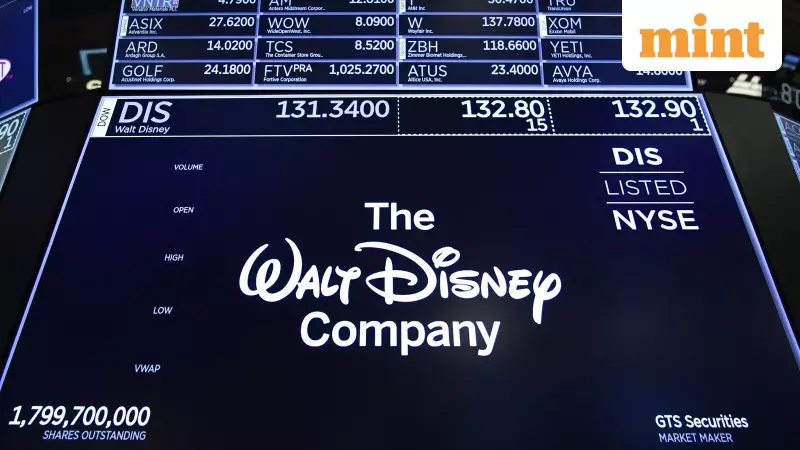
Disney's Strategic Revival: A Four-Point Roadmap for the Next CEO
Walt Disney Company finds itself at a critical juncture as it prepares for a leadership transition in 2026. With CEO Bob Iger set to step down, the entertainment giant's next leader faces the formidable challenge of revitalizing a stock that has significantly underperformed compared to peers over the past decade.
The Stagnant Performance Challenge
Disney shares recently traded around $110, representing a mere 17% increase from their value ten years ago. This performance pales in comparison to Netflix's staggering 832% surge and the S&P 500's 271% growth during the same period. Despite this disappointing trajectory for investors, analysts maintain optimism about Disney's underlying assets and future potential.
Barron's has identified the stock as a top pick for 2026, citing attractive valuation metrics for a company controlling premier entertainment properties and positioned for robust theme park earnings expansion. The impending CEO succession—with parks chief Josh D'Amaro and television head Dana Walden emerging as frontrunners according to Wall Street Journal reports—presents both uncertainty and opportunity for the entertainment behemoth.

The Four-Pillar Transformation Strategy
1. Accelerating Streaming Profitability
Streaming represents the paramount priority for Disney's incoming leadership. MoffettNathanson analyst Robert Fishman emphasizes that investors require "renewed confidence that streaming revenue growth and profitability still have meaningful runway." The analyst maintains a Buy rating with a $140 price target, suggesting 27% upside potential.
Disney appears to be moving in the right direction, with streaming division operating margins projected to climb from 7% to 11% in the fiscal year ending September. Chief Financial Officer Hugh Johnston clarified that margin expansion will come through revenue enhancement rather than cost reduction. The company's December partnership with ChatGPT developer OpenAI could further boost Disney+ engagement through artificial intelligence integration, potentially creating a significant competitive advantage.
2. Delivering Consistent Box-Office Success
While competitors battle for Warner Bros. Discovery assets, Disney wisely focuses on its existing powerhouse franchises. The upcoming content slate features new installments of Toy Story, Star Wars, Avengers, Ice Age, and The Simpsons—a formidable lineup that could drive substantial theatrical revenue.
The challenge involves maintaining box-office momentum while navigating superhero fatigue, evidenced by Marvel's 2025 disappointments. Fishman advocates building a streaming "flywheel" where hit films and series attract more subscribers, generating additional content investment funds—a model that propelled Netflix to 27% operating margins.
3. Transforming ESPN for the Streaming Era
ESPN's transition from cable cash cow to streaming contender represents Disney's most pressing concern. The August launch of an ESPN streaming service marks a crucial step, with the key question being whether it can generate sufficient profit to offset cable subscriber losses.
Early indicators appear promising: sports segment operating income increased by $476 million last year while linear networks profit declined by $497 million. The February 2027 Super Bowl broadcast presents a major opportunity, while longer-term options include potential spin-off or sale scenarios similar to Comcast's cable asset divestment strategy.
4. Capitalizing on Theme Park Dominance
Disney's experiences division—encompassing theme parks and cruise lines—has emerged as the company's primary earnings engine, contributing $10 billion of $17.6 billion in total operating income last year. Analysts project 22% growth to $12.2 billion by 2028.
Despite competition from Comcast's new Orlando park and potential economic headwinds, Disney continues investing billions to maintain attraction superiority. Morningstar analyst Matt Dolgin notes this division represents "the most important business to drive value for the firm" with "durable growth" prospects.

Learning from Past Leadership Transitions
The shadow of Bob Chapek's tumultuous 21-month tenure as CEO looms over this transition. However, analysts believe Disney enters this leadership change from a stronger position, with streaming achieving profitability and parks demonstrating resilience.
Dolgin summarizes the incoming CEO's mandate succinctly: "needs to execute on the foundation that is in place." While Iger's departure may unsettle investors, a Chapek-style debacle appears avoidable if the new leader implements the fundamental strategies outlined. With proper execution across these four critical areas, Disney stock could finally rediscover the magic that has eluded it for a decade.