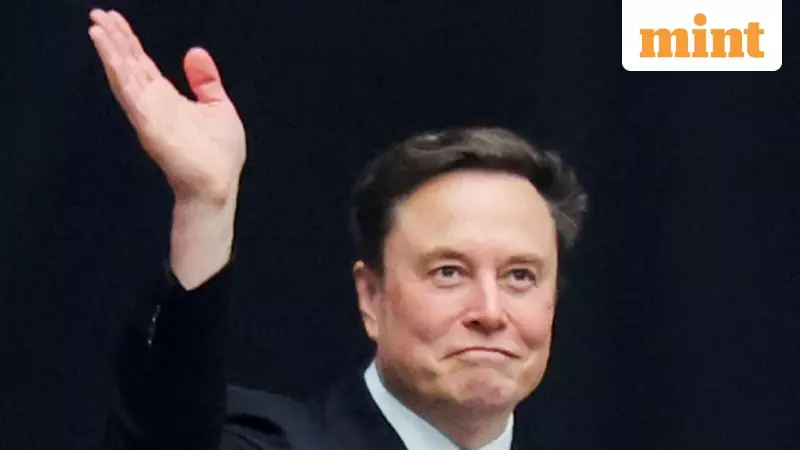
In a landmark decision that could reshape global wealth, Tesla shareholders have given their approval to a historic $1 trillion pay package for CEO Elon Musk. This move positions the tech visionary to potentially become the world's first trillionaire, with the full rollout planned over a decade based on performance targets. Given his wealth's deep ties to Tesla's stock performance, this astronomical financial milestone appears highly achievable.
The Billionaire's Surprisingly Modest Life
Despite being on the cusp of unprecedented wealth, Elon Musk's personal lifestyle tells a different story. In a 2021 post on his platform X, Musk revealed he resides in a prefabricated Texas home worth just $50,000. This claim of a modest existence was corroborated by his former partner, singer Grimes, who told Vanity Fair that Musk lives a lifestyle "below the poverty line." She shared a telling anecdote, stating, "Bro does not live like a billionaire. Bro lives at times below the poverty line. Once, he refused to buy a new mattress," despite the existing one having a hole.
Where the Billions Actually Go: Cars, Planes, and Real Estate
While his current home is humble, Musk's spending on other fronts tells a story of immense wealth. His collection of automobiles is both extensive and eccentric. According to a BBC report, it includes a 20th-century Ford Model T, the vehicle that revolutionized auto manufacturing. More unusually, he owns the 1976 Lotus Esprit from the 1977 James Bond film 'The Spy Who Loved Me,' a car famous for its submarine transformation capability. The collection also boasts a 1967 Jaguar E-Type Roadster, a 1997 McLaren F1, and the Tesla Roadster he famously launched into space in 2018.

For travel, Musk has spent millions on personal aircraft. Defending his use of a private plane during a 2022 TED interview, he stated it was necessary to maximize his work hours. The BBC report confirms he owns multiple Gulfstream models, each valued at tens of millions of dollars.
His real estate history is also far from modest. A 2019 Wall Street Journal report highlighted that he spent a whopping $100 million to acquire seven properties in Los Angeles's prestigious Bel-Air neighborhood over seven years. One of these was a ranch house previously owned by the late actor Gene Wilder. As of June 2025, besides his primary Texas residence, Musk still owns Wilder's three-bedroom house in Bel Air. He attempted to sell it to the actor's nephew on a loan but retook possession after repayments failed. Interestingly, in 2022, Musk claimed he was "kind of homeless" and often stayed at friends' houses, a habit confirmed by former Google CEO Larry Page.
Philanthropy Under the Microscope
Musk's approach to charity has drawn significant scrutiny. While US regulatory documents show he has donated billions in shares to charities and pledged millions to various causes, his philanthropy has been labeled as "haphazard and largely self-serving" by The New York Times. The criticism points out that these donations make him eligible for enormous tax breaks and help his businesses.
His charitable arm, the Musk Foundation, states its mission is to advance humanity through scientific research and innovation. However, The New York Times found that the foundation failed to meet its required distribution amounts for three consecutive years. Furthermore, many donations went to organizations with links to Musk himself.
When questioned about traditional philanthropy, Musk has expressed skepticism. In a 2022 conversation with Chris Anderson, he remarked, "I think if you care about the reality of goodness instead of the perception of it, philanthropy is extremely difficult." For Musk, his business ventures are the ultimate form of philanthropy. He insists that Tesla accelerates sustainable energy, SpaceX ensures humanity's long-term survival, and Neuralink addresses brain injuries and AI risks.