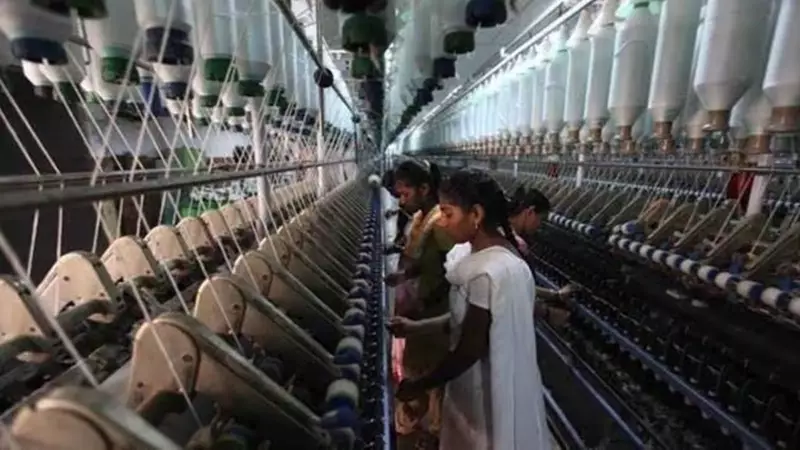
The announcement of the finalized Free Trade Agreement (FTA) between India and the European Union has sent shockwaves through the Indian stock market, creating a stark divergence between automotive and textile sectors. While automakers faced significant selling pressure due to reduced import barriers, textile companies experienced a robust rally as the deal promises enhanced access to European markets.
Automotive Sector Faces Headwinds
Shares of major Indian automobile manufacturers tumbled sharply on Tuesday following the FTA revelation. The agreement stipulates that India will progressively reduce import duties on European-manufactured cars from 110% to 10% for up to 250,000 vehicles annually. This substantial quota far exceeds the 37,000 vehicles allocated to the United Kingdom under a previous trade pact.
The market reaction was immediate and pronounced. The Nifty Auto index closed 0.9% lower, with individual stocks showing even steeper declines. Hyundai Motor India plummeted 4%, while Maruti Suzuki India settled 1.4% down after experiencing intraday losses of up to 2.9%. Mahindra & Mahindra, with its substantial SUV portfolio, closed 4.2% lower after falling as much as 5.6% during trading hours.

Analyst Perspectives on Auto Impact
Industry analysts expressed concern about the potential volume impact on domestic manufacturers. "The trade deal is likely to affect around 3-4% of volume for M&M and approximately 1-2% for smaller players in the SUV segment like Maruti Suzuki and Tata Motors," noted an analyst from a domestic brokerage firm. The SUV segment appears particularly vulnerable as these vehicles typically hover around the minimum import price threshold.
Radhika Rao, Senior Economist at DBS Bank, highlighted the protective measures incorporated into the agreement. "Authorities have implemented special provisions to balance the impact of increased imports on domestic manufacturing. There will be an exclusion for cars priced below Rs 25 lakh to safeguard the mass market segment, while premium vehicles will face greater openness. Additionally, access to electric vehicle markets will be phased in gradually over five years."
Textile Industry Emerges as Clear Winner
While the automotive sector grapples with increased competition, India's textile industry stands to benefit substantially from the FTA. The European Union has committed to eliminating tariffs on Indian textiles, reducing them from 12% to zero. This development triggered a significant rally in textile stocks, with companies like Welspun Living, KPR Mills, Vardhman Textiles, and Indo Count Industries closing 2-6% higher.
The textiles ministry emphasized the magnitude of this opportunity, stating that zero-duty access would open up the EU's massive import market valued at approximately Rs 22.9 lakh crore. As India's second-largest export destination for textiles and apparel after the United States, the European market represents a crucial growth avenue for ready-made garments, cotton textiles, man-made fibers, and handicrafts.
Broader Market Implications
The benchmark indices demonstrated resilience despite sectoral volatility. The Sensex, which had fallen nearly 450 points in early trading, recovered to close 320 points or 0.4% higher at 81,857.48 points. Similarly, the Nifty 50 ended the session 0.5% higher, indicating overall market confidence in the long-term benefits of the trade agreement.
Beyond automobiles and textiles, other sectors experienced mixed reactions. Pharmaceutical and alcohol companies also faced downward pressure as India agreed to reduce tariffs on most pharmaceuticals to zero from 11% and slash duties on European wines, spirits, and beer from 110-150% to 20-50%. Companies including United Spirits, United Breweries, Sula Vineyards, and Radico Khaitan ended 1-3% lower.
The European Commission characterized this agreement as "the most ambitious trade opening that India has ever granted to a trade partner," projecting that EU goods exports to India could double by 2032. In 2024, the EU exported motor vehicles worth 1.6 billion euros to India, a figure expected to grow significantly under the new tariff regime.

Additionally, export-oriented sectors like aquaculture received a boost, with companies such as Avanti Feeds and Apex Frozen Foods closing 3% and 10% higher respectively, benefiting from expanded access for food and agricultural exports to European markets.