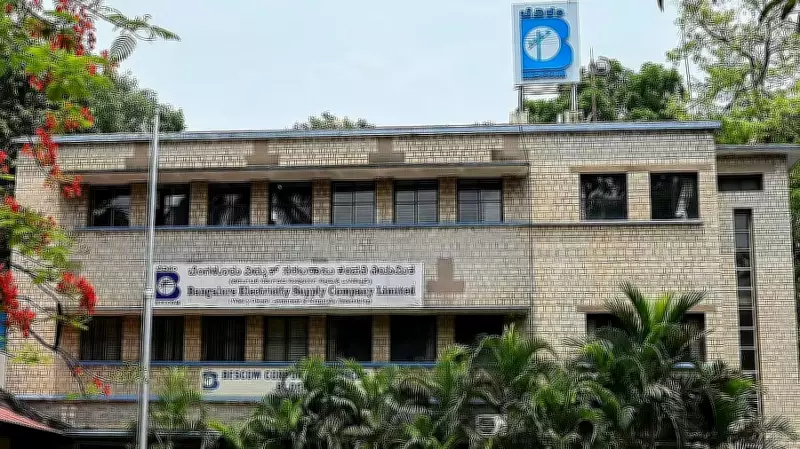
FKCCI Raises Strong Objection to Bescom's Annual Performance Review
The Federation of Karnataka Chambers of Commerce and Industry (FKCCI) has officially registered its opposition to the Bangalore Electricity Supply Company's (Bescom) recent annual performance review (APR) submission. This development comes as Bescom seeks regulatory relief that could potentially lead to increased electricity tariffs for consumers across its service area.
Bescom's Revenue Deficit Claims
In its comprehensive annual performance review and accompanying truing-up petition submitted to the Karnataka Electricity Regulatory Commission (KERC), Bescom has highlighted significant revenue deficits in its operations. The utility company has pointed to financial shortfalls that have accumulated over the review period, creating what it describes as an unsustainable financial position that requires regulatory intervention.
The crux of Bescom's argument centers on the gap between its operational costs and the revenue generated from existing tariff structures. Company officials have presented detailed financial data showing that current electricity rates fail to cover the full spectrum of expenses, including infrastructure maintenance, system upgrades, and administrative overhead.

Indirect Tariff Increase Request
While not explicitly stating it in direct terms, Bescom's submission to KERC contains clear implications for potential tariff adjustments. The utility has framed its request as seeking "relief" from the regulatory commission, but industry analysts and business organizations like FKCCI interpret this as an indirect approach to securing permission for electricity rate increases.
The truing-up mechanism, a standard regulatory practice in the electricity sector, allows utilities to reconcile projected revenues with actual financial performance. However, FKCCI representatives argue that Bescom's application goes beyond routine adjustment and represents a significant push toward shifting financial burdens onto consumers and businesses.
FKCCI's Counter-Arguments
The business chamber has articulated several key concerns regarding Bescom's approach:
- Questioning the efficiency of Bescom's operations and whether all possible cost-saving measures have been implemented
- Expressing concern about the timing of potential tariff increases during a period of economic recovery
- Requesting greater transparency in how Bescom calculates its revenue requirements
- Suggesting alternative approaches to addressing revenue gaps without immediately resorting to consumer tariff hikes
FKCCI officials have emphasized that any tariff increase would have cascading effects throughout the economy, potentially increasing production costs for industries, raising operational expenses for businesses, and ultimately affecting consumer prices across multiple sectors.
Regulatory Process and Next Steps
The Karnataka Electricity Regulatory Commission now faces the complex task of evaluating Bescom's submission while considering FKCCI's objections and the broader implications for Karnataka's economic landscape. The regulatory body typically follows a structured process that includes:
- Detailed examination of Bescom's financial data and performance metrics
- Public hearings to gather stakeholder input
- Technical analysis by independent experts
- Comparative assessment with other electricity distribution companies
- Final determination on tariff structures and any permitted adjustments
Industry observers note that this dispute highlights the ongoing tension between utility companies seeking to maintain financial viability and consumer/business groups advocating for affordable, predictable energy costs. The outcome of KERC's deliberations could set important precedents for how similar cases are handled in the future, potentially influencing electricity pricing policies across Karnataka and possibly other states with similar regulatory frameworks.

The business community, through FKCCI, has indicated it will continue to monitor the situation closely and may pursue additional advocacy efforts if it believes the regulatory process is not adequately considering the economic impact of potential tariff increases on Karnataka's commercial and industrial sectors.