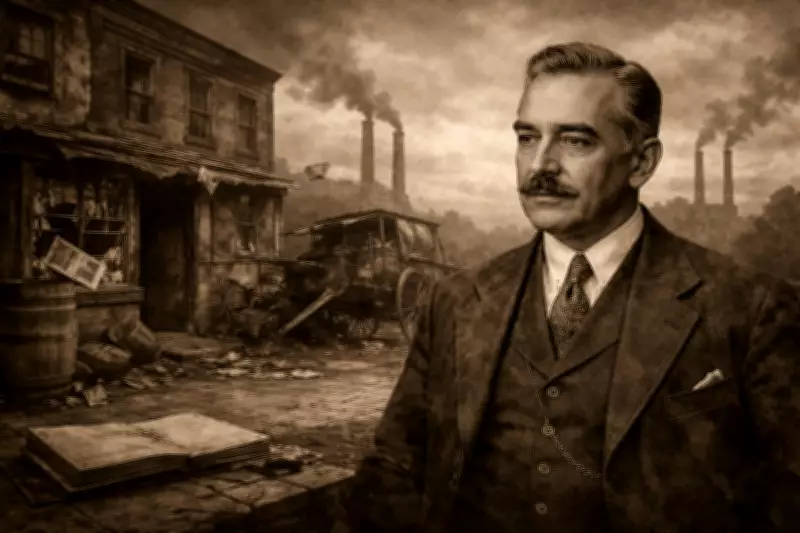
Milton Hershey's Journey: How Early Failures Built a Chocolate Empire
Milton S. Hershey's path to success was paved with repeated setbacks and financial collapses that would have discouraged most entrepreneurs. His early career as a confectioner was marked by ventures that failed due to inexperience and economic strain, each bankruptcy depleting his resources but simultaneously strengthening his determination. Rather than retreating from the industry, Hershey meticulously analyzed his mistakes, refined his techniques, and returned to the business with renewed focus and clarity.
The Apprentice Who Kept Rebuilding
Hershey's career began with traditional apprenticeship training in Lancaster, Pennsylvania, where he learned the confectioner's craft. In 1876, he opened his first candy store in Philadelphia, investing six years of relentless effort before the business ultimately failed and declared bankruptcy. Undeterred, Hershey moved to Denver and Chicago, attempting new ventures in different markets, and later tried his luck in New York City. Each of these early enterprises met with similar disappointing results, leaving him financially strained but with invaluable practical knowledge about customer preferences, production scaling, and common industry pitfalls.
Finding a Sweet Spot: Caramels, Scale and Timing
The turning point arrived when Hershey narrowed his focus to a single product and perfected its production method. Returning to Lancaster in the mid-1880s, he established a caramel business that incorporated fresh milk into the recipe—an innovation that created a richer, more consistent product that distinguished his goods from competitors. By emphasizing product consistency, implementing mechanized cooking processes, and expanding distribution networks, his Lancaster Caramel Company experienced explosive growth throughout the 1890s. This transformation turned the previously struggling entrepreneur into a profitable manufacturer with a solid reputation.

Selling Up and Betting on Chocolate
At the century's turn, Hershey accomplished what few entrepreneurs achieve: he leveraged his initial success to fund an entirely new venture. In 1900, he sold the caramel business for approximately $1 million—an enormous sum at the time—and redirected both capital and attention toward chocolate manufacturing. This strategic shift was inspired by his observations of European chocolate-making machinery at the 1893 Chicago World's Exposition. The Hershey Chocolate Company, initially established as a subsidiary of his caramel firm, became his concentrated investment in making milk chocolate affordable and accessible to ordinary Americans rather than remaining a luxury item for the wealthy.
Building a Town, a Factory and an Idea of Responsibility
Hershey's vision extended beyond mere business operations to encompass community development and social responsibility. He constructed a massive factory in Derry Township, Pennsylvania, and designed comprehensive housing and amenities for workers, creating the nucleus of what would become the company town still bearing his name. Furthermore, he institutionalized an extraordinary model of corporate philanthropy: in 1909, he and his wife established a school for orphaned boys, and later transferred substantial portions of his wealth into a trust to support this institution. This unique blend of entrepreneurial success and social purpose solidified his legacy as more than just a brand founder—it positioned him as a pioneer in community-building tied to industrial achievement.
Why the Failure Story Matters Now
The narrative of Hershey's transformation from bankruptcy to empire offers more than inspirational platitudes—it provides practical logistical lessons. His early failures taught him crucial business principles: what processes to standardize, when to secure financing, when to implement automation, and how to produce a single product consistently at scale. These experiences fundamentally altered his approach to risk, making him intensely pragmatic about reinvesting profits and acquiring machinery that reduced dependence on specialized artisans. These strategic decisions ultimately made chocolate affordable for millions and transformed a regional manufacturer into a national powerhouse.

The Hershey Legacy: Beyond Simple Perseverance
The Hershey story transcends simplistic narratives about grit and determination. It demonstrates the power of iterative improvement, strategic specialization, and the rare courage to sell one successful venture to fund the next ambitious project. The man who experienced multiple bankruptcies eventually attached his name to factories, parks, schools, and placed an affordable, beloved product on shelves across America. This apparent contradiction—using failure as a tactical roadmap rather than accepting it as final judgment—enabled the transformation of small-scale candy-making into one of the world's most recognizable food empires, leaving a lasting impact on both business practices and American culture.