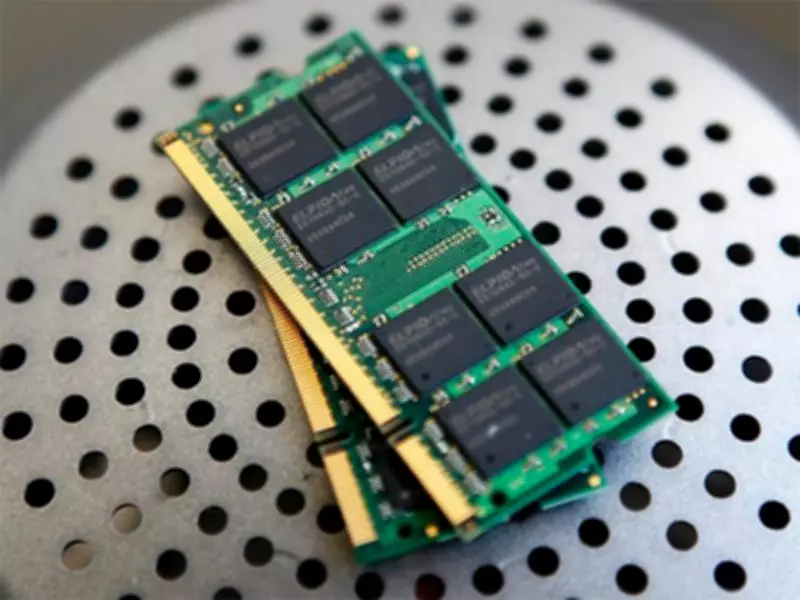
India is moving beyond its long-standing role as a global chip design hub and beginning to build domestic semiconductor manufacturing capabilities, as the artificial intelligence (AI) boom and a global reordering of semiconductor supply chains create new opportunities for the country, according to an Equirus Securities thematic report.
India's shift to full-stack semiconductor capability
The report said India, which has spent decades designing chips for global companies while importing almost every chip it consumed, is now entering "the next chapter" by building capabilities across fabrication, packaging and testing.
"For two decades India's place in semiconductors has been defined by design... This note is about the next chapter, the move from design talent toward full stack capability as India begins to fabricate, package and test chips on home soil," the report said.

Global semiconductor market to double by 2030
According to the report, the global semiconductor market is expected to grow from about USD 775 billion to USD 1.6 trillion by 2030, driven by AI, electrification and digital infrastructure. It said the changing geopolitical landscape has positioned India as a trusted manufacturing partner.
"A global chip market on course to grow from about US$ 775bn to US$ 1.6tn by CY30 is being rewired by a geopolitical reordering of where chips are made, and India has emerged as a trusted partner," it said.
India Semiconductor Mission and approved projects
The brokerage said India's semiconductor strategy now extends across the value chain through the India Semiconductor Mission (ISM), support for packaging and component manufacturing, and incentives for chip design and skilling. It noted that projects worth more than USD 21 billion have already been approved, including Micron's Sanand ATMP facility, Kaynes Semicon's OSAT unit and the Tata-PSMC fabrication plant at Dholera.
Focus on mature nodes and packaging
Rather than competing immediately in leading-edge chips, India is focusing on 28-110 nanometre technologies and semiconductor packaging, where the country has stronger commercial advantages. The report said India has around three lakh chip designers, roughly one-fifth of the global semiconductor design workforce, while domestic chip consumption is expected to more than double to about USD 155 billion by 2031.
"India is building where its advantages are real," the report said.
Challenges and long-term horizon
However, the report cautioned that the journey will take time. It said India still imports more than 90 per cent of its semiconductor equipment and most speciality chemicals and gases, while advanced manufacturing below 7nm remains absent.
"The constraints are real and the horizon is long," the report said, adding that "the binding risk is execution rather than strategy" as India remains in "roughly year five of a twenty year build."