Counter-UAV and pseudo-satellite systems approved
Drawing lessons from Operation Sindoor and the military standoff with China, the Defence Ministry on Friday approved a counter-UAV system for the Army and a pseudo satellite-based surveillance platform for the Indian Air Force. The Defence Acquisition Council (DAC), chaired by Defence Minister Rajnath Singh, accorded Acceptance of Necessity (AoN) for proposals worth Rs 52,000 crore.
For the Indian Air Force, approval was granted for the procurement of High-Altitude Pseudo-Satellites (HAPS), which will provide persistent intelligence, surveillance and reconnaissance (ISR), telecommunications and remote-sensing capabilities. The HAPS platforms feature fixed wings similar to aircraft and are powered by solar energy and onboard batteries. They are ultra-long-endurance unmanned aerial vehicles that operate in the stratosphere at an altitude of about 20 km.
Army gets Akash Tarang and kamikaze drones
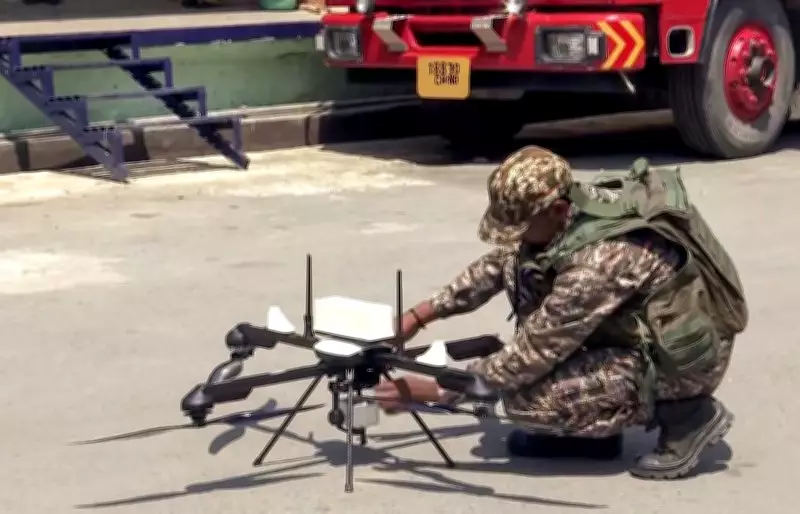
For the Army, the DAC approved the procurement of the Akash Tarang anti-UAV system, an electronic warfare platform designed to neutralise incoming drones. The Ministry of Defence said the system would provide effective anti-drone protection to Army formations. Rather than relying solely on kinetic interception through guns or missiles, Akash Tarang employs radio-frequency jamming, spoofing and other electronic countermeasures to disrupt command links and navigation signals of hostile drones.

The DAC also approved jet-powered kamikaze drones, man-portable anti-tank guided missile (MPATGM) systems, medium-range surface-to-air missile (MRSAM) systems and very short-range air defence systems (V-SHORADS). The MPATGM will strengthen infantry units’ ability to counter armoured threats. The MRSAM system will provide medium-range air defence, while the V-SHORADS will enhance close-range air defence capability.
Navy to get shipborne UAVs
For the Navy, the DAC approved the procurement of Naval Shipborne Unmanned Aerial Systems (NSUAS). Equipped with advanced sensors, these platforms are expected to significantly improve the Navy’s situational awareness and surveillance capabilities.
A pseudo-satellite flies high enough to perform many functions associated with a geostationary satellite, remaining over a designated area for weeks or even months at a time, but at a fraction of the cost of launching a satellite into space. Unlike conventional satellites, which eventually burn up or become space debris, HAPS can return to base, land on a runway and be redeployed.