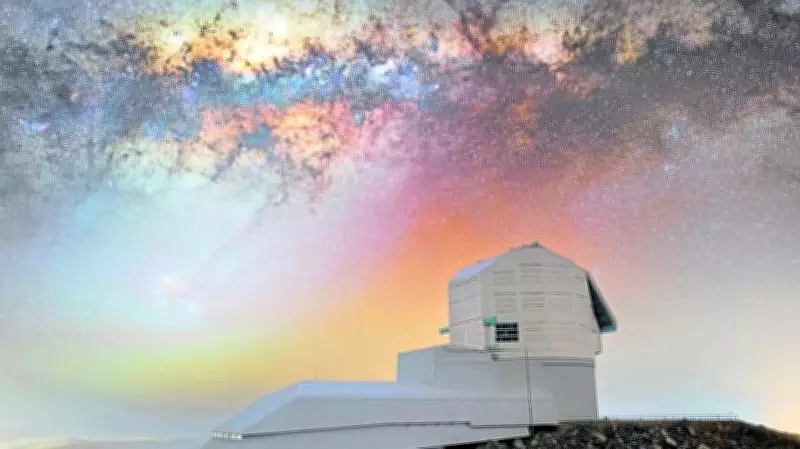
Vera Rubin Observatory Set to Revolutionize Astronomy
The Vera C. Rubin Observatory, currently under construction in Chile, is poised to transform our understanding of the cosmos. Over a decade-long survey, it will capture more than 20 billion galaxies by revisiting each patch of sky approximately 800 times. This ambitious project will effectively create a high-definition movie of the universe, tracking changes and movements across the night sky.
Unprecedented Scale and Cadence
According to project scientists, the observatory's 8.4-meter telescope and its 3.2-gigapixel camera—the largest digital camera ever built—will enable a survey of the entire visible sky every few nights. This rapid cadence is key to detecting transient events like supernovae, asteroid movements, and variable stars. Over 10 years, the telescope is expected to generate about 20 terabytes of data per night, leading to a total dataset of over 60 petabytes.
Mapping the Milky Way and Beyond
The Legacy Survey of Space and Time (LSST) will not only catalog billions of galaxies but also provide an unprecedented map of the Milky Way. By observing billions of stars, scientists hope to unravel the structure and history of our own galaxy. "This will be a goldmine for astronomers," said Dr. Kalyan Ray, a science journalist covering the project. "The sheer volume of data will enable discoveries we can't even imagine today."

Impact on Dark Matter and Dark Energy Research
One of the primary goals of the Rubin Observatory is to probe the nature of dark matter and dark energy. By measuring the shapes and distances of billions of galaxies, astronomers can map the distribution of dark matter and track the expansion history of the universe. This could provide crucial insights into why the universe's expansion is accelerating.
Technological Marvel
The observatory's camera, with its 189 individual CCD sensors, is a marvel of engineering. It can capture light from objects 100 million times fainter than what the human eye can see. The telescope's unique three-mirror design provides a wide field of view—about 3.5 degrees in diameter, or roughly 40 times the area of the full moon. This allows it to survey the sky with unparalleled efficiency.
Conclusion
The Vera Rubin Observatory represents a new era in astronomy. By filming the universe in unprecedented detail, it promises to answer fundamental questions about the cosmos while inevitably raising new ones. First light is expected in 2025, with full science operations beginning the following year.