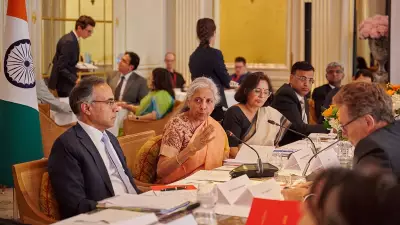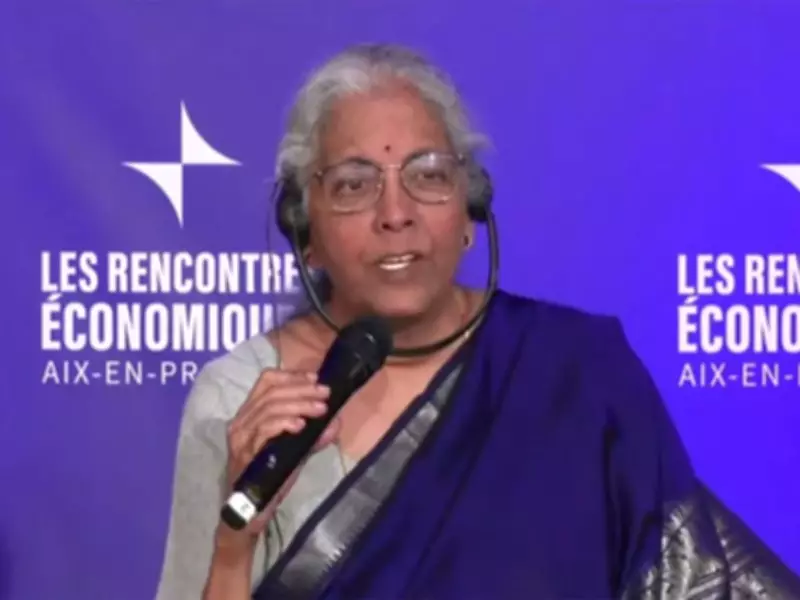
Union Finance Minister Nirmala Sitharaman stated on Saturday that India's middle class is projected to drive 93% of all consumption by 2036, positioning it as the primary engine of economic growth over the next decade. Speaking at the Rencontres Économiques d'Aix-en-Provence in France, she highlighted that nearly 500 cities are emerging as new economic hubs, with wealth distribution extending beyond metropolitan areas like Mumbai, Delhi, Bengaluru, and Chennai to tier-2 and tier-3 cities.
Middle Class as Growth Engine
Sitharaman described the middle class as "not just a beneficiary of growth, but actually the engines of growth," emphasizing that consumption triggers a virtuous cycle of economic activity. Currently, 31% of India's population belongs to the middle class, which has grown at an annual rate of 6.3% since 1995. According to OECD projections, India will surpass China in absolute middle-class population size between 2030 and 2035.
Policy Measures to Expand the Middle Class
The Finance Minister outlined several policy initiatives aimed at expanding the middle class from lower-income groups. The first step was financial inclusion through Jan Dhan accounts launched in 2014. Citing World Bank and IMF data, she noted that 248 million people have moved out of multidimensional poverty, with many entering the formal banking system via these accounts.

To support entrepreneurship, the government provided sovereign-guaranteed concessional loans, enabling borrowers without collateral to start small businesses. Many have since graduated to larger loans and built credit scores.
Digital Infrastructure and Tax Reforms
Digital infrastructure was the second pillar, making payments and banking accessible on feature phones and in regional languages, not just smartphones. This helped informal businesses formalize and improve creditworthiness. On taxation, Sitharaman said the income tax exemption limit was raised from Rs 0.25 million to Rs 1.2 million, increasing disposable income. GST was cut across commodities to support consumption and small businesses.
Health and Skills Initiatives
In health, every family receives Rs 5 lakh annual insurance cover under a cashless scheme, and citizens' pharmacies provide generic medicines at up to 80% lower cost. In skills, the government is funding girls' hostels in every district for STEM education and setting up five university townships for training. It is also skilling youth in AVGC (audiovisual, graphics, and gaming) to serve India's film, OTT, and export markets.
"Middle class is supported through these very measures. And they are today, therefore, an engine of India's growth," Sitharaman concluded.