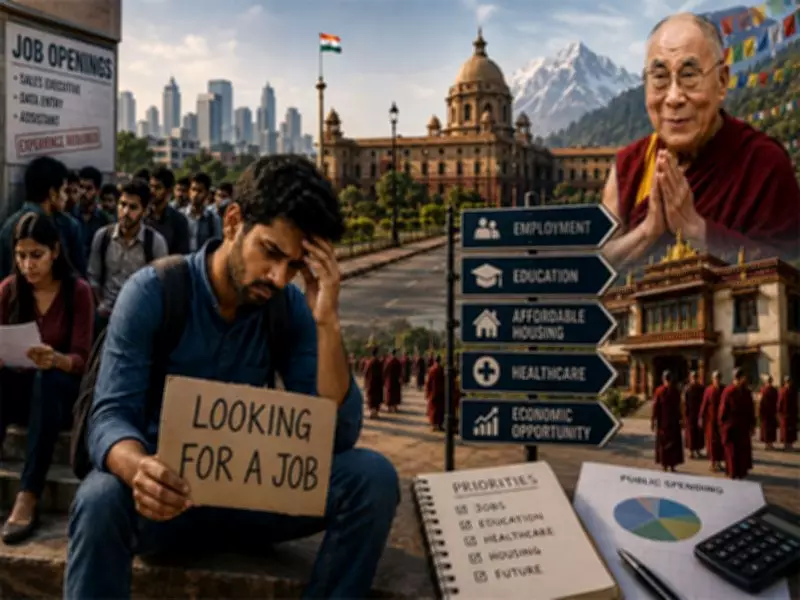
India's youth unemployment rate among those aged 15-29 reached 9.9 percent in 2025, according to official survey findings, while urban youth unemployment was reported at 13.6 percent. Despite improvements in educational attainment and workforce participation, many young Indians continue to struggle with securing stable and rewarding employment opportunities.
Rising Concerns Beyond Unemployment Figures
The challenge extends beyond unemployment numbers. Students and graduates across the country increasingly voice worries about rising living costs, career uncertainty, housing affordability, and the growing disconnect between educational qualifications and available jobs. For many families, investing in education represents a major financial commitment, creating expectations of better economic prospects upon graduation.
Economists and policymakers have highlighted broader economic uncertainties. Government officials have acknowledged challenges from global commodity price volatility, foreign exchange pressures, supply-chain disruptions, and rising input costs, all of which influence economic planning and public expenditure decisions.

Public Spending Debate Intensifies
At a time when employment generation, education reform, and economic resilience remain key public concerns, reports about a proposed new residence for the Dalai Lama have sparked public interest and discussion. According to information circulating among political and policy observers, the reported proposal involves the possible development of a residence in New Delhi to accommodate the Dalai Lama's age-related healthcare, accessibility, and security needs. Some reports suggest the project, reportedly valued at approximately ₹12 crore, could be located in or near areas associated with the Tibetan community in the national capital, where cultural, educational, and religious institutions already operate.
However, the details of the reported proposal have not been independently verified. No official project documentation, government notification, budget release, tender records, or public statement confirming the scope, funding, timeline, or implementation has been reviewed. Readers should treat references to the reported project as unverified information pending clarification from relevant authorities.
India's Longstanding Relationship with Tibetan Community
The Dalai Lama, widely regarded as one of the world's most influential spiritual leaders, has lived in India since 1959 after leaving Tibet. Over the decades, India has become the center of Tibetan cultural, religious, and educational activities in exile. Dharamshala in Himachal Pradesh hosts the Central Tibetan Administration and remains an important center for Tibetan Buddhist scholarship and cultural preservation. After the framing of the Tibet rehabilitation policy in 2014, the Centre set aside ₹40 crore for Tibet resettlements. Every year, ₹8 crore was allocated to the Dalai Lama's CTRC for administrative and social welfare activities at Tibetan settlements, including repair and maintenance of monasteries and infrastructure development.
Now in his nineties, the Dalai Lama continues to receive followers, religious leaders, academics, diplomats, and visitors from around the world. His public engagements, teachings, and humanitarian initiatives have contributed to his global profile. Given his age and international stature, discussions about his long-term accommodation, healthcare, accessibility, and security arrangements are likely to attract significant public attention.
Balancing Priorities: Cultural Diplomacy vs. Domestic Needs
Supporters of any future accommodation project may view it as part of India's longstanding relationship with the Tibetan community and its commitment to supporting Tibetan cultural heritage. Others may seek greater clarity about the purpose, funding structure, and expected public benefits. As with any project involving public resources, transparency and accountability remain important for fostering informed public discussion.

While questions remain about the reported proposal, the broader debate highlights ongoing public interest in how governments balance cultural, diplomatic, social, and developmental priorities. For many citizens, issues such as employment generation, educational advancement, affordable housing, healthcare access, and economic opportunity continue to be central concerns as India pursues its long-term development goals.
Stakeholders from across civil society continue to call for greater transparency in public spending decisions and sustained focus on policies that strengthen employment opportunities, educational outcomes, and economic mobility for future generations.