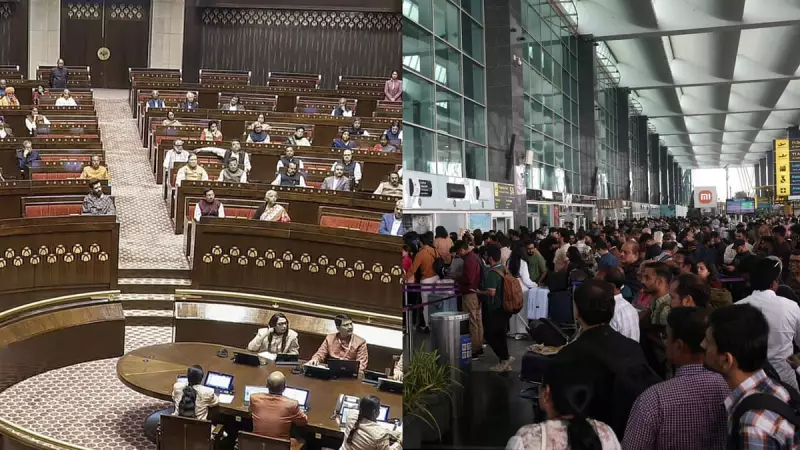
The issue of IndiGo's recent spate of flight cancellations and its dominant market position erupted into a full-fledged debate in the Rajya Sabha on Thursday. Members raised serious concerns about the airline's operations and the potential for monopolistic practices in the Indian aviation sector.
Parliamentary Scrutiny Over Operational Disruptions
During the Question Hour, members highlighted data from the Directorate General of Civil Aviation (DGCA) revealing that IndiGo cancelled more than 500 flights in January 2024. This significant disruption to air travel prompted lawmakers to question the Civil Aviation Ministry on the steps being taken to protect passengers and ensure reliable service.
The discussion quickly pivoted from mere operational issues to the broader structure of the industry. Members pointed out that with a commanding market share of around 60%, IndiGo's operational failures have a disproportionately large impact on the traveling public. The absence of strong competitors, they argued, leaves passengers with few alternatives when such widespread cancellations occur.

Monopoly Concerns Take Center Stage
The core of the parliamentary concern revolved around the lack of effective competition. Members, including those from the ruling and opposition benches, expressed apprehension that the current market dynamics could lead to monopolistic behavior. They questioned whether such a dominant position allows an airline to compromise on service quality and passenger convenience without facing significant commercial consequences.
Civil Aviation Minister Jyotiraditya Scindia responded to the queries, outlining the regulatory framework in place. He assured the house that the DGCA closely monitors all airlines for compliance with regulations, including those related to flight cancellations and passenger compensation. The minister detailed the existing rules under which airlines are mandated to provide alternative travel arrangements or refunds to affected passengers.
Regulatory Response and Future Implications
Minister Scindia emphasized that the government does not intervene directly in the commercial decisions of airlines, such as pricing. However, he stressed that the regulatory focus remains firmly on safeguarding passenger rights and ensuring safety. The government's role, as per his statement, is to create a level playing field while enforcing strict adherence to service norms.
This parliamentary debate underscores a critical juncture for Indian aviation. The exit or financial weakening of several major carriers in recent years has dramatically consolidated market share. The Rajya Sabha discussion brings to the fore essential questions about:
- Consumer Protection: How to ensure passenger rights are upheld when one carrier dominates the market.
- Market Health: The need for a sustainable competitive environment to foster innovation and service quality.
- Regulatory Oversight: The adequacy of current regulations in a highly concentrated market.
The outcome of this scrutiny could influence future policy decisions. It may lead to a review of competition laws within the aviation sector or stricter operational mandates for dominant players. For now, the Civil Aviation Ministry and DGCA face increased pressure to demonstrate that their oversight mechanisms are robust enough to handle the challenges posed by a concentrated market, ensuring that the interests of millions of Indian air travelers are effectively protected.