

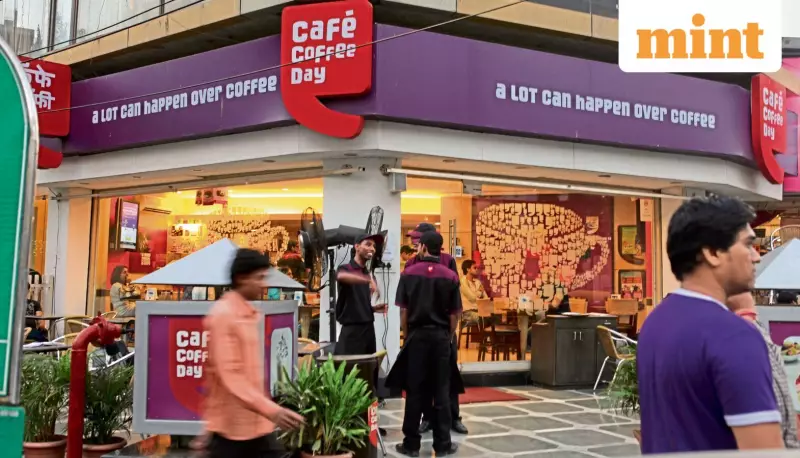
The tragic death of V.G. Siddhartha, the founder of the iconic Cafe Coffee Day (CCD) chain, on 29 July 2019, sent shockwaves through India's business community. He jumped off a bridge into the Netravati River in Mangaluru, leaving behind a sprawling empire built on coffee and a complex web of finances. While the exact trigger for his extreme step remains a mystery, a new investigative book, Coffee King: The Swift Rise and Sudden Death of Café Coffee Day Founder V.G. Siddhartha by journalists Rukmini Rao and Prosenjit Datta, pieces together the factors that led to the collapse.
The House of Cards: Debt, Opacity, and a Founder-Centric Empire
The book reveals that CCD's story is not merely one of a founder's suicide but an anatomy of a prolonged financial deception. At its peak, CCD was transformative, creating India's popular "third place" for youth in the early 2000s. However, beneath the visible success was a business where the numbers never truly added up.
Siddhartha's empire was built on relentless debt, opaque cross-pledging between his many entities, and a complete lack of formal governance. The authors detail how the company expanded wildly into plantations, retail, vending, and logistics without first stabilizing its core operations. Financial reporting became an exercise in deferral, with auditors and board members failing to probe glaring inconsistencies.

"Everyone reported only to Siddhartha… There were no formal processes in place; no approval chains, no record-keeping systems," the book notes, painting a portrait of a charismatic founder whose empire was doomed by its total dependence on him.
The Devastating Collateral Damage
The fallout from CCD's unraveling extended far beyond coffee. One of the most significant collateral casualties was the Indian IT firm Mindtree, where Siddhartha was the largest shareholder. Forced into a distress sale of his stake to Larsen & Toubro (L&T) to meet his obligations, he inadvertently facilitated a hostile takeover that Mindtree's founders had vehemently resisted.
The financial consequences are stark and ongoing. In FY2019, CCD operated 1,752 stores across India. By 31 March 2025, that number had catastrophically shrunk to just 422 outlets, a collapse of over 75%. Even after selling key assets, the group's debt remains a crushing ₹1,273 crore. The nationwide network that once defined youth culture now stands as a hollow shell.
A Cautionary Tale for Indian Entrepreneurship
The book draws sharp, instructive contrasts with global chains like Starbucks and Caffe Nero. While Starbucks, under Howard Schultz, grew through "disciplined investment" and robust governance, and Caffe Nero focused on reinvesting profits from its core coffee business, CCD's path was the opposite. It diversified before consolidating, expanded before stabilizing, and borrowed before earning.
This pattern, the authors argue, is emblematic of a wider issue in Indian entrepreneurship. Founders with bold visions—in sectors like education (Byju's) and aviation (Kingfisher)—have stumbled not due to a lack of merit in their ideas, but due to the collapse of governance, transparency, and financial discipline beneath them.
Coffee King ultimately transcends biography to become a mirror to Indian business. It is a story of deep loss—not only for a life ended too soon but for the global coffee brand India could have had. The book leaves the reader with a powerful cautionary tale: a dream of immense potential, undone from within by a lack of rigour, structure, and honesty.






