

Lenskart Religious Dress Code Policy Sparks Widespread Social Media Debate
A significant controversy has erupted involving eyewear retailer Lenskart, capturing intense attention across social media platforms. The debate centers on workplace regulations and religious expression, ignited by a document that went viral and prompted serious questions about permissible employee attire. As reactions intensified, the company's founder issued a response, yet the discussion persists with users calling for greater clarity and transparency.
Origins of the Controversy: Viral Document Details
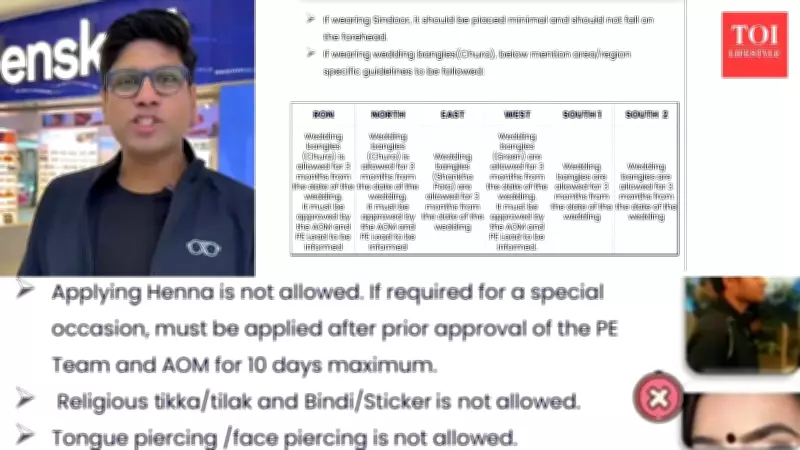
The controversy began when a document, purported to be Lenskart's staff grooming and uniform guide, was widely shared online. According to the circulated material, employees were permitted to wear a black hijab during shifts, with black turbans also allowed. However, the same document reportedly imposed restrictions on other religious symbols. It explicitly stated, "Religious tikka/tilak and Bindi/Sticker is not allowed."
Further rules addressed traditional items like the chooda or wedding bangles worn by North Indian Hindu women. The document specified that these bangles could only be worn for three months from the wedding date, requiring approval from an Area Operations Manager and notification to the People Experience Lead. This apparent asymmetry in allowances—permitting some religious items while restricting others—triggered immediate questions and sharp criticism from social media users.

Founder's Response and Clarification
As the online conversation gained momentum, Lenskart founder Peyush Bansal addressed the issue directly on the platform X. He stated, "Hi, all. I’ve been seeing an inaccurate policy document going viral about Lenskart. I want to speak directly that this document does not reflect our present guidelines." Bansal emphasized that the company's current policy imposes no restrictions on any form of religious expression, including bindi and tilak, and that guidelines are regularly reviewed.
He acknowledged the confusion caused by the situation, noting that grooming policies have evolved over time and outdated versions do not represent the company today. Bansal apologized for the concern generated, but this clarification did not fully quell the debate.
Why the Issue Resonated Deeply
The controversy quickly gained traction due to its direct connection to religious identity and daily practices. Many users highlighted the common use of bindi and tilak in everyday life, making the document's restrictions particularly sensitive. This sparked broader discussions about fairness, inclusivity, and balance in workplace guidelines across social media platforms.
Ongoing User Skepticism and Demands
Even after Bansal's clarification, numerous users remained unconvinced. Many argued that the shared document appeared recent, with some noting it was dated February 2026, and called for the company to publicly release its current policy. One user challenged, "Okay, then you should make public a copy of your company's current policy. Because what we have seen is completely opposite to what you are saying."
Another questioned the timeline, stating, "It's February month policy dude....to whom are you making a fool? Public or yourself?" Commentator Shefali Vaidya also pressed for details, asking why the document was inaccurate if it was from February 2026, and why religious asymmetry was ever acceptable in company guidelines.
The situation remains fluid, with users continuing to demand transparency and consistent policies regarding religious expression in the workplace.






