

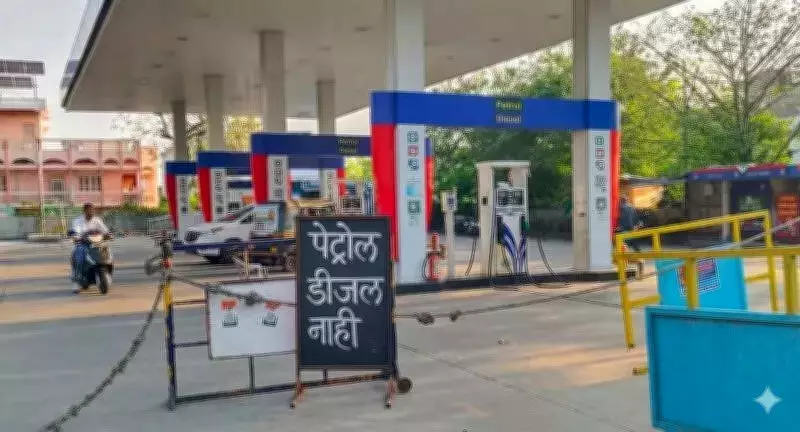
Naggrapples with Severe Fuel Shortage as Pumps Shut Down and Traffic Snarls
On a day marked by widespread petrol pump closures and serpentine queues that brought traffic to a standstill, top officials have clarified that panic buying is not the sole culprit behind the escalating fuel crisis in Nagpur. Sources within the petroleum industry and retail vendors emphasize that the problem runs deeper, and only consumer restraint can prevent a larger catastrophe.
Indirect Supply Controls Amid West Asia Conflict
While there is no official rationing of petrol or diesel, an indirect control over supply has been implemented to ensure fuel is used sparingly during the ongoing West Asia conflict. Officials state that it is crucial for existing stocks to last until the Iran war concludes, highlighting the strategic importance of conservation efforts.
Credit Withdrawal and Depot Hour Cuts Cripple Replenishment
The oil crisis triggered by the war has forced petroleum companies to abruptly halt the age-old practice of providing credit to dealers. Additionally, depots have curtailed their working hours in recent days. These twin measures have significantly slowed the turnaround time for petrol pumps to replenish their stocks.

Until last week, depots operated late into the night, filling tankers sent by petrol pumps. This practice has now been discontinued, with depots closing by 6 PM and remaining shut on weekends. The slowdown in replenishment led to a sudden rush of consumers, fueled by social media messages warning of impending fuel shortages and urging people to fill their tanks.
A source in the business lamented, "The system came crashing down after that."Nagpur's Supply Chain: Three Key Depots Face Restrictions
Nagpur's petrol pumps rely on supplies from three major depots:
- The nearest is operated by Bharat Petroleum Company Limited (BPCL) at Borkhedi, 35 km from the city, which also serves other companies.
- The next is 75 km away, run by Nayara Energy, an Indian company with Russian stakes, catering to PSU oil companies as well.
- Indian Oil Corporation (IOC) has a depot in Chandrapur, 160 km away.
Each depot has imposed restricted timings alongside the advance payment requirement. For instance, the Nayara facility announced that filling for HPCL pumps would only occur until 2:30 PM. Tankers arriving after this deadline returned empty, according to petroleum dealers.
"There is a strict insistence on advance payment. Many petrol pump owners initiate payment by depositing money at the bank branch. By the time the amount is credited to the oil company's account, depot hours are over, leaving tankers empty," explained another dealer.Industry Appeals for Calm Amid Growing Chaos
Amit Gupta, president of the Federation of Maharashtra Petroleum Dealers Association (FAMPEDA), confirmed the timing restrictions at depots. He appealed to the public, warning that panic buying will only worsen the crisis. Refilling of petrol pumps has slowed, but panic buying acted as a catalyst, with even two-wheeler owners who typically buy a litre or two now filling their tanks completely, rapidly depleting local stocks.
Official Statements and Rationale Behind Measures
A BPCL official told TOI, "There's no change in payment terms for dealers. Regarding timing restrictions, it depends on the load. Depots also operate overtime and on holidays if tankers are waiting."
A source in a PSU oil company revealed that timing curbs and the scrapping of credit have been implemented to rationalize systems and prevent hoarding. Often, petroleum dealers send tankers even when they have sufficient stock, leading to unnecessarily higher offtake from depots. Now, they must wait until stock levels genuinely hit rock bottom, the source added.
This multifaceted crisis underscores the complex interplay between global conflicts, supply chain disruptions, and consumer behavior, putting Nagpur's fuel infrastructure under unprecedented strain.






