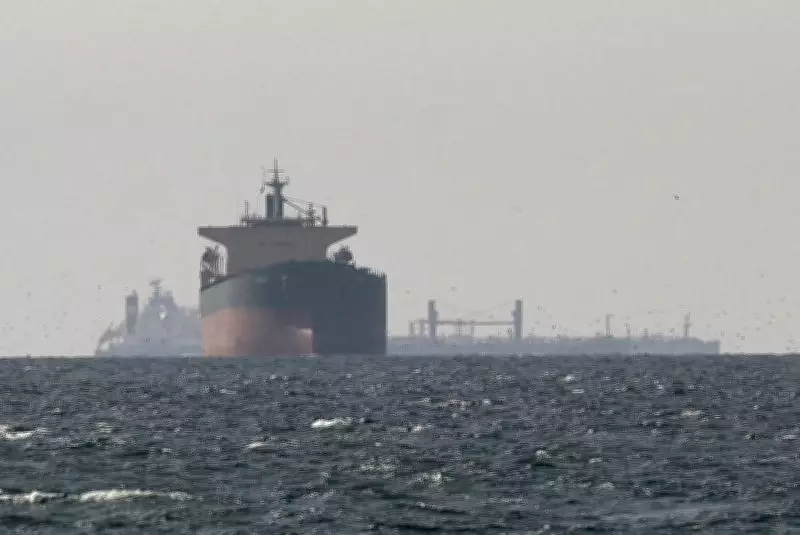
Two Additional Indian-Flagged LPG Tankers Embark on Critical Journey Through Strait of Hormuz
In a significant development for India's energy security, two more Indian-flagged LPG tankers have commenced their voyage from the Persian Gulf and are anticipated to traverse the war-affected Strait of Hormuz before making their way to Indian ports. This movement, as revealed by ship tracking data, underscores ongoing efforts to navigate the volatile region amidst escalating Middle East conflicts.
Strategic Navigation and Verification Processes
The LPG tankers, identified as Pine Gas and Jag Vasant, were observed sailing in close proximity near the waters between Iran's Larak and Qeshm islands on Monday afternoon. This positioning is believed to be a deliberate maneuver to clearly establish their identity with Iranian authorities prior to crossing the Strait of Hormuz. Analysts suggest that Iran may be permitting select vessels to transit the strait following a verification protocol.
This process involves a short diversion through the Larak-Qeshm Channel, where Iran confirms ownership, cargo details, and ensures the vessels are not affiliated with the United States or are among those authorized for transit. The two ships are part of a larger group of 22 Indian-flagged vessels that were stranded in the Persian Gulf after the outbreak of war in the Middle East nearly sealed off the Strait of Hormuz.

Recent Safe Passages and Ongoing Challenges
Earlier this month, MT Shivalik and MT Nanda Devi successfully reached Indian shores, carrying approximately 92,712 tonnes of LPG, equivalent to roughly a day's cooking gas consumption for the country. Additionally, the Indian-flagged oil tanker Jag Laadki, transporting 80,886 tonnes of crude oil from the UAE, arrived at Mundra on March 18. Another tanker, Jag Prakash, en route to Tanzania with gasoline from Oman, had previously crossed the strait safely.
Originally, 28 Indian-flagged vessels were in the Strait of Hormuz when hostilities erupted following US-Israel attacks on Iran. Of these, 24 were on the West side and four on the East side. In recent days, two vessels from each side have managed to sail to safety, reducing the number of remaining Indian-flagged vessels in the war zone to 24.
Composition of Stranded Fleet and Broader Implications
Among the 24 remaining vessels, 22 are on the West side with 611 seafarers onboard, while two are on the East side. The stranded fleet includes:
- Six LPG carriers, two of which have now set sail for India.
- One liquefied natural gas (LNG) tanker.
- Four crude oil tankers.
- One vessel transporting chemical products.
- Three container ships.
- Two bulk carriers.
- One dredger, one empty vessel, and three in dry dock for routine maintenance.
Overall, close to 500 tanker vessels remain confined within the Persian Gulf, comprising 108 crude oil tankers, 166 oil product tankers, 104 chemical/product tankers, 52 chemical tankers, and 53 other tanker types. This congestion highlights the severe disruption to global maritime trade caused by the conflict.
India's Energy Dependence and Supply Chain Adjustments
India's reliance on the Strait of Hormuz for energy imports is substantial. The country imports about 88% of its crude oil, 50% of natural gas, and 60% of LPG. Prior to the war, more than half of India's crude oil imports originated from countries such as Saudi Arabia, Iraq, and the UAE, all of which utilize the strait for shipping.
Furthermore, 85-95% of LPG and 30% of natural gas supplies transit through this narrow waterway. While disruptions in crude oil imports have been partially mitigated by sourcing from alternative regions like Russia, West Africa, the United States, and Latin America, gas and LPG supplies to industrial and commercial users have faced significant curtailments.
The ongoing transit of Indian-flagged vessels through the Strait of Hormuz, despite the geopolitical tensions, is crucial for maintaining energy flows and underscores the strategic importance of this maritime corridor for India's economy and energy security.