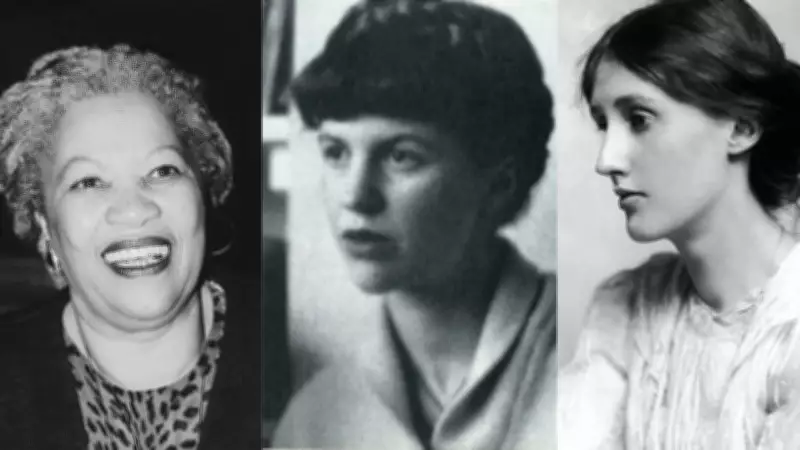
10 Female Authors Who Enriched English Language with Invented Words
Language represents a dynamic and ever-evolving tool that continuously transforms through the voices of those who utilize it. Some of the most fascinating additions to the English vocabulary have emerged not from scientists or linguists but from imaginative storytellers and writers, particularly courageous women authors who dared to experiment with words. This article pays tribute to ten extraordinary female writers whose creativity extended beyond mere storytelling to permanently influence the pages of dictionaries, leaving behind linguistic legacies that continue to resonate and evolve through time.
Toni Morrison: “Rememory”
Toni Morrison significantly enriched the English language through her distinctive rhythm, profound cultural expressions, and redefined meanings. The Oxford English Dictionary officially recognizes her coined term "rememory" from her seminal novel Beloved, where it describes the complex act of remembering traumatic experiences. Morrison masterfully reshaped existing vocabulary with remarkable depth and contextual richness, transforming narrative voices and expanding literary vocabulary in unprecedented ways.
Margaret Atwood: “Unbaby”
Margaret Atwood contributed distinctive terms like "unbaby" and popularized dystopian vocabulary through her groundbreaking work The Handmaid's Tale. Her linguistic creativity has been extensively discussed in academic circles for its pivotal role in shaping the language of speculative fiction. Literary analyses frequently cite Atwood's work for its substantial influence on modern lexical development and imaginative word usage.

Suzanne Collins: “Mockingjay”
Suzanne Collins introduced the term "Mockingjay" into new cultural contexts through The Hunger Games series, transforming a fictional concept into widespread cultural recognition. These invented words gained massive popularity, demonstrating how contemporary fiction can redefine and revitalize existing vocabulary. Collins's work serves as a compelling example of how imaginative storytelling can permanently alter linguistic landscapes.
J.K. Rowling: “Muggle”
J.K. Rowling famously coined numerous words including "Muggle" and "Quidditch," many of which have achieved official recognition in the Oxford English Dictionary. The dictionary defines "Muggle" specifically as "a person without magical powers," explicitly citing Rowling's Harry Potter series as the definitive origin. Her monumental impact on contemporary vocabulary remains undeniable and continues to influence how new generations engage with language.
Sylvia Plath: “Bee-box”
Sylvia Plath introduced vividly emotional and charged expressions that have significantly influenced modern English usage. Her poem The Arrival of the Bee Box contributed substantially to metaphorical lexical applications and psychological vocabulary. Literary scholars consistently note how Plath stretched conventional vocabulary boundaries into deeply personal and psychologically complex territory, expanding expressive possibilities within the language.
Virginia Woolf: “Stream of consciousness”
Virginia Woolf made substantial contributions to modernist language development, shaping abstract and introspective expressions that transformed literary communication. Terms like "stream-of-consciousness" gained prominent status in the literary world through her innovative narrative techniques and stylistic experimentation. As documented in numerous literary studies, Woolf's writing fundamentally redefined how internal thought processes could be linguistically structured and expressed.
Christina Rossetti: “Goblin-like”
Christina Rossetti creatively played with poetic language, helping popularize expressive terms like "Goblin-like" and unusual linguistic constructions. While not always credited with direct word coinages, her substantial poetic influence shaped how certain descriptive vocabulary evolved within Victorian English. Literary scholars frequently cite Rossetti's work as expanding imaginative vocabulary and enriching descriptive possibilities within poetic expression.

Charlotte Brontë: “Moody”
Charlotte Brontë helped shape literary emotional vocabulary through words like "moody" and "sympathetic" that conveyed unprecedented emotional depth. In her masterpiece Jane Eyre, she dramatically expanded how inner feelings and psychological states could be described with precision. The Oxford English Dictionary explicitly notes Brontë's significant influence in shaping psychological vocabulary within fiction, making emotional expression more precise and relatable throughout English literature.
Jane Austen: “Vanity-bait”
Jane Austen is credited with refining the social meanings of words like "vanity-bait" within nuanced social contexts and character interactions. Her novels meticulously refined everyday language, embedding subtle emotional vocabulary and social commentary into English usage. According to Oxford English Dictionary records, Austen's works are frequently cited for first recorded usages and contextual richness, helping define how ordinary words gained sophisticated layered meanings through literary application.
Mary Wollstonecraft: “Feminine”
Mary Wollstonecraft helped popularize the term "feminine" within modern intellectual discourse and feminist contexts. In her revolutionary work A Vindication of the Rights of Woman (1792), she challenged established gender norms and fundamentally reshaped how language framed women's identities and capabilities. The Oxford English Dictionary explicitly credits Wollstonecraft's writing with influencing the evolving meanings of gendered terminology, demonstrating how her work expanded not just philosophical ideas but vocabulary itself.
These ten authors collectively demonstrate how women writers have played crucial roles in linguistic evolution, transforming English through creative innovation that continues to influence how we communicate, think, and express complex ideas in contemporary society.