

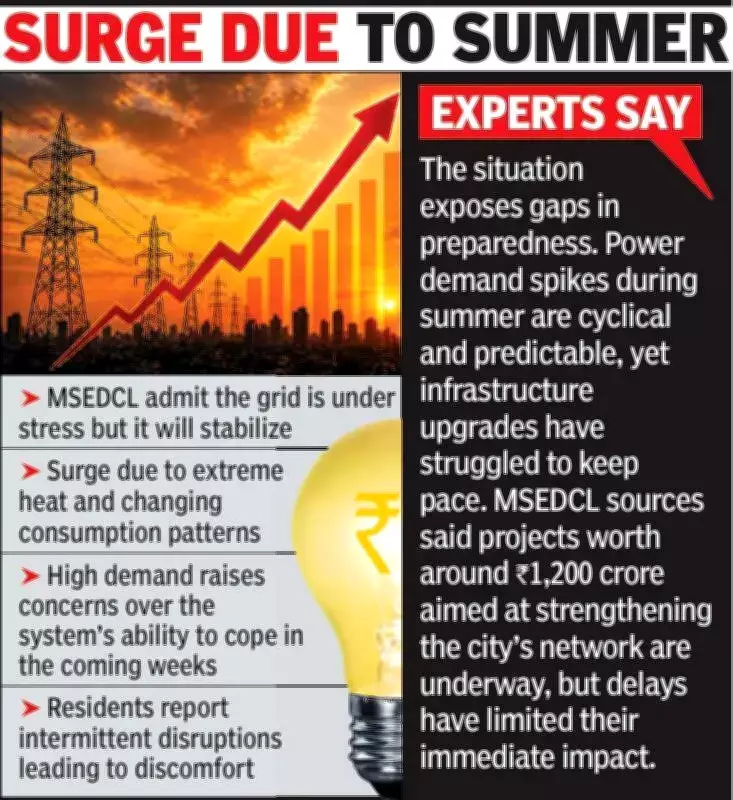
Nagpur has recorded an unprecedented power demand of 821 megawatts (MW), driven by soaring temperatures and a sharp increase in the use of cooling appliances. This figure surpasses the previous peak of 753 MW recorded in May last year. The early surge has placed immense pressure on the city's power distribution network, leading to frequent tripping and short-duration outages across several localities.
Rising demand and infrastructure strain
The unusually high demand has raised concerns about the system's ability to cope in the coming weeks, as temperatures and power consumption are expected to climb further. Residents in multiple areas have reported intermittent power disruptions, exacerbating discomfort amid heatwave-like conditions. Officials from the Maharashtra State Electricity Distribution Company Ltd (MSEDCL) acknowledged that the grid is under significant stress but expressed optimism that the situation would stabilise after May 1, following the completion of ongoing pre-monsoon maintenance works.
A senior MSEDCL official stated, "The demand recorded on April 21 itself crossed last year's peak. Such a sharp rise is putting pressure on infrastructure, leading to tripping and breakdowns in some pockets." The maintenance efforts are focused on strengthening feeders, transformers, and distribution lines. "Post May 1, outages will largely be limited to unavoidable faults," the official added.

Changing consumption patterns
The surge is also attributed to evolving consumption patterns. Increased use of air conditioners, often multiple units per household, has significantly raised load demand. Additionally, while solar power adoption is beneficial during daytime, it contributes to peak stress after sunset, causing a sudden spike in grid dependency. "At the same time, solar power adoption, while beneficial during daytime, is contributing to peak stress after sunset, leading to a sudden spike in grid dependency," the official explained.
Sources indicated that reverse load and fluctuations from solar injection are adding complexity to grid management. Experts warn that the situation exposes gaps in preparedness. Power demand spikes during summer are cyclical and predictable, yet infrastructure upgrades have struggled to keep pace. MSEDCL sources said projects worth approximately Rs 1,200 crore aimed at strengthening the city's network are underway, but delays have limited their immediate impact.






