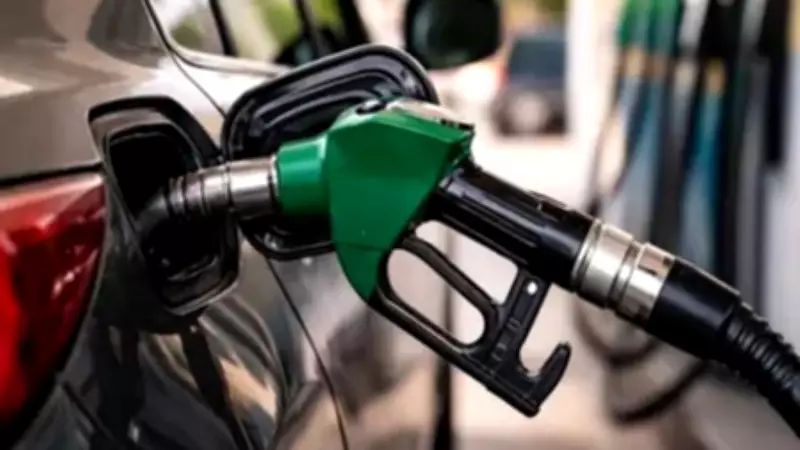
Nayara Energy Announces Significant Fuel Price Hike Amid Global Crude Volatility
India's largest private fuel retailer, Nayara Energy, has implemented substantial price increases for petrol and diesel, citing escalating input costs driven by the ongoing Middle East crisis. The company raised petrol prices by Rs 5 per litre and diesel by Rs 3 per litre, effective Thursday, marking a notable shift in India's fuel pricing landscape.
Price Variations Across States and Market Dynamics
The actual increase varies across different states due to differences in local levies such as VAT. In certain regions, petrol prices have risen by as much as Rs 5.30 per litre. Nayara Energy, which operates 6,967 of India's 102,075 petrol pumps and is majority-owned by Russia's Rosneft, has decided to pass on part of the increased input costs to consumers, according to PTI sources.
Fuel marketing companies in India are facing mounting financial pressure, as retail petrol and diesel prices have remained unchanged despite global oil prices climbing nearly 50 per cent since February 28. This surge followed US–Israel strikes on Iran, which sparked a wider conflict and retaliation from Tehran, disrupting global energy markets.

Divergent Strategies Among Fuel Retailers
Private and state-run fuel retailers in India are adopting contrasting approaches as they grapple with elevated global crude prices and a prolonged freeze in retail rates. Jio-bp, the fuel retail joint venture between Reliance Industries and BP Plc operating over 2,100 outlets nationwide, has so far maintained stable petrol and diesel prices while absorbing significant losses.
In contrast, state-owned oil marketing companies—which dominate roughly 90 per cent of the market—have continued a price freeze on standard fuels, a strategy in place since April 2022. These companies, including Indian Oil Corporation (IOC), Bharat Petroleum Corporation Ltd (BPCL), and Hindustan Petroleum Corporation Ltd (HPCL), typically absorb losses during periods of high crude prices and recover margins when prices soften.
Premium Fuel and Bulk Diesel Adjustments
While retail prices for regular petrol and diesel remain unchanged, state-run companies recently increased the price of premium-grade petrol by Rs 2 per litre and sharply raised bulk diesel rates sold to industrial consumers by about Rs 22 per litre. In Delhi, the price of premium 95-octane petrol now stands at Rs 101.89 per litre, up from Rs 99.89, while bulk diesel rates have jumped to Rs 109.59 per litre from Rs 87.67.
Standard petrol and diesel prices in Delhi remain frozen at Rs 94.77 and Rs 87.67 per litre, respectively. This divergence reflects differences in fuel grades: regular petrol, typically rated at 91–92 octane, caters to standard engines, whereas premium petrol with higher octane levels (95–98) is designed for high-performance vehicles.
Global Crude Surge and India's Vulnerability
Globally, crude oil prices surged to as high as $119 per barrel earlier this month amid escalating tensions involving Iran, before easing to around $100 per barrel. India, which imports nearly 88 per cent of its crude oil and about half of its natural gas requirements, remains highly exposed to such volatility. A significant portion of supplies passes through the strategically sensitive Strait of Hormuz, where recent threats from Iran following US and Israeli strikes, coupled with insurance withdrawals, have disrupted tanker movements.
The government has reiterated that petrol and diesel pricing is deregulated and determined by oil marketing companies. Historically, oil firms have navigated sharp price cycles, such as when crude touched $119 per barrel in June 2022 after Russia's invasion of Ukraine. While that year saw limited profitability, state-run companies posted record profits of Rs 81,000 crore in FY24, offsetting earlier margin pressures. In the current financial year, the three firms together reported profits of Rs 23,743 crore in the December quarter alone.