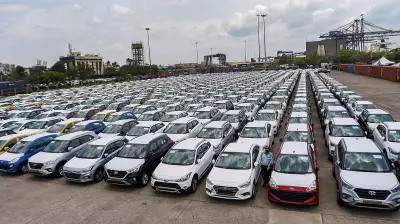
In a significant development for India's automotive sector, the National Company Law Tribunal (NCLT) in Delhi has given its official nod to the merger between Suzuki Motor Gujarat (SMG) and its parent entity, Maruti Suzuki India Limited (MSIL). This landmark decision paves the way for the consolidation of one of the country's most prominent car manufacturing operations.
NCLT's Green Light: Unanimous Approval and Key Conditions
The two-member bench, led by President Ramlingam Sudhakar and Member Ravindra Chaturvedi, sanctioned the joint petition from the carmakers. The tribunal's comprehensive review concluded that the amalgamation scheme is beneficial for both companies, their shareholders, creditors, and employees. The appointed date for the transfer scheme is set for April 1, 2025.
Notably, the NCLT order highlighted that key statutory authorities, including the Income-Tax Department, BSE, NSE, RBI, and SEBI, raised no objections to the proposed merger within the stipulated 30-day period. This lack of opposition from regulatory bodies was a crucial factor in the tribunal's decision to approve the scheme under Sections 230 to 232 of the Companies Act, 2013.

Operational Impact: Employee Transition and Corporate Dissolution
A major aspect of the merger involves the seamless transition of the workforce. As per the sanctioned plan, all employees on the payroll of Suzuki Motor Gujarat will become employees of Maruti Suzuki India from the effective date. This ensures job security and continuity for the staff.
Furthermore, upon the merger taking effect, Suzuki Motor Gujarat will be legally dissolved without undergoing the winding-up process. The company is required to surrender its GSTN and PAN to the concerned authorities after filing the NCLT order with the Registrar of Companies.
Strategic Rationale Behind the Merger
The companies had jointly petitioned for the merger, citing several strategic advantages. The primary goals are to achieve focused growth, operational efficiencies, and enhanced business synergies. By consolidating their operations, the merged entity aims to eliminate administrative duplications, which is expected to reduce overall administrative costs.
The move is also designed to simplify the larger Suzuki group structure in India and improve agility in decision-making for SMG's operations. It will enable better sharing of best practices, cross-functional learnings, and more efficient utilisation of manufacturing facilities. The pooling of financial, managerial, and technical resources is anticipated to maximise shareholder value in the long run.
This corporate restructuring marks a pivotal step for Maruti Suzuki, solidifying its manufacturing capabilities under a single, more streamlined entity as it continues to dominate the Indian passenger vehicle market.