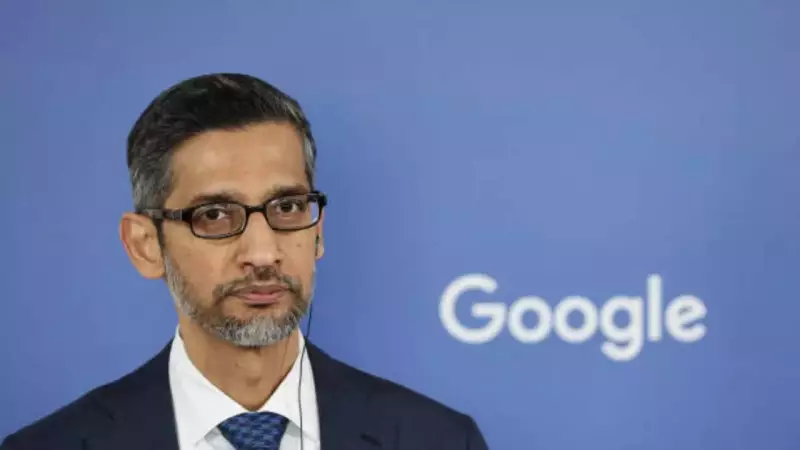
Corporate leadership has long been portrayed as a solitary journey of individual achievement. The narrative typically follows a predictable arc: revenue milestones are reached, new products hit the market, company valuations soar, and the chief executive emerges as the singular face of this upward trajectory. Success appears concentrated in one office, one name, creating an illusion of solitary accomplishment.
The Pichai Paradigm: A Shift in Leadership Philosophy
Google CEO Sundar Pichai offers a transformative perspective that challenges this conventional framing. "As a leader, it is important to not just see your own success, but focus on the success of others," Pichai asserts. While this statement may sound deceptively simple, its implications ripple through every layer of organizational structure and culture.
Redefining Leadership Metrics in Modern Organizations
Within large corporations, leadership decisions extend far beyond quarterly financial reports. They fundamentally shape:

- Hiring priorities and talent development strategies
- Product roadmaps and innovation pipelines
- Workplace culture and psychological safety
- The organizational appetite for calculated risk-taking
When leaders prioritize personal performance metrics or public perception above all else, organizational incentives narrow dangerously. Teams learn to optimize for upward approval rather than outward growth, creating echo chambers that stifle genuine innovation.
Pichai's formulation represents a fundamental axis shift in leadership philosophy. When leadership measurement includes how many others advance, build, and lead in turn, authority becomes distributive rather than centralized. The critical question transforms from "Did I win?" to "Did the system I oversee enable others to win?"
Innovation Thrives on Shared Success Ecosystems
In technology giants like Google, where thousands of engineers, researchers, and managers collaborate across products and geographies, this distinction carries profound significance. True innovation rarely emerges from isolated silos or single offices. Instead, it flourishes in environments where:
- Teams feel genuinely trusted to experiment and iterate
- Failures are absorbed as learning opportunities without stigma
- Credit flows freely across hierarchical layers and departmental boundaries
A leadership focus on others' success also transforms how organizations navigate uncertainty. Technology companies operate in volatile cycles characterized by rapid change, regulatory pressures, and intense public scrutiny. In such environments, the temptation to centralize control for perceived stability can be overwhelming.
Yet this centralization often slows organizational response times and mutes valuable internal expertise. Leaders who consciously invest in others' growth create organizational capacity that extends beyond their own tenure, building sustainable advantage.
The Ethical Dimension of Distributive Leadership
Beyond operational benefits, Pichai's perspective introduces crucial ethical considerations. When leadership is framed primarily as personal triumph, organizations risk reinforcing competitive dynamics that systematically exclude those without early access to power networks. When reframed as stewardship, emphasis naturally shifts toward:
- Equitable access to opportunities and resources
- Meaningful mentorship and sponsorship programs
- Institutional continuity and knowledge preservation
Under this model, a leader's legacy becomes less about headline-grabbing metrics and more about the durability, resilience, and capability of their teams.
Universal Applications Across Organizational Types
This leadership philosophy transcends the technology sector. In public institutions, academic settings, and startup environments, the same fundamental tension persists between authority-hoarding and capability-building approaches. Leaders who guard authority may achieve short-term stability, but those who develop others build organizational depth. Over extended timelines, depth consistently proves more resilient than temporary visibility.

Pichai's statement therefore functions simultaneously as practical management advice and cultural critique. It questions organizational cultures that celebrate singular vision while relying fundamentally on collective labor. It suggests that authentic leadership involves less about standing ahead of others and more about ensuring others can move forward effectively.
Personal victories may define specific career moments, but enabling others' success determines whether those moments compound into lasting organizational impact. Within this crucial distinction lies the fundamental difference between mere command and genuine leadership.